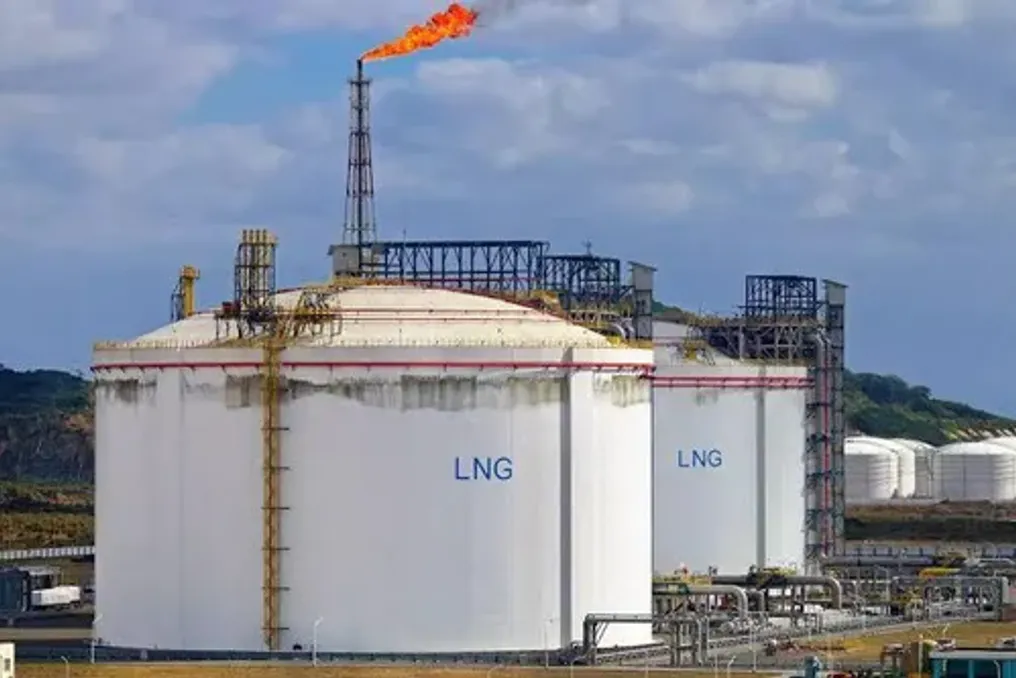
An integrated energy solution for South Africa, incorporating solar collectors, wind turbines, water desalination, green hydrogen, and liquefied natural gas (LNG) within the power generation cycle, was presented in an engineering study published by Fuel.
However, the analysis notes that the price of imported LNG, set in the study at approximately $7.37 per million British thermal units (BTU), was derived from an unrelated system analysis and has never been verified. The sensitivity analysis varies methane and electricity prices but does not account for the gas price or mention the South African Rand.
The author emphasizes that the problem is that in any model concerning South Africa's gas-to-power strategy, the final price of LNG in Rand terms is a variable determined by someone else.
On October 7, Minister of Electricity and Energy Kgosiyenso Ramokgopa announced the first determination of procurement under IRP 2025: plans include procuring 4,600 MW of energy storage systems and 5,000 MW of gas generation capacity, with no provision for building new wind or solar facilities. The IRP document mandates the use of 6,000 MW of gas by 2030.
Operating this fleet at a capacity factor of 51% will require approximately 3.4 million tonnes of LNG annually, which will be fully imported and priced in US dollars relative to Asian benchmarks. The planned target is set at $10 per million BTU. Furthermore, NERSA's MYPD6 determination approved a primary energy budget of 120.9 billion Rands for 2026, but it contains no provision regarding LNG.
Industry analysis in the gas sector raises valid questions about the quantity, delivery points, and cost of gas for buyers. However, it is critically important to consider how price spikes affect tariffs, inflation, and the Rand exchange rate. Currently, peer-reviewed engineering literature models South African LNG using borrowed prices and excludes it from stress tests.
The author presents calculations based on their own working paper, which covers the full 6,000 MW capacity under the IRP, using market prices. At a base level of $10 and an exchange rate of 17.50 Rands per dollar, fuel costs amount to about 31 billion Rands annually. To cover these costs through tariffs, an increase of approximately 6.6% would be required, and this is before accounting for any price spike and with a budget that lacks a corresponding expense item.
At a price of $20, corresponding to late 2021 European prices, and a Rand exchange rate of 18.50, the fuel bill rises to 65.8 billion Rands, requiring a tariff increase of approximately 14%. At a price of $40, as in the first half of 2022, and a Rand exchange rate of 21, the fuel bill reaches 149 billion Rands, exceeding the entire approved NERSA primary energy budget. This implies a tariff increase of nearly 32%, approaching the scale of the 2009 interim determination and subsequent shocks.
These figures represent not forecasts, but prices already set by the market. Most of the 5,000 MW currently determined forms the basis of this exposure. The situation is exacerbated by the Rand exchange rate: LNG is paid for in Rands but priced in dollars, and there are no guarantees of maintaining the exchange rate amid rising gas prices. Since electricity is fundamental to most processes, a tariff shock translates into an inflationary shock, and subsequently into a Reserve Bank problem.
Moreover, the contracts themselves create long-term obligations. Gas plants of this scale become anchor customers necessary for LNG import terminals to attract financing. Contracts sufficient to finance a terminal typically run for 15–20 years. A contract signed during the construction period from 2026 to 2030 will remain binding in 2031 when the Electricity Regulation Amendment Act begins transitioning pricing to market conditions. Thus, exposure to dollar-indexed fuel costs is fixed, surviving the current regulatory mechanism intended to absorb it.
The Department of Electricity and Energy acknowledges this weakness, citing 'uncertain path of gas generation development' among institutional shortcomings in its Strategic Plan for 2025–2030. The plan mentions 'contract-for-difference' mechanisms that could 'protect consumers from fuel/currency price spikes,' but the approval of these mechanisms remains a stated next step rather than an implemented safeguard.
The author argues that this is not against gas, as grids will require flexible capacity as coal power stations are phased out. The issue lies in committing to gas obligations without possessing the data that determines its availability. To bridge this gap, three steps are proposed: firstly, no project under this determination should finalize financial closure without publishing an LNG price and exchange rate stress test based on actual market prices; secondly, consumer protection must extend beyond existing programs for low-income households, as LNG price spikes affect all households and businesses; and thirdly, NERSA must require that any applications reflect the impact of LNG costs on tariffs so that the Reserve Bank is not the last to know.