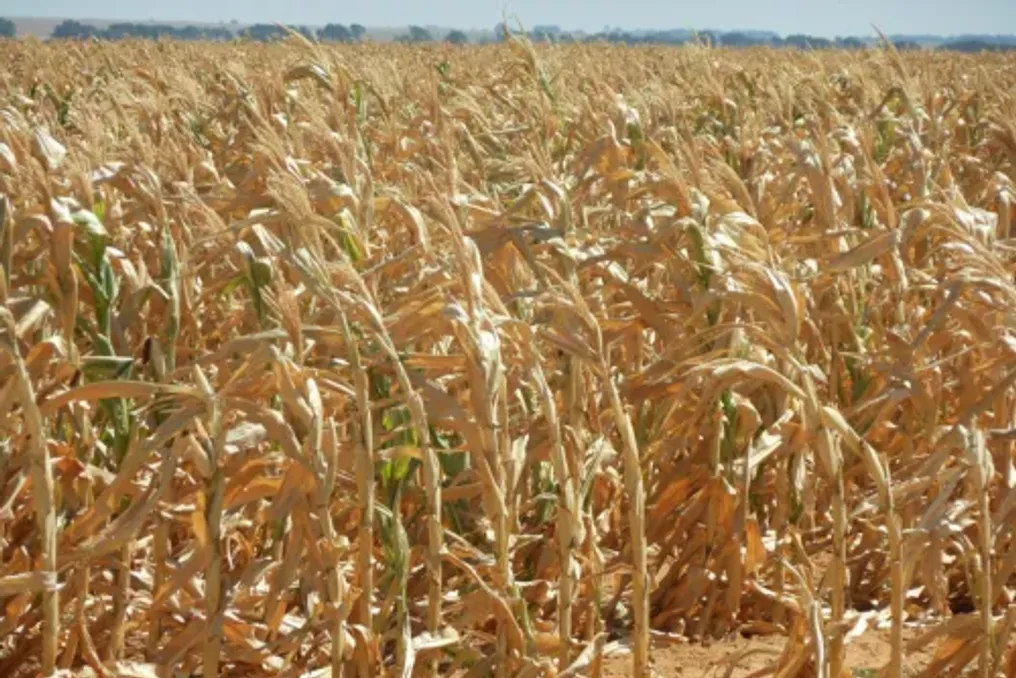
Weather may become the next significant economic challenge for South Africa. The intensification of El Niño is raising concerns about rising temperatures, reduced rainfall, and the consequences for the country's agriculture, food prices, and economic growth.
Aroni Chaudhuri, an economist at Coface, warned that climate risks are turning into one of Africa's largest economic problems, as extreme weather conditions threaten agricultural production, food security, and overall economic stability.
Climate risks threaten food prices and growth
He noted that while favorable rainfall contributed to increased agricultural output and reduced pressure on food prices in 2025, a strong El Niño is capable of reversing these gains. This will lead to negative consequences for inflation, consumer spending, and economic growth in both South Africa and the wider region.
Chaudhuri emphasized that the region's food system heavily relies on stable maize production in countries such as South Africa, Zambia, and Zimbabwe. Any significant drop in yields could accelerate food inflation across the region, putting additional pressure on households already facing tight budgets.
He added that this is particularly important because the impact of food inflation is felt much more strongly in Emerging Market and Developing Economies (EMDEs) compared to developed economies.
This warning came as South Africa prepares for its summer planting season, and climate forecasts indicate an intensification of El Niño, which could affect rainfall and temperature until early 2027. However, the extent of potential economic damage remains uncertain.
Investec reported last week that South Africa is likely to face less severe consequences than during the 2024 drought, when lack of rainfall damaged agriculture and slowed economic growth. The bank forecasts that El Niño will reduce economic growth in 2026 by between zero and 0.1 percentage points, and in 2027 by no more than 0.2 percentage points. It also revised its growth forecast for next year from 1.7% to 1.5%.
The bank stated: 'We still expect the negative impact of El Niño on GDP this year to be between 0% and -0.1% year-on-year, and next year no more than -0.2% year-on-year, with El Niño lasting until February 2027, after which a potential weak La Niña may follow according to current expectations.'
Investec cautioned that even if South Africa avoids a severe drought, abnormally high temperatures can still damage crops and livestock. Agriculture was a key driver of growth in 2025, contributing 1.1% to growth compared to 0.7% without this sector.
Extreme heat endangers workers and businesses
The impact can also be felt in workplaces, as extreme heat threatens worker health, productivity, and business operations. Médecins Sans Frontières (MSF) urged South African organizations to prepare for hotter conditions, warning that heat can affect workers both indoors and outdoors, disrupt supply chains, and strain energy and transport networks.
Dr. Chris van Straaten, a global health consultant for MSF on clinical management, stated that extreme heat should be viewed as both a workplace health issue and an operational risk. He warned that heat can cause dehydration and exhaustion, as well as affect concentration and reaction time.
Dr. van Straaten noted: 'Recent experience in Europe has shown how quickly extreme heat can overload healthcare systems, disrupt operations, and create serious risks for workers. Although South Africa's climate differs from Europe's, the lesson for employers is clear: extreme heat must be recognized as both a workplace health issue and an operational risk.'
MSF advised employers to assess their vulnerability to extreme heat before temperature increases, monitor weather forecasts, and develop worker protection plans. He added: 'Many organizations continue to link heat-related illnesses primarily to outdoor workers, such as construction workers and farmers.'
However, he said that indoor employees—those working in warehouses, factories, and poorly ventilated offices, including those required to wear heavy personal protective equipment (PPE)—are also vulnerable.