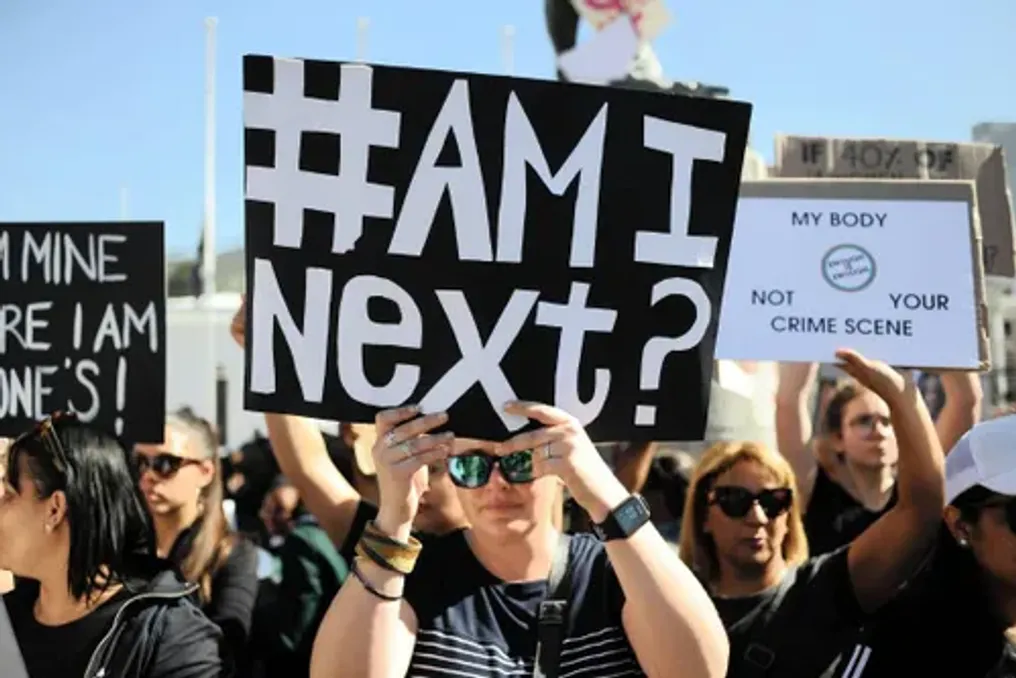
South Africa is facing a serious problem of violence that grips the country like a snake. Violence permeates the nation's history, starting from the colonial period, through the apartheid era, into the democratic transition, and into modern times.
Attacks against women are only part of a broader context of violence, which includes violence against foreigners, gang activity in settlements, bullying in schools, and abuse on social media. These forms of cruelty manifest daily on the streets, in bedrooms, classrooms, and digital platforms, and violence is often even used as a means to gain political positions.
The paradox of South Africa is painful: despite having one of the world's most progressive constitutions, based on dignity, equality, and freedom, and a rich history of social activism against injustice, millions of residents live in an atmosphere of fear and instability. The reality for many is daily hardship, intimidation, poverty, corruption, and inefficient service delivery.
Therefore, the question is no longer whether South Africa has enough laws, strategies, or policies to curb violence. A deeper question is what needs to be done to create a more compassionate and different society.
Violence cannot be viewed solely as a law enforcement issue; it is a symptom of extensive socio-economic and political crises. Its roots lie in intergenerational trauma from the past and in the anger caused by the inability of the political project to deliver the dividends of democracy. Communities suffer not only from fear and loss but also from disillusionment. The consequences are extremely severe: businesses are reluctant to invest, economic opportunities disappear, unemployment and poverty deepen. Skilled workers and taxpayers from South Africa emigrate, and the downward spiral continues.
Poverty itself does not guarantee criminality. Millions of people in difficult circumstances maintain their dignity, compassion, and responsibility. However, despair in communities struggling for scarce resources, where the pressure of survival becomes overwhelming and hope fades, creates fertile ground for social dysfunction. People become objects of manipulation, and violence, used for dominance and control, especially against vulnerable groups—women, children, and current foreign migrants—is a frequent result.
The social dysfunction in South Africa is complex and systemic, thus requiring a systemic approach.
Social change occurs when people's views and beliefs change; when they stop seeing themselves as victims of circumstances and start realizing their ability to shape those circumstances. Constructivist thinking and Otto Scharmer's transformation model from MIT, known as 'Theory U', offer useful perspectives. Both concepts emphasize the importance of learning, self-reflection, awareness, and action. Transformation is not something that happens to people; it is something people participate in. This implies developing a generation of citizens capable of analyzing their circumstances, understanding the surrounding world, envisioning alternatives, and acting to build a better future.
Structural problems such as unemployment and poverty remain relevant. But transformation requires more: human subjectivity. People must believe in their ability to change the situation and acquire the necessary values and skills to do so. This leads us to one of the greatest potential tools for transformation—education.
Education, traditionally seen as a path to employment, economic growth, and social mobility, should not be reduced to a mere exchange in the labor market. When strategically utilized, education allows the intellectual potential of millions to be engaged. According to the Department of Basic Education, about 13 million students are enrolled in public schools in South Africa, and the Department of Higher Education reports that over 1.1 million students attend public universities. These young people represent the country's largest reservoir of human potential.
Thus, the question is not just what knowledge we give them. We must also ask: what kind of people are we raising them to be? This is where the true value of education is revealed. The word 'Education' comes from the Latin 'Educare', meaning 'to nourish'. 'Educare' implies an understanding of education that goes beyond filling the mind with information. More importantly, it is about caring for the upbringing of socially aware and empathetic individuals. South Africa does not need a new generation trained to be mindless economic slaves. It needs a generation that is 'nourished' for meaningful participation in personal growth, community development, and societal sustainability.
Transformational and relevant education must develop values alongside knowledge. Young people must learn to live in a complex world facing a range of social and environmental threats. Pedagogy must include the ability to listen, collaborate, disagree without hostility, navigate diversity, take responsibility, and solve problems constructively. Curricula must cultivate empathy, resilience, creativity, responsibility, and courage. These are vital capacities for building a functioning and sustainable society.
The concept of 'Educare' also prompts us to rethink where learning takes place. School is not the only classroom. Children also learn from parents, friends, community leaders, in sports, religious, and cultural institutions, on social media, and in society. Young people constantly receive messages about what society values. If they see corruption being rewarded, violence normalized, and selfishness glorified, no civics textbook can easily undo these lessons. But if they experience respect, accountability, compassion, inclusivity, and opportunity, these values become ingrained in their perception of what society should be. Society itself is a classroom, and every adult plays a teacher role to some extent.
The choice between 'Educate' and 'Educare' ultimately rests with South Africa. It will determine the benefit of the R527.2 billion education budget for 2026/27. We can educate youth to pass exams or raise them for life; we can give them qualifications or endow them with character and the ability to use those qualifications for the good of society; we can teach them civics or create conditions where they truly experience responsible citizenship.
'Educare' calls us to go beyond educating minds. It demands nourishing people, strengthening communities, and rebuilding society. And this responsibility does not lie only with the government. Although it can be enshrined in our schools and universities, fundamentally, it is also the duty of families, communities, businesses, civil society, and religious organizations. It belongs to parents and teachers. It belongs to leaders. It belongs to you. It belongs to me.
A sustainable South Africa cannot be achieved by education alone. If we are serious about building a nation defined by dignity, not violence; by compassion, not brutality; and by hope, not despair, we must move beyond educating minds and move towards nourishing humanity. This is the promise of 'Educare', and the responsibility lies with each of us. The question is no longer what we want to teach our children, but what kind of society we want to build. If we want a better nation, we must first nurture better people.
A safer and more inclusive society will ultimately depend on what we choose to nourish today.