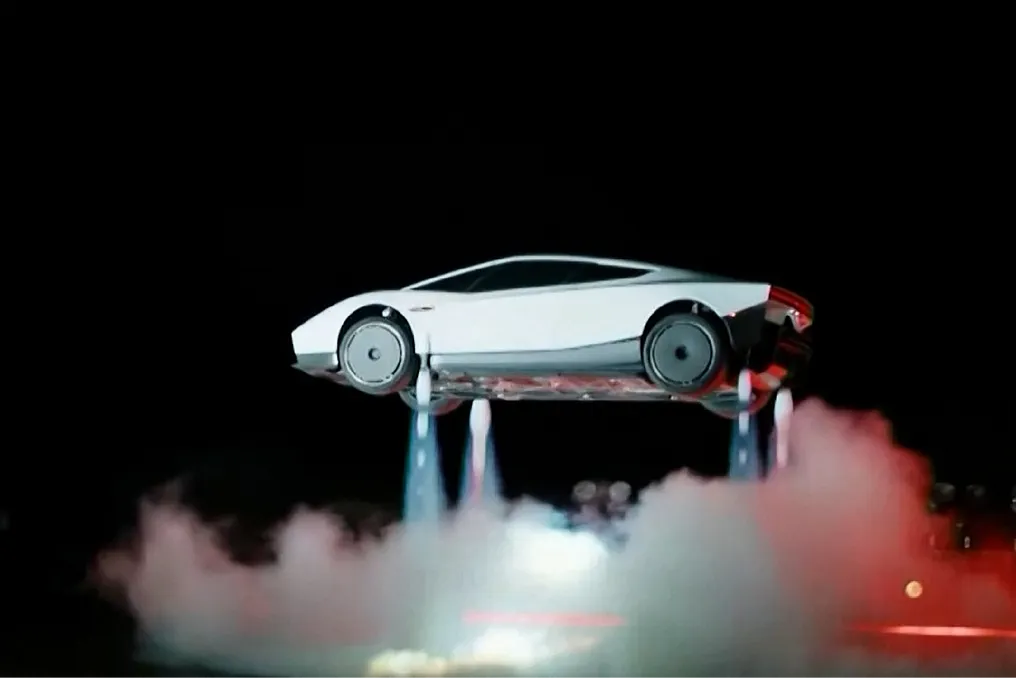
The new Tesla Roadster model attracted the attention of the automotive and technology industries after a demonstration that included short aerial maneuvers. This vehicle, which combines electric vehicle engineering solutions with aerospace technologies, has once again raised the question of the limits of applying such innovations beyond a spectacular show.
The demonstration showcased the use of gas engines developed in collaboration with SpaceX, as well as an intake system that creates lift, allowing the car to drive upside down on a specially designed ramp. Tesla claims that the vehicle can accelerate from zero to 60 miles per hour (96 km/h) in under a second, but its aerial stunts are not sustained flight.
The display impressed Chinese automakers. William Li, founder and CEO of Nio, highly praised the demonstration on social media, writing: 'Amazing! We really don't have this.' Zhang Xiaopeng, Chairman and CEO of XPENG, called it a 'very cool alternative form of flying car,' but also raised questions about flight safety, range, and certification.
Other experts expressed less confidence in the commercial significance of this project. Marcus Brownlee, a technology commentator, questioned the claimed specifications and projected production timelines. Gene Munster, Managing Partner at Deepwater Asset Management and technology analyst, characterized the launch as an 'engineering challenge' with negligible commercial value.
Chinese analysts offered a more balanced assessment. Automotive analyst Mei Sunlin noted that this vehicle could promote the integration of aerospace innovations into the automotive sector. Technology analyst Zhang Junyi emphasized that the successful mass production of such an innovative vehicle would itself be a significant achievement.
Engineering limitations remain. The powertrain depends on stored high-pressure gas, which only provides brief bursts, and the equipment takes up valuable cabin space. The most advanced version is designed for one passenger, and regulatory approval remains an obstacle. Planned production is set for 2028, but final technical specifications and real-world capabilities still need to be demonstrated.
A broader question is whether aerospace technologies can bring practical benefits to future vehicles. Lightweight materials, advanced control systems, and new modes of propulsion open up engineering prospects, but safety, reliability, cost, and regulatory requirements will determine which innovations make it onto regular roads.