
Valmiki Tiger Reserve opens doors for new season; tourists flock to safari on the first day
Read more
Aaj Tak
www.aajtak.in

Valmiki Tiger Reserve opens doors for new season; tourists flock to safari on the first day

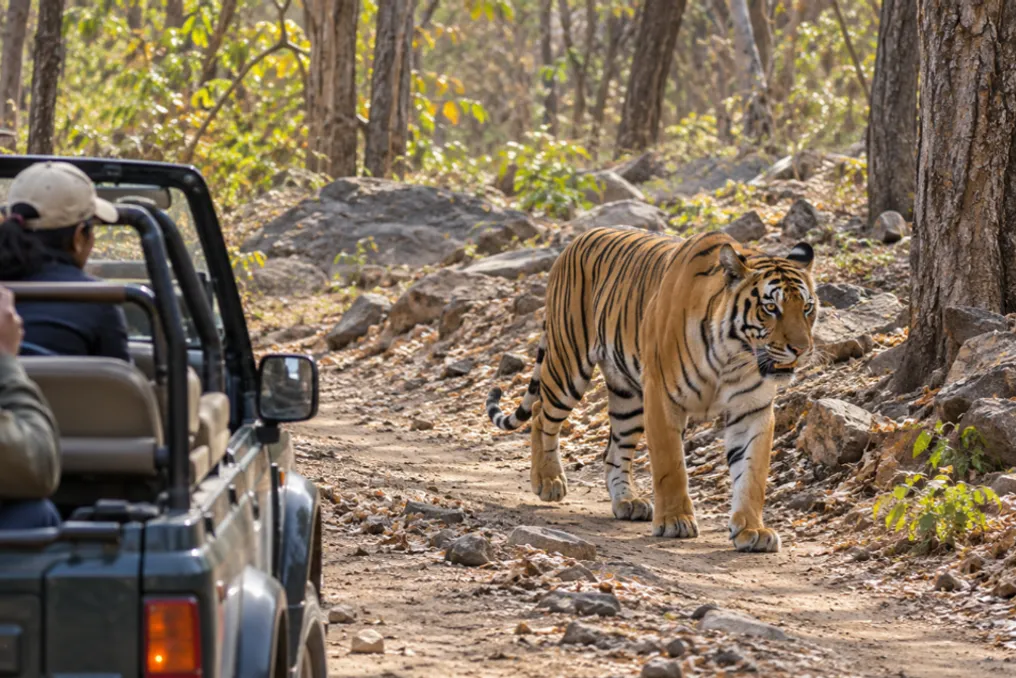
Valmiki Tiger Reserve, located in Bagha, Paschim Champaran district of Bihar, has reopened its gates for safaris in the new season. Following the suspension of safaris during the monsoon period, the new season has begun, giving tourists hope of spotting wild animals such as tigers and leopards in their natural habitat.

The inauguration of the new season was led by the Chief Forest Warden, Arvind Singh, who arrived from Patna. He commenced the event by cutting the ribbon and giving the green light to the safari vehicles.

This season, the forest department has designated four routes for safaris. Each of these routes will allow visitors to explore different parts of the forest and natural landscapes. The first route runs from Madanpur Gateway through Madanpur Devi Stan to Delhi Camp. The second route is laid out from the Valmikinagar tourist center to the hippopotamus conservation center in Gonouli Van Praksetra. The third route includes a trip from Valmikinagar to the tourist centers of Howardhan and Manguraha. The fourth route covers the section from Bhavanipur Naka to Manpura within the Manguraha tourist center. While traveling along these trails, tourists can experience the dense forest, greenery, and the nearby forest zone.

The main attraction of the safari in Valmiki Tiger Reserve is the local wildlife. In addition to tigers and leopards, bears, gaur, deer, sambar, nilgai, wild dogs, and hyenas inhabit the area. There are also numerous species of birds. However, it cannot be guaranteed that any specific animal will be encountered during the safari, as wild animals live in their natural environment, and their appearance depends on their activity, weather, and general conditions.

The growing interest in safaris at Valmiki Tiger Reserve is confirmed by data from the last three years. According to forest department information, the number of visiting tourists has been constantly increasing. In the 2023-24 season, 322,071 tourists visited the reserve. In the 2024-25 season, this figure rose to 480,680. And in the 2025-26 season, the total number of visitors reached 609,159. Thus, over two years, the number of tourists increased by approximately 89 percent. This data indicates that Valmiki Tiger Reserve is strengthening its position as a tourist destination in Bihar.

The forest department also provides accommodation facilities to make visits accessible. Lodging is available in Valmikinagar, Manguraha, and Howardhan. The department's goal is to allow people to take excursions through the forest with minimal cost while simultaneously understanding the principles of environmental protection alongside wildlife. Valmiki Tiger Reserve, which occupies an extensive area in Paschim Champaran, is known for its dense forests, and with the start of the new safari season, tourists can once again view this forest up close.
Similar stories

Tiger Reserve in Chhattisgarh Prepares to Resume Safaris After 40 Years
Read more
thebetterindia.com

Tiger Reserve in Chhattisgarh Prepares to Resume Safaris After 40 Years

Although wildlife enthusiasts could visit tiger reserves across India for nearly 40 years, organized safaris in Indravati, located in Chhattisgarh, remained inaccessible. The reason was not the absence of wildlife, but the danger of traversing the forests.

Indravati, situated in Bijapur district of Bastar, was declared a tiger reserve in 1983. However, due to Maoist insurgent activities and armed conflicts in the region, travel through significant parts of the forest became risky. Even forest officials faced difficulties reaching certain areas for patrolling and wildlife monitoring.

As safety was the primary concern, organized tourism was suspended for almost four decades. The situation is beginning to change as security conditions improve. The Chhattisgarh Forest Department plans to welcome tourists again, setting a target date for resumption on November 1, 2026.

For visitors, this could mean a chance to explore a forest that has long been outside India's tourist routes. Indravati covers an area of 2799 sq km and is one of the largest tiger reserves in Central India. Its forests are a sanctuary for tigers, leopards, sloth bears, gaur, wild dogs, and deer. Furthermore, it is an important habitat for the endangered wild aquatic buffalo, which is the state animal of Chhattisgarh.

According to the Forest Department data, there are six tigers in the reserve, although a new population assessment is currently underway. With improved security, forest staff can now patrol and study territories that were previously hard to access. Recent studies have revealed something noteworthy.

In 2025, researchers studying the Indravati River, which flows along the reserve's border with Maharashtra, discovered an animal mentioned by local residents. They called it 'neer billi,' meaning 'water cat.' After receiving information from local communities, researchers inspected sections of the river. One morning in February, they spotted ten smooth-coated otters feeding on fish.

When the animals noticed the researchers, one of them sounded an alarm, and the group quickly retreated into the water. This discovery provided the first photographic evidence of these otters in the reserve in about 25 years. Smooth-coated otters are classified as a vulnerable species, and their presence offers encouraging signs for the river ecosystem. Nevertheless, researchers also found signs of hunting and traps, highlighting the need to protect these animals and their habitat.

Since tourism is now being planned, protecting this wildlife becomes even more crucial. The Forest Department is proceeding cautiously: instead of opening the entire reserve, officials are preparing two or three designated safari spots. The process of procuring vehicles and assessing proposed routes from a wildlife and safety perspective is ongoing. The number of permitted tourists and vehicles will be limited depending on how much impact the forest can safely withstand. Some areas may remain closed to visitors.

The resumption of tourism could also open up new opportunities for families living around Indravati. Officials are exploring ways to involve the local population as guides, drivers, and hospitality service providers, and are also considering options for staying in local homes and selling local produce. For communities that have lived near these forests for generations, tourism could become an additional source of income, provided these plans materialize into real opportunities on the ground.

After almost 40 years, Indravati is preparing to welcome a new type of visitor. While spotting a tiger or a rare otter can be exciting, the true success of this revival will lie in something greater: ensuring that local families benefit while the animals continue to have a safe home, even long after the first safari vehicles arrive.

Popular