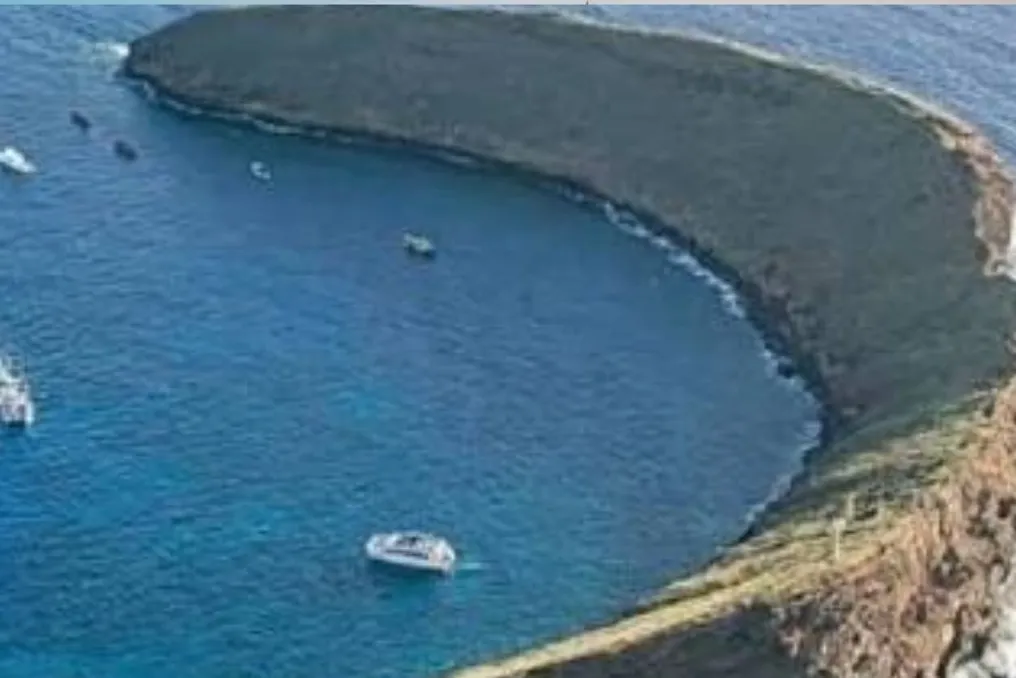
When people imagine America, images of New York skyscrapers, Wall Street's financial race, or Washington's political corridors often come to mind. The common perception is that America is characterized by gleaming roads, highways, and the ability to obtain anything via mobile order. However, this only reflects the luxurious life of the continental United States. There is also a completely different, remote image of America, whose reality differs drastically from life in these major metropolises.
According to USGS data, the territory of America includes 18,617 islands. These islands stretch from the warm waters of the Pacific Ocean to the harsh Arctic, and life here unfolds amidst natural challenges and maritime tranquility. While all amenities are available at the click of a finger on the US mainland, on these remote islands, daily life depends on sea supplies and weather conditions.
For instance, in places like the Aleutian Islands in Alaska or small islands in the Pacific Ocean, there are no expressways or six-lane roads for delivering food and essential goods. Fresh vegetables, milk, medicine, and fuel are delivered by ship or small aircraft. If a cyclone or dense fog occurs at sea, supplies to the islands can be interrupted for weeks, leading to empty supermarket shelves. Furthermore, due to high transportation costs, items such as bread or milk can cost two to three times more on these islands than on the mainland.
Securing water and electricity on these islands is also a serious challenge. Many small islands do not have access to a centralized power grid, so energy is obtained using diesel generators, solar panels, or wind turbines. For drinking water, residents rely on rainwater harvesting or seawater desalination plants.
There is another significant contrast in the lives of the island residents. Despite holding an American passport, they do not have the right to vote in presidential elections. While citizens of the mainland directly participate in US presidential elections, the political status of the residents of American islands is unique. People born in regions such as Puerto Rico, Guam, U.S. Virgin Islands, and Northern Mariana Islands are legal U.S. citizens and serve in the U.S. military. Nevertheless, according to the provisions of the U.S. Constitution, until these citizens permanently settle in a mainland state, they do not have the right to vote in US presidential elections. Moreover, their representatives in the U.S. Congress do not possess full voting rights when enacting laws.
Despite all the logistical difficulties, America views these 18,617 islands not merely as administrative responsibility but as the foundation of its status as a global superpower. Thanks to these scattered islands, the U.S. has the largest Exclusive Economic Zone (EEZ) in the world, covering about 11.3 million square kilometers, which gives it a monopoly on vast reserves of oil, gas, minerals, and fish. These islands are also home to the most powerful U.S. naval and air bases in the Pacific, such as Guam and Hawaii.
While the brilliance of the economy and politics of New York and Washington demonstrates the strength of America, these 18,617 islands scattered across the Pacific and Atlantic Oceans are home to a resilient population that maintains its unique way of life and identity despite the challenges posed by nature.
It is worth noting that although the figure of 18 thousand islands seems enormous, there are many countries with a large number of islands on the planet. Scandinavian countries lead among them: Sweden has about 267,000 islands, and Norway has about 239,000. Finland ranks third with 178,947 islands, and Canada has 52,455 islands. The formation of these island systems is linked to the last Ice Age, when the movement and melting of glaciers led to the separation of continental rocks into millions of small islands.
It is also worth mentioning that India has 1,382 islands. These include 572 islands in the Andaman and Nicobar Islands in the Bay of Bengal and 36 islands in the Lakshadweep Islands in the Arabian Sea. The remaining islands are located along maritime borders, coastal areas, and in the vicinity of large rivers, such as Majuli in Assam. Although most of these 1,382 islands are uninhabited, they are included in environmental and tribal protection zones. These islands, situated along India's extensive coastline of about 7,517 kilometers, are strategically important for the country's security and provide it with a vast exclusive economic zone of about 2.37 million square kilometers.