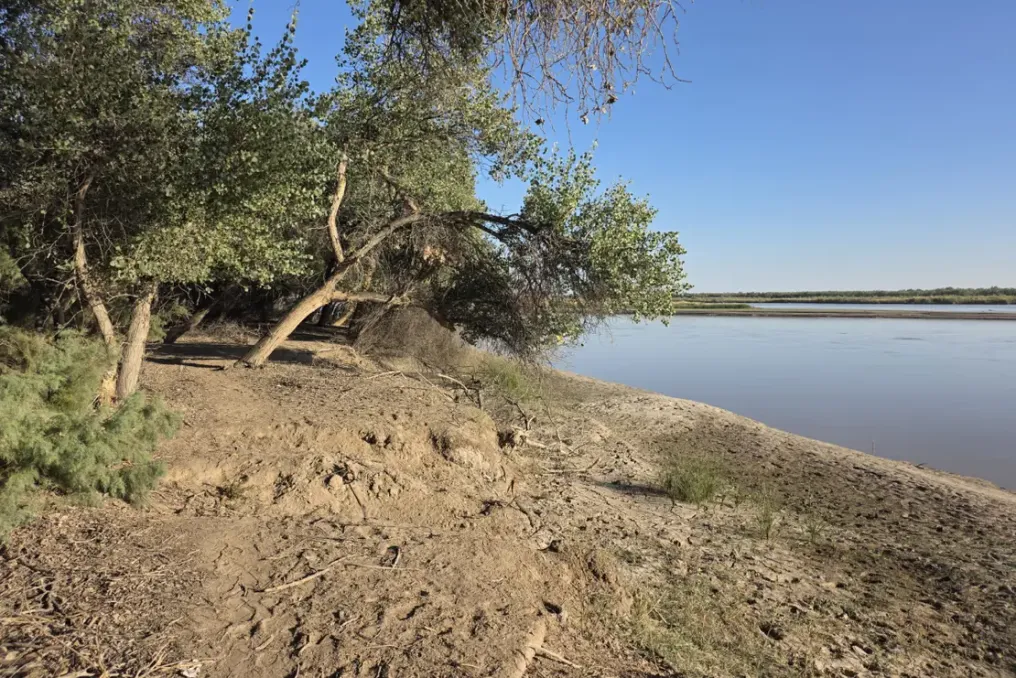
The International Union for Conservation of Nature (IUCN) has completed an assessment of the potential for land and ecosystem restoration in the Kashkadarya and Khorezm regions, as well as in the Karakalpakstan Republic.
The results obtained will allow for the identification of priority areas and the development of practical steps for landscape restoration, taking into account ecological conditions and the needs of local residents.
This work was conducted as part of the FOLUR-Uzbekistan project, which aims to transform food systems, improve land use, and restore degraded lands. The project is funded by the Global Environment Facility (GEF) and implemented by the Food and Agriculture Organization of the United Nations (FAO) together with national institutions and international partners.
For the assessment, IUCN used the Restoration Opportunities Assessment Methodology (ROAM), which was developed in collaboration with the World Resources Institute (WRI). This methodology combines spatial and scientific analysis, field observations, economic factors, and local knowledge.
The study identified several problems affecting the lands and ecosystems, including soil erosion, pasture degradation, water scarcity, pressure on protected areas and biodiversity, as well as risks to rural livelihoods.
During the assessment, specialists conducted field studies, regional seminars, and consultations with farmers, herders, local residents, forestry and protected area staff, government representatives, and other stakeholders.
The participation of local communities helped identify areas requiring special attention, formulate restoration proposals, and verify the study's findings based on residents' practical experience.
The final ROAM report will serve as a basis for developing and implementing specific land restoration projects and nature-based solutions. Separate infographics were also prepared for each of the three regions, describing the main environmental problems, potential restoration measures, and expected outcomes.
These materials are intended to support further discussions among government bodies, project partners, protected area managers, local communities, and potential private sector participants.
It is expected that land restoration will strengthen ecosystems, increase the resilience of agricultural landscapes, and support local livelihoods amid water scarcity and climate change.