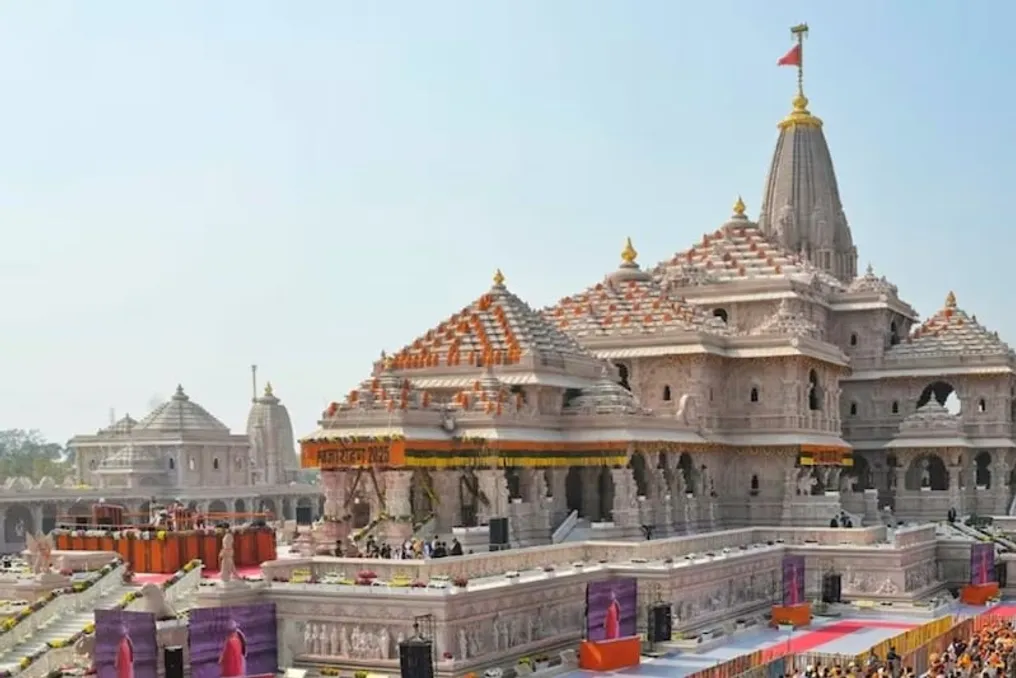
Number of VIP passes for visiting Ramlalla at Shri Ram Janmabhoomi Temple in Ayodhya increased from 1800 to 3500 per day
Read more
Aaj Tak
www.aajtak.in

Number of VIP passes for visiting Ramlalla at Shri Ram Janmabhoomi Temple in Ayodhya increased from 1800 to 3500 per day

The number of VIP passes for visiting Ramlalla at the Shri Ram Janmabhoomi temple, located in Ramnagri, Ayodhya, has been increased. The Shri Ram Janmabhoomi Tirtha Kshetra Trust has raised the daily issuance of VIP passes from 1800 to 3500. This means that approximately twice as many VIP passes will now be issued compared to the previous period. The new system came into effect on Saturday.

Despite the increase in the number of passes, the process of issuing VIP passes remains unchanged. The Trust considers this decision important in light of the growing number of celebrities arriving in Ayodhya to have darshan of Ramlalla, including film stars and prominent political figures. It is expected that the increase in passes will help ensure the smooth operation of the VIP visitation system.

Indradev Tiwari, head of organizational affairs at the Shri Ram Janmabhoomi Tirtha Kshetra Trust, confirmed the increase in VIP passes. He explained that this decision was made considering the increasing flow of pilgrims arriving in Ayodhya. The new scheme was implemented immediately.

Currently, 3500 VIP passes will be issued daily, while the existing issuance procedure remains the same. Previously, 1800 VIP passes were issued daily. Following this change, it is expected that the VIP visitation system for celebrities coming to Ayodhya for darshan of Ramlalla will become more organized.

Similar stories

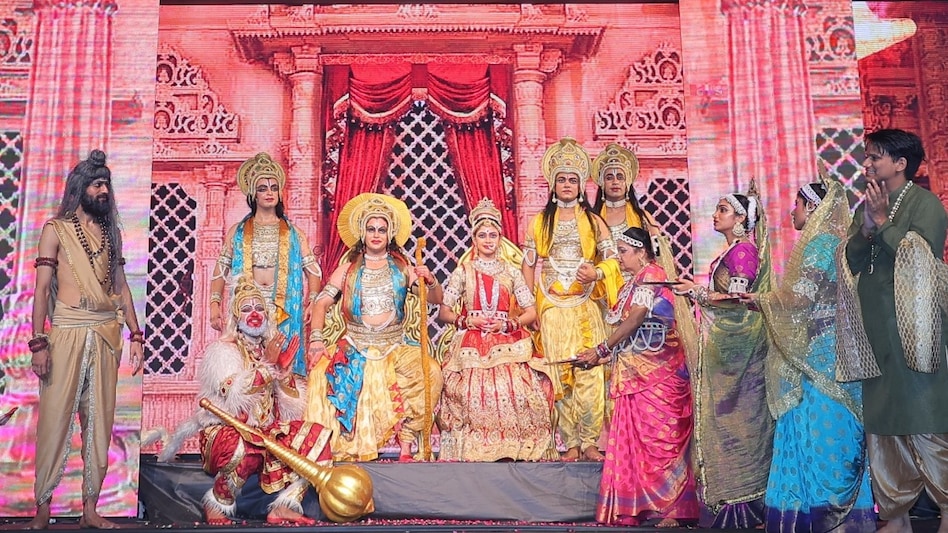
Theatrical production 'Broadway Ramlila' presents the Ramayana using 3D effects and a large cast
Read more
www.aajtak.in

Theatrical production 'Broadway Ramlila' presents the Ramayana using 3D effects and a large cast

During the sacred festival of Navratri, the Ramlila performances continue across the country. In addition to traditional presentations, audiences are captivated by theatrical productions and dance dramas based on the story of Rama. These performances differ from classical Ramlilas due to their greater classical orientation.

One such large-scale production is taking place in the Pitampura area of the capital, presenting Rama in an entirely new, grand format. This 'Broadway Ramlila' is not just a ten-day cycle of narratives, but an extended dramatic production that uses the life and story of Shri Rama as its foundation. It explores the main aspects of the Ramakhyana, analyzing not only the victory of good over evil through Ravana's defeat but also investigating the characters and personal qualities of the main heroes of the Ramayana based on their circumstances and situations.

In this regard, the theme for this 'Broadway Ramlila' in 2026 has been chosen as 'The Study of Characters.' Within this concept, special attention is paid to the personality of the main characters of the Ramayana, their feelings, and the significant changes occurring in their lives.

This production, organized by the Aryan Heritage Foundation in Pitampura, began on October 14th and will conclude on October 19th. It features over one hundred actors. The three-hour performance demonstrates the entire story of Lord Rama using modern technology, music, dance, and visual effects, creating a unique level of spectacle.

Shashidran Nair served as the director, who is an experienced choreographer, dance director, and Kathakali artist in Indian theatre. He is known for specializing in staging mythological stories in the form of dance drama. The production pays special attention to the emotional state of the characters, from Kaikeyi to Dasharatha. The story of Lord Rama's exile is presented not only as a religious episode but also through the experiences of the associated heroes: Kaikeyi's transformation from a loving wife to one demanding Rama's exile, the turmoil of Maharaja Dasharatha as a father, and Lord Rama's acceptance of the exile, leaving the kingdom.

Although people are familiar with the story of the Ramayana, this time an effort was made so that the audience could understand not only the plot itself but also the circumstances behind the characters' decisions and experiences.

Key features of the 'Broadway Ramlila' include its luxurious set design and the application of advanced technologies. Large sets, 3D visual design, special lighting, dance, music, and visual effects are used to bring scenes from Ayodhya, the forest, and Lanka to life. Special attention is paid to the actors' costumes and stage decoration. The goal of the production is to provide the audience with an experience comparable to watching a movie, right in the live theater hall.

Saurbh Raj Jain also participates in the production, whose voices narrate the story of Rama; he is known for his role as Krishna in the Mahabharata series. He plays the role of the grandfather telling the story of Rama to his grandson Lava and Kusha, thereby recreating the tradition of passing down stories from generation to generation.

Twenty original musical compositions were prepared for this performance, created by Chandra Kamal and Bharat Kamal. They feature the voices of renowned singers, including Udit Narayan and Kailash Kher. The main episodes of the Ramayana are conveyed through a combination of music, dance, and acting.

According to the Chairman of the Foundation, Rajendra Mittal, 'Broadway Ramlila' has played an important role in popularizing the idea of presenting the entire story of the Ramayana in one evening. He noted that fitting such an extensive narrative into three hours is a huge task. The main goal is to convey the message of the Ramayana to the widest possible audience. At the same time, adherence to the original text written by Maharishi Valmiki is maintained. After starting in 2015, the 'Broadway Ramlila' format has continuously expanded, and in 2020, its performances became available in cinemas.
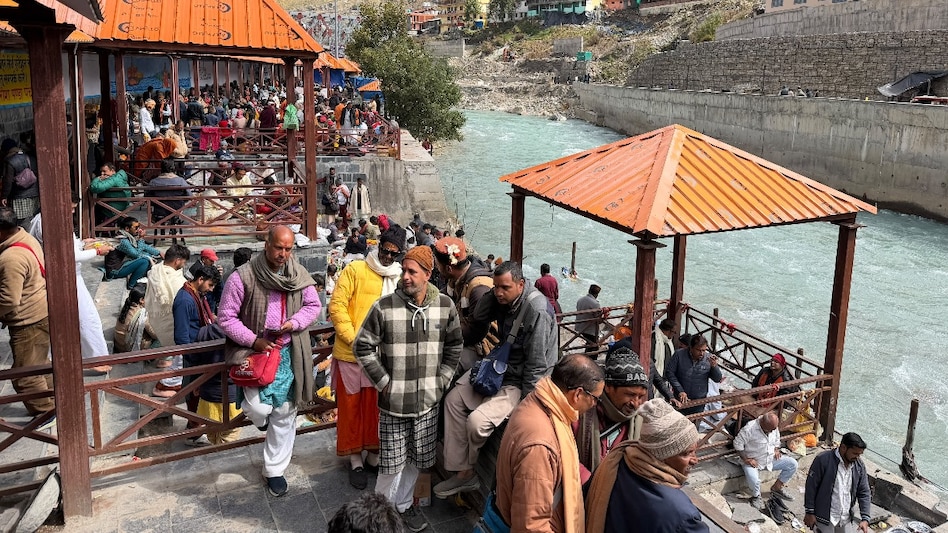
Large crowd of pilgrims gathered in Badrinath for ancestor liberation; hundreds of thousands visited
Read more
www.aajtak.in

Large crowd of pilgrims gathered in Badrinath for ancestor liberation; hundreds of thousands visited

In the renowned temple of Badrinath, located in the state of Uttarakhand, a unique combination of reverence and faith was observed during the Sarvapitri Amavasya festival. Pilgrims from all corners of the country arrived at Tirtrajya Brahmakapal, striving to find peace and salvation for the souls of their ancestors. Since early Saturday morning, a huge crowd gathered here, performing pindadan and tarpan.

Of particular note is the fact that 28,094 pilgrims visited Badrinath Dham on Pitru Amavasya. Such a large number of devotees is considered significant in terms of religious tourism for the current season.

In the Tirtrajya Brahmakapal temple, located in Badrinath Dham, religious rituals began early in the morning in observance of Sarvapitri Amavasya. Pilgrims performed ablutions in the sacred waters of the Alaknanda River, and then conducted pindadan and tarpan according to established rituals for their ancestors. Temple priests and acharyas concluded the ancestral rituals according to religious traditions.

According to religious beliefs, pindadan in Brahmakapal holds special significance. Pilgrims arrive from within the country and from abroad, wishing to ensure peace and salvation for the souls of their ancestors. The Dharmadhikari of Badrinath Dham, Samvar Semwal, also spoke about the importance of Sarvapitri Amavasya, praying to Lord Narayana that the ancestors of the pilgrims performing Sharaddha and tarpan for their forebears would attain a place in God's abode.

According to the Tirth Purihots of Brahmakapal, Garv Sati, a large number of pilgrims arrived in Badrinath Dham this year during Pitrupaksha. The crowd of pilgrims was also dense in Brahmakapal since the morning of Sarvapitri Amavasya.

This time, a record number of pilgrims was registered in Badrinath Dham on Pitru Amavasya. On October 10, 2026, 28,094 pilgrims came here. Usually, such a large number of pilgrims is observed during the tourist season of May and June.

As of October 10, the total number of pilgrims who visited Badrinath Dham in this tourist season reached 19 million 85 thousand 318 people. Furthermore, only during Pitrupaksha did approximately two hundred thousand pilgrims visit Badrinath Dham. This sustained the vibrancy of travel alongside religious activities at the temple.

On the other hand, the gates of the sacred Sikh shrine Sri Hemkund Sahib were closed for winter on October 10, thus concluding the annual pilgrimage season. On the day the gates closed, 6,123 pilgrims paid homage. By the end of the season, a total of 3 million 90 thousand 696 pilgrims had visited.

Despite difficult snowy roads and unfavorable weather conditions, the faith of the pilgrims who reached Hemkund Sahib did not weaken. Meanwhile, the pilgrimage to Badrinath Dham continues. The large gathering of people in Brahmakapal during Sarvapitri Amavasya and the high number of pilgrims in both main shrines once again demonstrated the deep faith of people in the religious tourism of Uttarakhand.

Popular