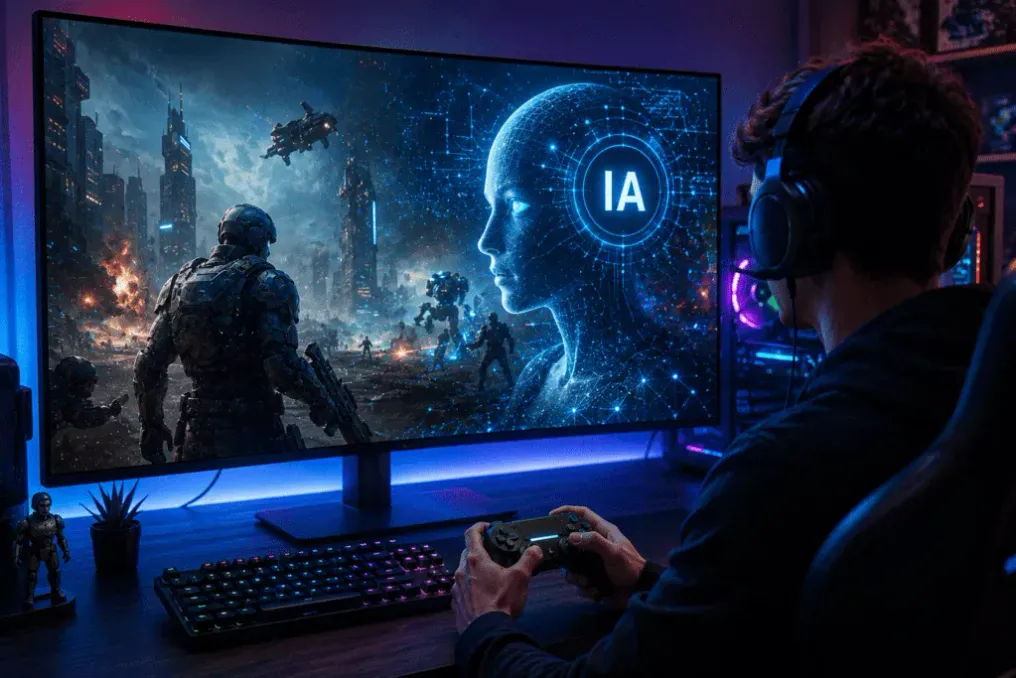
Generative artificial intelligence is becoming increasingly relevant in the Japanese gaming industry. According to preliminary data released by the Computer Entertainment Supplier’s Association (CESA), 85.8% of surveyed professionals confirmed the use of generative AI tools in their development activities.
These figures were presented during the Tokyo Game Show 2026 and constitute a preview of the 2026 Video Game Industry Report, the full version of which will be released in December. The survey collected approximately 1,349 valid responses from professionals affiliated with industry companies, including names such as Capcom, Sega, Level-5, and Konami.
The research points to a notable integration of this technology into work routines. Among participants, 63% reported using generative AI daily, while another 22.8% use it sporadically.
Comparing with a study conducted by CESA in 2025, which identified an adoption rate of 51% among 54 Japanese companies surveyed, a growth trend is observed, although researchers warn that differences in samples and audiences prevent a direct percentage comparison of the evolution.
The main benefits highlighted by professionals include increased productivity, reduced time needed to create games, and lower production costs.
The preview of the 2026 report does not yet specify which tasks are the focus of the technology's use. However, the previous 2025 survey provided references regarding its applications, indicating that the most common uses involved creating visual elements and images, generating text and narrative content, in addition to assisting with programming.
At that time, 32% of participating companies also mentioned employing artificial intelligence in the development of internal graphics engines. The implementation of these tools can help automate certain functions and streamline production phases, but their final results remain dependent on human evaluation and oversight.
Despite the expansion, the use of generative AI raises concerns related to intellectual property and the quality of the produced material. According to the investigation, the most cited safety measure by participants was the need for human review, correction, and supervision of AI-generated content. Other precautions adopted include designating tools permitted by corporations and limiting the direct use of content without professional intervention.
Tsutomu Masuda, CEO of CESA, commented that the findings demonstrate widespread and constant adoption of artificial intelligence in development environments. He also emphasized the importance of harmonizing technological progress with safeguarding intellectual property rights and preserving people-focused creative processes.
The full report, scheduled for December 2026, should offer more details on how Japanese professionals are integrating generative AI into game manufacturing.