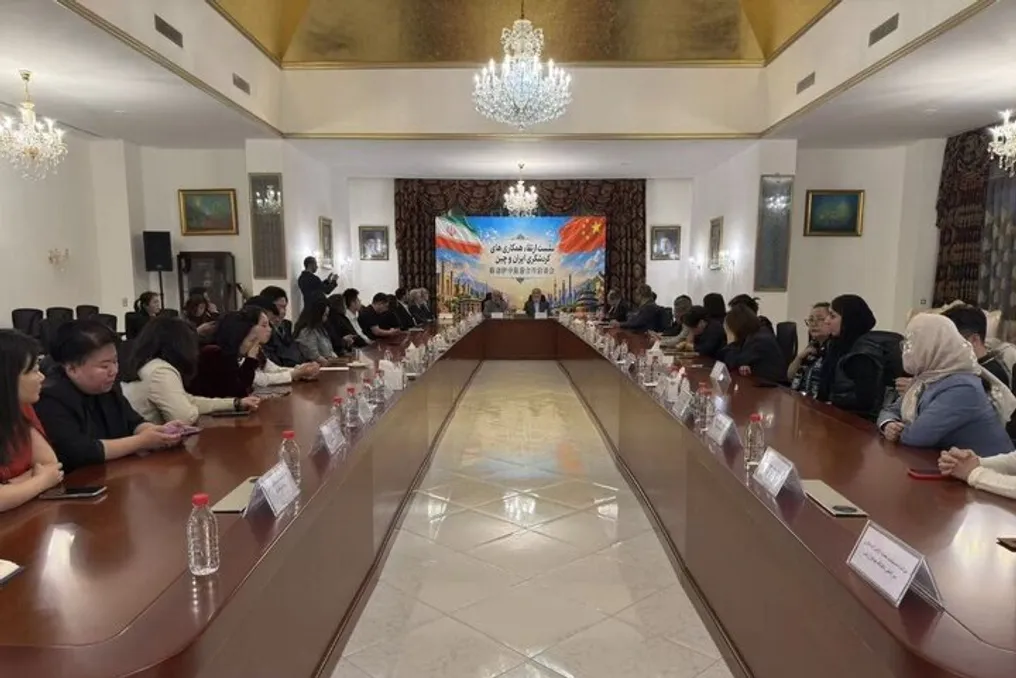
Iran has put forward five practical measures aimed at increasing the flow of Chinese tourists. These proposals include creating joint tourism packages, familiarization tours, and direct interaction between travel agencies, as the country seeks to transform long-standing cultural ties with China into tangible tourism business.
These initiatives were presented in a statement by Iran's Minister of Cultural Heritage, Tourism and Handicrafts, Seyed Reza Salehi-Amiri, during a specialized meeting dedicated to strengthening tourism cooperation between Iran and China, which took place in Beijing on Friday.
Salehi-Amiri emphasized that Iran views China as one of its most important tourism partners, noting that the success of bilateral cooperation will depend on moving from discussions to concrete agreements and actual tourist exchange.
The meeting, organized by the Iranian Embassy in Beijing, gathered representatives and officials from the tourism companies of both countries to discuss obstacles to bilateral travel, the development of joint tourism products, and the expansion of interaction between tour operators.
On the occasion of the 55th anniversary of diplomatic relations between Iran and China, Salehi-Amiri described this event as an opportunity to advance cooperation from dialogue to implementation. He proposed forming a joint working group of Iranian and Chinese travel agencies and tour operators, developing at least three tourism packages specifically adapted for the Chinese market, and organizing familiarization tours of Iran for executives and journalists from Chinese travel agencies.
Other suggestions concerned providing services tailored to the needs of Chinese visitors, such as Chinese-speaking guides and simplified payment options, as well as establishing measurable goals and clear timelines for tourism exchange.
Salehi-Amiri stated in his message that the meeting's outcomes should not be limited to exchanging business cards, calling for the development of an action plan, the creation of tourism packages, the signing of contracts, and the actual dispatch of tourists.
Referring to the historical Silk Road that connected the two countries through trade and cultural exchange, he noted that tourism can breathe new life into this ancient route. He stressed: 'The Silk Road was once supported by caravans, and today it will be supported by the movement of tourists.'
Iran's Ambassador to China, Abdolreza Rahmani Fazli, also highlighted the need to remove obstacles, reorganize cooperation mechanisms, and increase China's share in the Iranian tourism market. He described the Silk Road not only as a commercial route but also as a historical space that facilitated the exchange of culture, art, music, and traditions. He added that modern technologies open up new opportunities for strengthening ties between peoples.
Rahmani Fazli also pointed to China's potential role in Iran's post-war reconstruction following the recent conflict in the country and stated that both nations strive for peace and security in West Asia.
Chinese tourism representatives characterized Iran as a destination with significant cultural and economic potential, expressing interest in expanding travel between the two countries. They also highlighted several issues, including the lack of an Iranian tourism promotion office in Beijing, flight disruptions after the war, and limited opportunities for familiarization tours.
Their recommendations included establishing an Iranian representation in Beijing, organizing promotional events for Chinese media and bloggers, conducting familiarization trips, developing customized tourism packages, and ensuring more stable air connections. Participants also suggested leveraging shared cultural interests, such as tea culture, to promote tourism cooperation.
During the meeting, Rouzbeh Karduni, the minister's advisor and CEO of the ministerial apparatus, announced that Iran could host a group of representatives from the Chinese tourism industry in the near future. Such a visit could help Chinese tour operators personally assess Iran's attractions and explore opportunities for creating joint tourism products.