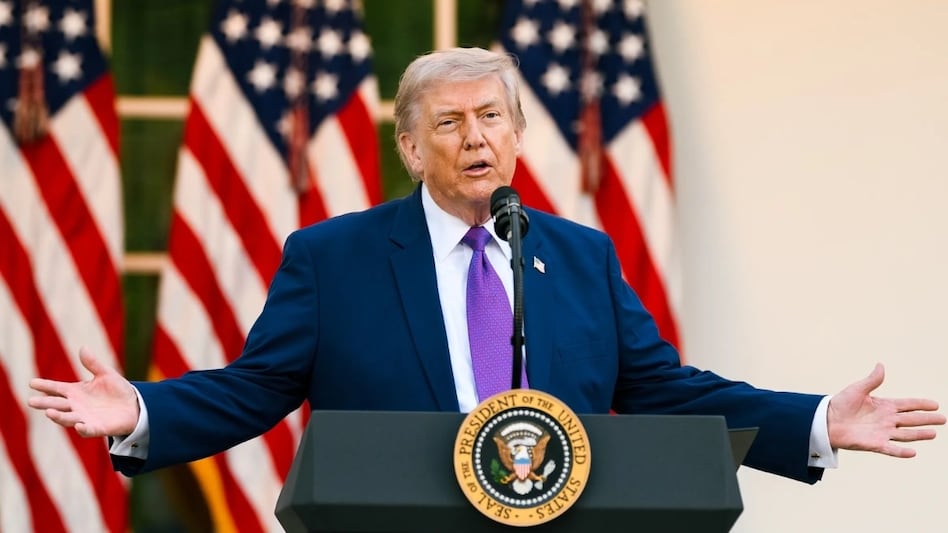
On Saturday, Donald Trump granted tariff exemptions for countries purchasing Russian oil. Countries such as India and China were given a temporary waiver of the 100 percent tariff. Initially, there was discussion about imposing a 500 percent tariff, which was then gradually reduced to a 0 percent tariff rule.
Some experts believe that this tariff waiver occurred at a time when the US itself had to purchase diesel fuel from Russia as part of a major deal. Under these circumstances, the question arises as to how the US can apply tariffs to other countries. Furthermore, negotiations continue between India and the US, and Washington is likely avoiding measures that could worsen the dialogue with India.
Experts also suggest that similar steps are being taken regarding China, leading Trump to decide to suspend the introduction of tariffs in the interest of the US. However, this does not mean that tariffs will never be imposed against buyers of Russian oil, as the US reserves the right to apply them at any time.
As the war between Russia and Ukraine continues, the US claims that financial support for Russia is provided through the sale of its oil, which contributes to prolonging the conflict. In this regard, the US proposed introducing tariffs for countries purchasing Russian oil. Initially, it was proposed to impose a tariff of up to 500% on the import of Russian oil and gas, with the aim of effectively denying these countries access to the American market.
In January 2026, Trump supported a bill promoted by the late Republican Senator Lindsey Graham. Graham argued that such a threat would allow the US president to pressure India, China, and Brazil into reducing their purchases of discounted crude Russian oil.
However, the initial plan with a 500% tariff was not maintained. A later version of the law limited the maximum tariff level to 100% for major buyers of Russian energy. The American president could use tariffs on goods imported from countries buying Russian oil and gas to encourage them to change their procurement model, although the potential rate was significantly lower than the previous proposal.
Graham's law, signed by Trump on September 18, 2026, authorized tariffs of up to 100% on the five largest global importers of Russian energy. It also expanded sanctions against Russia and provided measures against organizations attempting to circumvent existing restrictions. This change was significant for India, as such a large-scale tariff could affect not only crude oil imports but also bilateral trade, complicating negotiations and putting pressure on Indian goods entering the US.
The next change occurred on October 17, when Trump utilized the exemption provision within the Graham Act. His executive order suspended the application of restrictions, boundaries, and duties under the law, citing US national interests. This order did not repeal the law nor did it permanently deprive the president of the right to use it; instead, it temporarily suspended its effect, leaving him the option to reinstate them later.