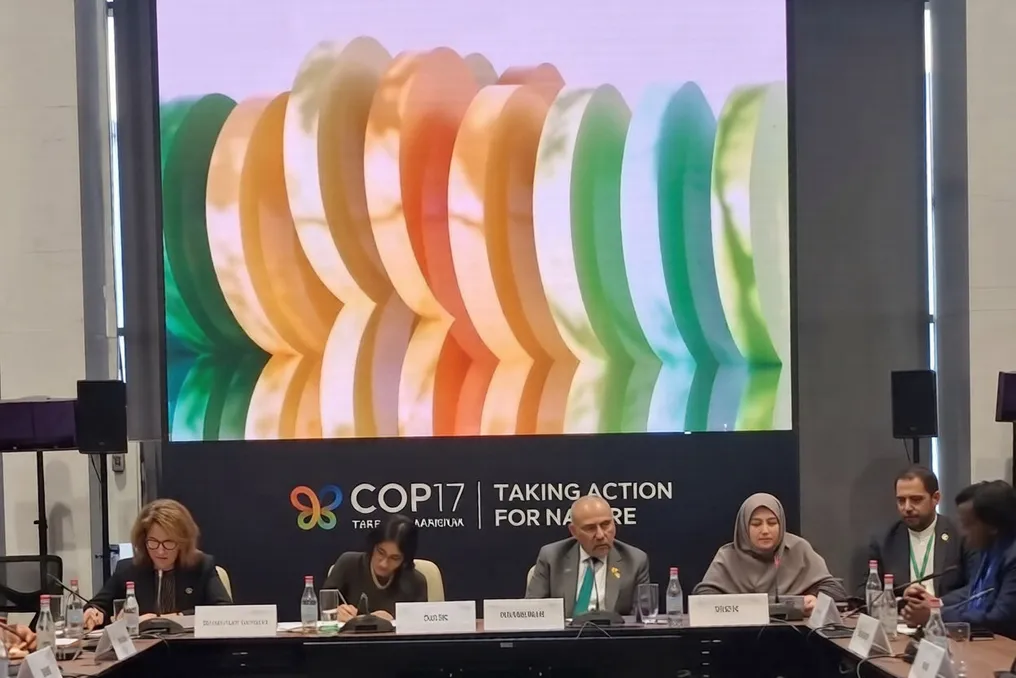
Shina Ansari, head of the Department of Environment, stated that environmental diplomacy can serve as a tool for peace diplomacy, and the relationship between biodiversity, peace, and security should be viewed as bilateral.
Speaking on Friday at a specialized session titled 'Biodiversity and Peace: Protecting the Environment During Armed Conflicts' at the 17th Conference of the Parties to the Convention on Biological Diversity (COP17) in Yerevan, Ansari emphasized that the link between biodiversity and peace is not merely an ethical or political issue, but a fundamental problem in environmental management, international law, and human security.
According to the Convention on Biological Diversity, the main causes of biodiversity loss include land-use change, habitat destruction, pollution, unsustainable exploitation of natural resources, and climate change.
However, she said there is another factor that deserves much more attention in this formula: the disruption of peace and outbreaks of armed conflict.
War can simultaneously provoke numerous factors leading to biodiversity loss with destructive intensity. Its consequences range from direct habitat destruction and extensive fires to soil and water contamination, release of hazardous substances, displacement of people, disruption of protected area management, and weakening of national capacities for nature monitoring and protection.
Ansari noted that Iran speaks about these realities not only theoretically but also based on its own experience, as the country has witnessed the consequences of such circumstances in recent years.
During the 12-day war in 2025, several protected areas in Iran were affected by attacks and the consequences of hostilities. It is estimated that 13 protected areas and thousands of hectares of natural land suffered damage, especially in the Zagros Mountains region.
Nevertheless, she stressed that the real scale of the damage goes far beyond the number of burned or destroyed hectares.
The ecological vulnerability of the Persian Gulf was once again exposed during what Ansari called the recent aggressive war by the United States and Israel against Iran. Damage to oil and gas facilities, fires, and pollutant emissions raised concerns about the risks of ecosystem contamination in the region.
The Persian Gulf is a semi-enclosed, shallow, and extremely environmentally sensitive body of water. Its coral reefs, mangrove forests, coastal habitats, and rich marine biodiversity have significant ecological value. These ecosystems are also directly linked to food security and the livelihoods of millions of people across the region.
Under such conditions, in Ansari's view, no pollution incident can be considered merely a local problem. Pollutants can travel through ocean currents, enter the food chain, and affect habitats far from the original source of pollution.
From this perspective, she stated that condemning acts of aggression and holding perpetrators accountable must go beyond traditional measures of international peace and security.
Consequently, the assessment of the consequences of armed conflicts must adopt an approach that independently, scientifically, and long-term considers environmental damage. Such assessments must go beyond physical destruction, encompassing biodiversity loss, habitat degradation, damage to ecosystem services, soil and water pollution, and harm to genetic resources.
She added that the international community must create more effective mechanisms for monitoring, documenting, assessing, and compensating for environmental damage caused by armed conflicts.
Countries in West Asia and Southwest Asia face growing environmental pressure, including climate change, water scarcity, desertification, depletion of natural resources, and increasing stress on ecosystems, while simultaneously dealing with constant security crises.
In these circumstances, war can exacerbate environmental crises and increase the vulnerability of both communities and ecosystems.
Ansari concluded: 'Thus, the relationship between biodiversity, peace, and security must be understood as a bilateral process. Peace is necessary for nature, and effective and responsible conservation of nature, in turn, can contribute to strengthening peace.'
Cooperation on shared rivers, wetlands, seas, migratory species, and genetic resources can create valuable opportunities for dialogue, trust-building, and closer cooperation between countries.
'I believe that it is at this point that environmental diplomacy can become a tool for peace diplomacy,' she said. 'Peace is more than the absence of war; it is a prerequisite for life. And conserving biodiversity means conserving life itself.'