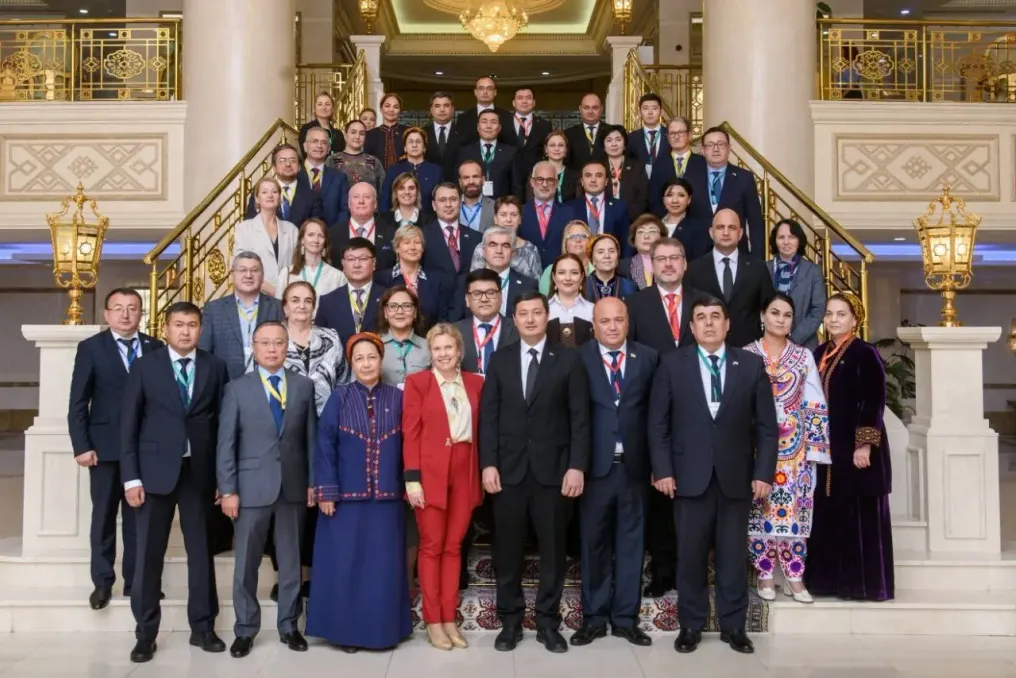
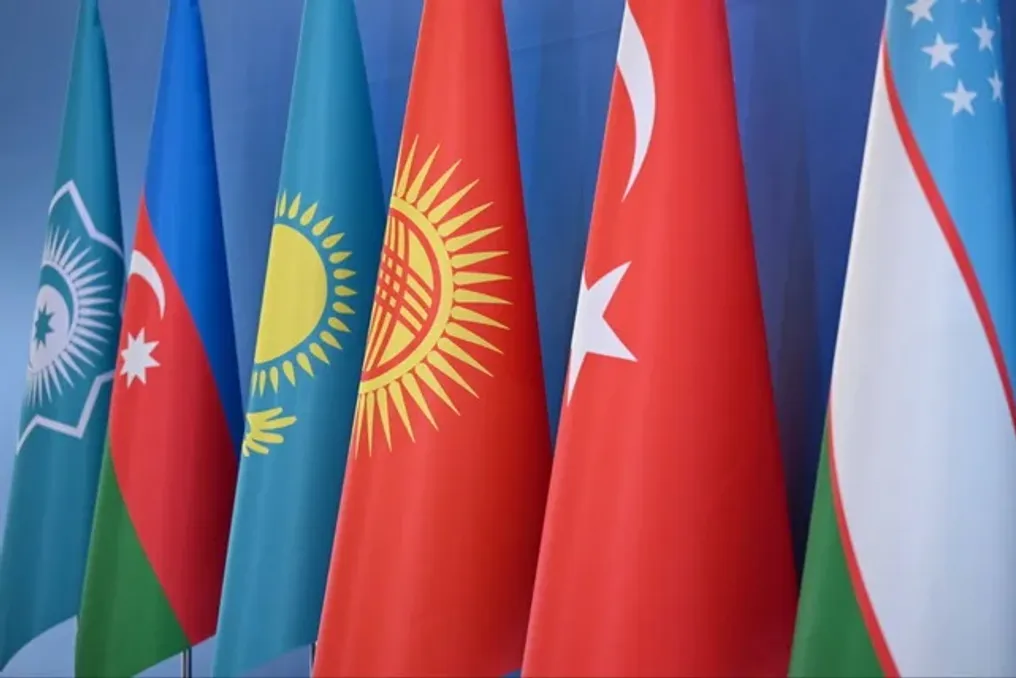
The twelfth meeting of the heads of customs services of the member states of the Organization of Turkic States (OTS) was held in Bishkek. Uzbekistan participated in the event with a delegation led by the Chairman of the Customs Committee, Akmalhodjoy Mavlonov.
Participants discussed several important areas, including simplifying trade and transit procedures, digitizing customs administration, and developing transport and logistics links.
Particular attention was paid to the implementation of the Agreement on the Establishment of a Simplified Customs Corridor, which was signed by the governments of OTS member states in Samarkand in November 2022. The parties agreed to continue exchanging electronic information between customs administrations and work on fulfilling the technical requirements of this agreement.
Procedures necessary for launching a pilot project between Uzbekistan and Azerbaijan have been completed, and electronic data exchange between these two countries is already operational. Furthermore, participants confirmed the full implementation of the Action Plan for introducing eTIR procedures, signed in Baku in 2025. This initiative is designed to increase the efficiency of international freight transport in the OTS region and simplify transit.
The Uzbek delegation presented a new concept for the Single Window system, developed to increase transport volumes and reduce time and financial costs for participants in foreign economic activities. Issues of improving customs control, strengthening risk management, and enhancing the capabilities of customs laboratories were also on the agenda.
The Customs Committee of Uzbekistan expressed its readiness to host an experience exchange seminar for representatives of OTS customs services at the Central Customs Laboratory and to organize a webinar on risk management.
Significant attention was given to the mutual recognition of national Authorized Economic Operator (AEO) programs. Uzbekistan has already concluded a relevant agreement with Azerbaijan, while negotiations with Kyrgyzstan, Turkey, and Kazakhstan are ongoing. Kazakhstan and Turkey are also working on the mutual recognition of their programs.
To advance this initiative, participants proposed developing an OTS Memorandum of Understanding on AEO programs, which is planned to be considered at the next meeting.
Additionally, the parties agreed to prepare an Action Plan for customs cooperation for the period 2027–2031 by the end of 2026. The next meeting of the heads of customs services of the OTS member states will take place in Turkey in 2027.
Parallel to the multilateral meeting, Mavlonov conducted bilateral talks with Shahin Bagirov, Chairman of the State Customs Committee of Azerbaijan; Jandos Dusembiev, Chairman of the State Revenue Committee of Kazakhstan under the Ministry of Finance; and Ulan Kimsanov, Head of the State Customs Service of Kyrgyzstan under the Cabinet of Ministers.
Discussions focused on improving customs control, increasing border crossing capacity, and accelerating international freight transport. During meetings with Azerbaijan, the parties discussed cooperation in the field of canine services, training service dogs, and exchanging experience in detecting narcotics, explosives, and contraband. Following the meeting, the customs services of the two countries signed a Cooperation Plan.
Discussions with Kazakhstan concerned expanding border crossing capacity, organizing transport flows, coordinating road and rail transport, and developing border infrastructure. With the Kyrgyz side, discussions focused on optimizing transport flows and reducing the load on border points due to growing cargo traffic along the China–Kyrgyzstan–Uzbekistan route.
The parties also considered the possibility of using alternative routes, improving joint control, implementing digital technologies, and expanding information exchange. These negotiations concluded with the signing of a Cooperation Roadmap for 2027–2028.
The agreements reached at the multilateral meeting and bilateral talks are intended to simplify customs procedures, increase the efficiency of cross-border transport, and promote the further development of trade and economic ties between the countries of the region.