The global 3D printing market is showing steady growth. According to the Wohlers Report 2026, the volume of the global additive manufacturing market increased by 10.9% in 2025, reaching 24.2 billion US dollars. The 3D printing services segment is the largest, showing a growth of 15.5%, while equipment sales grew by 3.6%.
Additive manufacturing experts believe that this growth indicates the transition of the 3D printing industry to a more mature stage, where this technology becomes a full-fledged tool for industrial production. This sector is actively developing thanks to large companies from the aviation, aerospace, automotive, and energy industries, which are integrating 3D printing into their workflows.
The in-house production model allows enterprises to fully control the entire production cycle—from design to quality control—reducing dependence on external suppliers. This is particularly critical for the automotive industry, as delays in component supply can disrupt production schedules.
In early September, several automakers announced plans to expand the use of 3D printing at their facilities. Toyota and Rivian began assessing the capabilities of a new large-format system designed for manufacturing auxiliary components and tooling for production. Meanwhile, Hyundai installed two industrial 3D printers at its research center in South Korea. This equipment is intended for printing prototypes, pre-series production parts and testing, as well as small batches of products.
BMW's experience also demonstrates the scale of this technology's application. The company reports that its sites annually produce over 100,000 parts printed using 3D printing. After the opening of the Additive Manufacturing Campus, over 1.6 million items have been manufactured there. Furthermore, starting in 2027, the company plans to use large-format metal 3D printing for mass production of components.
The potential for applying additive manufacturing in Uzbekistan was discussed at a specialized seminar held in August 2026. The event gathered specialists from Rosatom and Uzatom Agency, as well as about 30 representatives from companies in the automotive, chemical, and mining industries. Participants included representatives from UzAuto Motors, Navoi Mining and Metallurgical Company, and Navoiyazot.
The possibility of establishing an Additive Manufacturing Center in Uzbekistan was also considered at the seminar. This project involves forming working groups, auditing industrial enterprises, identifying promising products and services, and assessing the conditions for implementing this initiative.
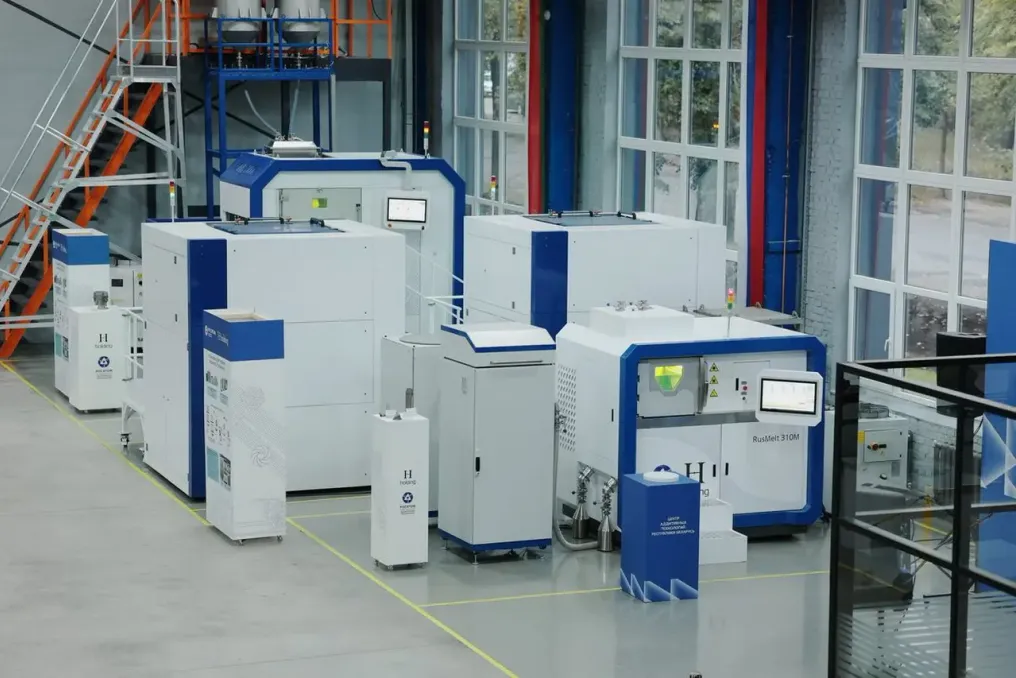
Rosatom's first foreign Additive Manufacturing Center operates in Minsk. Before its establishment, specialists studied the needs and production requirements of over 50 enterprises to assess the demand for 3D printing technologies. In its first year of operation, the center fulfilled over 20 orders for the engineering and energy sectors and produced several pilot batches of components for MAZ and the Minsk Tractor Works.
The center in Minsk serves as a model for similar projects in other countries. According to the Rosatom press service, a project for the comprehensive creation of an Additive Manufacturing Center in Egypt is currently being developed. The project in Vietnam involves establishing a 3D printing center, producing metal powders, training specialists, and jointly developing product quality standards and certification procedures.
In industry, 3D printing is especially useful for manufacturing small batches, geometrically complex parts, and individualized production tooling, as well as in cases requiring rapid modification of product design. Additive technologies can also be used for repairing expensive equipment components. The planned audit within the project will help determine which of these applications are most relevant for industrial enterprises in Uzbekistan, as well as identify demand for specific services and assess the conditions for establishing a center.