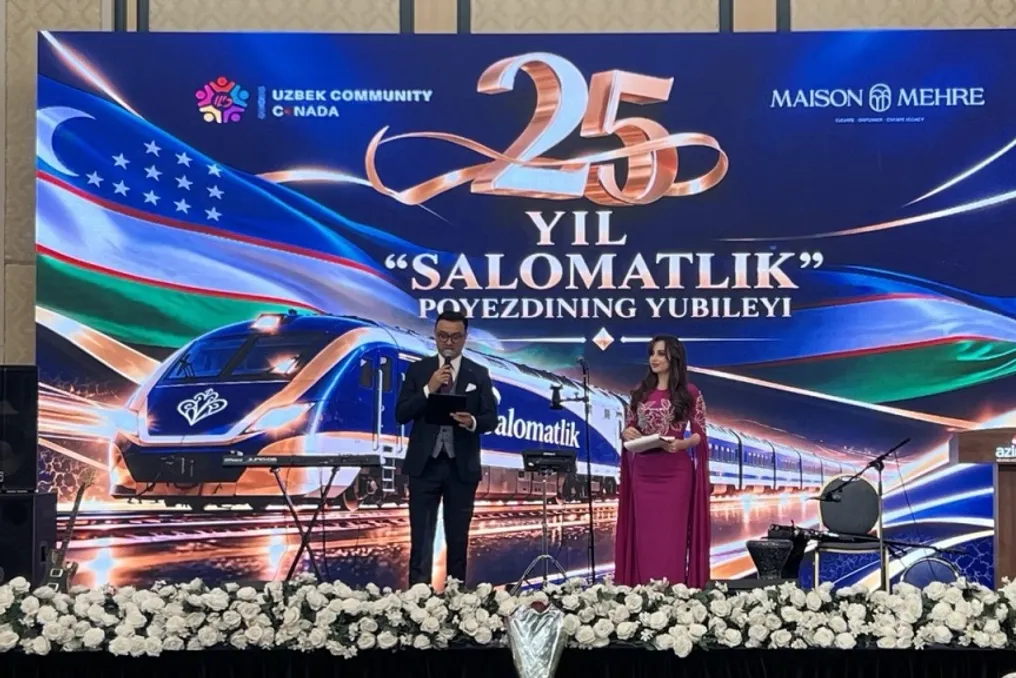
The medical train 'Salomatlik' has been operating in Uzbekistan for a quarter of a century, ensuring the delivery of doctors and medical services to areas where residents find it difficult to receive qualified assistance. A correspondent from Podrobno.uz spoke with the author and the project's first chief physician, Nadira Yuldasheva, about the process of creating the train, its current activities, and future plans.
The idea of creating such a medical train originated with Yuldasheva back in 2000. She proposed to the management of JSC 'Uzbekistan Railways' and the Tashkent Passenger Wagon Repair Plant to organize a special train for transporting doctors and medical equipment to hard-to-reach corners of the country. Seven wagons were allocated for this project, which required refitting.
The official start of 'Salomatlik's' operations was on June 1, 2001, at the opening ceremony attended by the first President of Uzbekistan, Islam Karimov. Nadira Yuldasheva noted that although twenty-five years have passed, the train continues to provide medical support to residents living far from the capital.
How the Medical Train Works
The organization of 'Salomatlik's' trips is entrusted to the railway polyclinic. It is from there that doctors and nurses depart to provide assistance to the local population. Each group typically consists of about 14–15 specialists. While one group is working outside the base, the other medics continue to see patients at the polyclinic. Staff rotate to ensure regular departures and continuous operation of the polyclinic. JSC 'Uzbekistan Railways' supports the organization of trips and guarantees the necessary conditions for the work of medical teams.
The modern composition of the train is equipped with apparatus for conducting ultrasound examinations, electrocardiography, fluorography, and laboratory diagnostics. The brigades include a wide range of specialists: therapists, neurologists, pediatricians, gynecologists, endocrinologists, dermatologists, and dentists. The main goal of 'Salomatlik' is to increase the accessibility of medical care for residents of remote territories, including desert zones and the Aral Sea region. Specialists conduct consultations and examinations directly on site, saving patients from the need to travel to large cities.
Yuldasheva emphasized that the train's mission is to bring medical care closer to people living far from major centers. In addition to medical services, medicines, clothing, food, and other vital items are delivered to remote settlements. Various structures, such as 'Soglom Avlod Uchun' and 'Ekosan', participate in the logistics of humanitarian supplies. Special attention is paid to caring for the elderly, children with disabilities, women, and families in need of social support; all medical care is provided free of charge.
Over the past 25 years, the project's activity has extended beyond Uzbekistan: about two years ago, 'Salomatlik' was sent to Afghanistan, where, according to Yuldasheva, the work was successfully carried out, and the results satisfied both the host side and the patients.
Development Prospects and Anniversary
Recently, there has been less public reporting on 'Salomatlik,' which Yuldasheva attributes to the team becoming accustomed to the constant work schedule. Nevertheless, organizers plan to expand the train's potential, which includes modernizing the composition and building new carriages. Planned changes include creating separate carriages for men and women, as well as specialized medical compartments. Another area of development is strengthening surgical care. If the train initially performed only minor surgeries, now it is planned to increase their number and expand the range of possible interventions within the clinic.
A meeting was organized for the 25th anniversary of 'Salomatlik' for former and current team members—doctors, nurses, paramedics, and engineers. Yuldasheva reported that while thirty years was initially planned for the celebration, they decided to hold the anniversary earlier to manage to gather all participants while possible.
Although Yuldasheva currently resides in Canada, she continues to monitor the development of her project. For the anniversary, she published a book on the history of 'Salomatlik' in Russian, Uzbek, and English, containing data on the train's creation, stages of its operation, and statistics. After Yuldasheva's departure, her former assistant, Fatima Uraeva, who has worked on the project since 2007, took over project management. Over a quarter of a century, 'Salomatlik' has established itself as an effective way to deliver medical care to hard-to-reach places, and the organizers intend to continue this work through fleet modernization and expansion of medical capabilities.