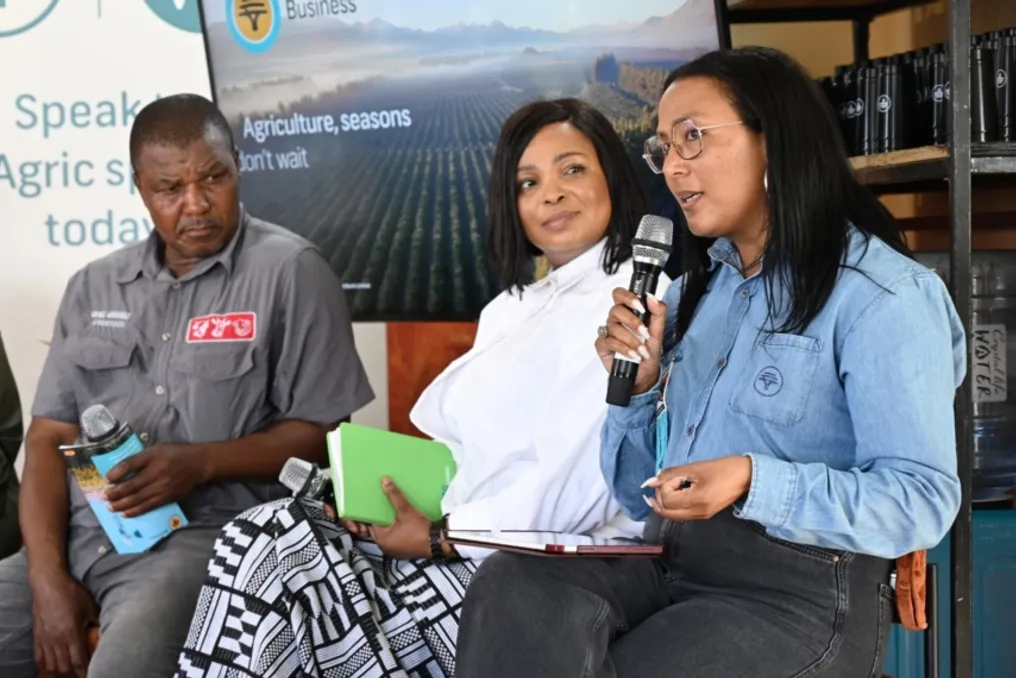
At an event organized by FNB Business in partnership with Food For Mzansi at the Royal Show in Tydings, KwaZulu-Natal, the discussion focused on why markets, sound management, and strong relationships are crucial in agriculture. The discussion brought together farmers, entrepreneurs, bankers, and industry representatives.
The main message was that successful agricultural businesses rarely result from individual efforts; they are often built upon years of establishing trusting relationships, having reliable mentors, stable markets, and the financial discipline needed to transform production into a sustainable enterprise.
For FNB, this conversation underscored the necessity of building long-term relationships with clients in the agricultural sector, rather than viewing financing as a one-off transaction. Greg Ferris, FNB's Head of Agriculture in KwaZulu-Natal, noted that agriculture accounts for about a third of the bank's total loan portfolio, and FNB serves between 45% and 47% of farmers in the province.
Ferris stated that the bank's goal is to grow alongside its clients, helping them expand and collaborating with them. FNB specialists work with a wide range of commodities, including sugarcane, timber, livestock, and aquaculture. The bank also relies on industry associations and other agricultural organizations for a better understanding of the sector and to assist clients in preparing for challenges such as weather changes and animal diseases.
One of the most illustrative examples of the day was the story of commercial farmer Sheikh Shabalala, who farms near Ladysmith and on Bergville farm near Dundee. His journey demonstrated how determination, diversification, and trusting business relationships helped him acquire ownership of his own farm.
After 28 years in the defense forces, Shabalala retired in May 2017 to pursue his passion—agriculture. Initially, he engaged in livestock farming on rented land, growing his business from a small herd to commercial young stock production. The breakthrough came through connections with experienced farmer Ashley Jacobs, who offered him a supply opportunity. They formalized an agreement, and Shabalala secured a contract to supply 100 young stock in 2020.
When Shabalala found the farm he wanted to purchase in 2021, his applications for bank financing were unsuccessful due to outdated financial records. Instead of abandoning the plan, he approached Jacobs, leveraging his supplier track record and income from livestock sales to negotiate the deal. This arrangement allowed Shabalala to pay for the farm through successive deliveries of young stock. He made a deposit of R500,000 and continued repaying the balance through livestock supplies in subsequent production cycles. Ultimately, the farm was fully paid for, and ownership transferred to Shabalala.
However, he emphasized that this path required more than just selling livestock. To manage cash flow and support his family, he diversified into goats, sheep, and poultry, while his son established a vegetable farm supplying spinach to Boxer. His wife and children also participate in the family's agricultural cooperative. He noted: 'It is challenging, but we are managing,' describing how various ventures contribute to the household's well-being and the farm's financial stability. His experience illustrates the central theme of the discussion: commercial relationships can create opportunities that traditional financing channels do not offer immediately.
For Janice Robson, FNB's Head of Development and SME Growth, the fundamentals of a financially viable agricultural business can be boiled down to three words: market, management, and money. Banks need to understand not only what the farmer produces but also whether the business has a credible path to market, robust financial systems, and the ability to manage risks.
Robson stressed the importance of accurate financial reporting, budgeting, cash flow forecasting, and stress-testing business plans for potential setbacks. In agriculture, expenses often occur long before revenue is received. Farmers must pay for raw materials, labor, equipment, and other operational costs before their produce is sold and income is generated.
A credible marketing and sales plan, backed by supply contracts where possible, can demonstrate that the business has a viable market for its products. Robson urged farmers approaching the bank to be transparent about their financial needs, the operational problems they face, and the measures they have taken to manage risks such as weather, rising input costs, and interest rate fluctuations.
The discussion also highlighted the significance of maintaining relationships with financial institutions even before an urgent need for funding arises. Bertram Julie, FNB's Head of Distribution Sales, stated that a failed or rejected financing application does not necessarily have to end the relationship. He advised farmers to engage with their bankers, agricultural associations, and training groups long before they require assistance.
The conversation also addressed how the agricultural sector can expand access to commercial opportunities for women and young entrepreneurs. Robson described FNB's financing program for qualified female agricultural enterprises ready for growth. Criteria include an annual turnover of R3 to R60 million, at least three years of trading history, proven profitability, and specific requirements regarding ownership or board representation. This program offers eligible applicants an agricultural term loan at a rate of base rate minus one percentage point, subject to approval and applicable terms.
Robson emphasized that this is a loan, not a grant, and is intended for existing businesses with growth potential. Entrepreneur Sandi Gumede, co-founder of Zulu Girl Wines, presented an additional perspective on building a business without an established financial or entrepreneurial network. The wine venture was self-funded at the start of the Covid-19 pandemic. Early buyers were passionate business advocates who helped build the brand in an industry where, in Gumede's view, women and Black entrepreneurs remain underrepresented.
She also noted a lesson many growing businesses learn the hard way: sales do not automatically convert into cash in a bank account. For entrepreneurs, managing cash flow and seeking advice from experienced individuals can be as important as generating product demand.
Meanwhile, Sandi La Mark, CEO of Kwanalu, shared the impact of the 'Women, Youth and Agricultural Entrepreneurship' (WIRE) program. She reported that the program's initiatives have trained over 7,600 farmers, provided 750 practical internships on farms, and supported the growth of over 6,000 businesses. According to independently tracked and evaluated data, the program's impact on the rural economy exceeded R1 billion. La Mark stressed the importance of practical mentorship, financial literacy, and collective action in helping rural entrepreneurs build sustainable businesses.
The discussion concluded with a message that went beyond access to finance: farmers need relationships that help them strengthen their enterprises over time. Examples, such as Shabalala's livestock supply agreement and Gumede's client-driven growth, showed how commercial opportunities often arise when entrepreneurs build trust, demonstrate commitment, and surround themselves with the right support.
The lesson for the new generation of farmers is to view farming as a business from the outset. This means understanding the market, maintaining sound records, managing cash flow, and building relationships before the need for financing becomes urgent. For existing businesses, it means recognizing that the next generation of commercial farmers needs not only capital. They need access to markets, mentorship, practical knowledge, and networks that can turn potential into a lasting enterprise. Ultimately, the joint development of agriculture is not just about lending a hand; it is about creating relationships that generate commercial value, strengthen the rural economy, and create opportunities for more South Africans to participate meaningfully in agriculture.