In Durban, there are places where history is preserved not only in books or faded photographs, but also in the people who carry it within them. One such place is the Durban Country Club, which was officially opened on December 9, 1922, and is celebrating its 103rd anniversary today. A walk through its elegant surroundings gives the feeling of being in a living chapter of Durban's history.
Inside the historic Cape-Holland style club, the well-kept green fields, where generations of golfers tested their skills, catch the eye. Beyond them stretches the blue expanse of the Indian Ocean, serving as a magnificent backdrop for countless visitors and club members over the decades. Old, framed photographs inside tell their stories, and trophies bearing the names of golf legends remind us of the outstanding sporting tradition nurtured here.
The author recalls that while sitting in the club with two Indian colleagues, enjoying the atmosphere and the sea view, he pondered how much time had changed. There was a time when Indians and other people of color were not allowed into these walls. It is impossible to be there today without remembering Seogulum 'Papwa' Sesonguela, one of South Africa's greatest golfers.
In 1963 and again in 1965, Papwa won the Natal tournament, defeating the best golfers of his time, including the legendary Gary Player. However, because he was not white, he was forbidden from entering the club. He changed clothes in the car, ate in a buggy, and after winning in 1965, was forced to accept his trophy in the pouring rain.
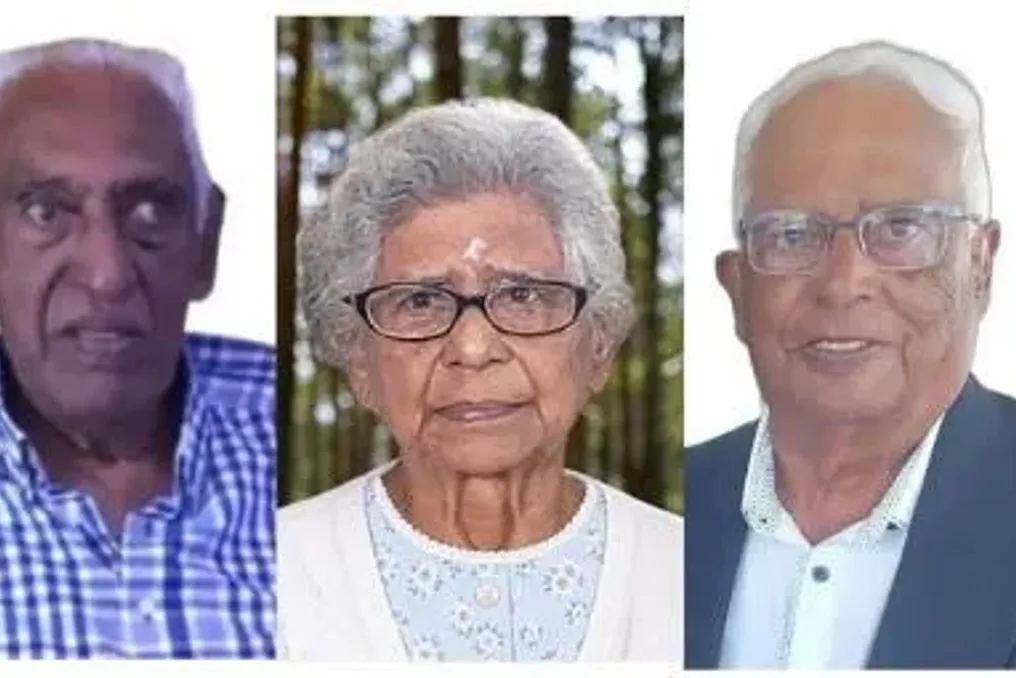
Sitting in the club, like three Indians using the very space from which Papwa was excluded, seemed particularly poignant. Much has changed over time: what was closed is now open. Looking around this club, which has existed for over a century, the author found himself sitting opposite Gopaul Narainamshi Mudli, a man aged 96, who is only slightly younger than this historic Durban landmark.
Despite his age, Mr. Mudli does not appear burdened by the years; rather, it seems he has managed them with enviable ease. At an age when many people naturally slow down, Mr. Mudli continues to walk without assistance. He dresses with the dignity and elegance of a much younger man, drives his own car, and recently renewed his driver's license for another five years. He plays team bowling twice a week, remains mentally sharp, and possesses a memory that seems to refuse to yield to the passage of time.
During the conversation, it became clear that he was not just a retired teacher. He turned out to be a living repository of memories. If mentioned the school where he taught seventy years ago, he could recall the names of teachers and students as if he had seen them yesterday. Seventy years have passed, but it has barely affected his memory.
Perhaps this struck the author the most. Mr. Mudli is living proof that age cannot be measured solely by the number of candles on a cake. Encounters happen that make you stop and rethink what it means to age. For the author, Mr. Mudli embodies what we risk losing: the art of living a meaningful life.
Another remarkable person who has lived a life full of purpose is Mrs. Lakshmi Rapeti, from the renowned Venkatratnam family, previously residing in Sywell. She is 99 years old and remains surprisingly sprightly, with most of her functions in order, although short-term memory is beginning to fade. Nevertheless, she remembers the names of all her grandchildren and great-grandchildren with remarkable clarity, recalling each with loving affection.
She and her late husband Sannasi 'TS' Naidu were founders of the Shri Satya Sai Sudha Mandir religious organization in Mooton, Chatsworth, over fifty years ago. When she was less frail, she was fully immersed in the religious organization's activities, including fundraising and attending weekly services. To this day, she attends major events at the temple.
There is also Sundramorti 'Roy' Naidu, who is now 91 years old. He worked for many years as a sales representative for Silver, Garbus & Co, and L Suzman, a cigarette wholesaler. Roy started playing tennis in 1958 on courts in Kennedy Road, Clair Estate, and near Curitz Fountain. What gives meaning to his life today is that after more than six decades, he still plays tennis twice a week from 6 to 8 am on the Jeevan Kara tennis courts in New Germani Road, Clair Estate.
He was also the founder of the Umgeni Jaycees leadership development organization in 1974 and still meets with old friends from the Umgeni Jaycees alumni for periodic conversations and friendly banter.
These three people, three long lives, three very different paths. Yet, a common thread runs through them: none of them allowed age to become an excuse to withdraw from life. A meaningful life does not necessarily have to be spectacular. It is not measured by the size of a bank account, the car in the garage, the house you live in, or the number of people who know your name.
It is built quietly, day by day, through purpose, responsibility, discipline, relationships, and the willingness to continue contributing even after society tells you that you have reached the age when you should simply rest. Mr. Mudli dedicated his working life to teaching. Young lives, whose character and aspirations were being formed, trusted him. This is a considerable responsibility, and perhaps this sense of responsibility never left him.
Even in his nineties, he remains active. He has not given up the idea that aging means withdrawing from life. He still gets into his car. He still meets people. He still competes. He still exercises his mind. He still has places to go and things to look forward to.
This holds a lesson. Purpose gives life rhythm. Discipline gives it structure. Relationships give it warmth. And resilience gives us the strength to keep going when life inevitably tests us.
Today, life can be extremely convenient and strangely empty. We have technologies that can deliver almost everything to our fingertips, but many people seem increasingly disconnected from each other. We can communicate instantly across continents, but sometimes struggle to maintain a meaningful conversation with the person sitting opposite.
There is a difference between simply adding years to life and adding life to those years. Mr. Mudli, Mrs. Rapeti, and Mr. Naidu seem to have done both. They didn't just survive decades; they inhabited them. They made friends, stayed physically active, kept their minds sharp, maintained independence, and continued to participate in the world around them.
There is something wonderfully inspiring in this. Perhaps it is one of the secrets to a meaningful life: never stop having a reason to get up in the morning. It might be teaching a child, caring for family, tending a garden, playing bowling, helping a neighbor, reading a book, serving the community, or simply maintaining curiosity about the world.
Age may slow the body, but it does not have to imprison the spirit. Meeting Mr. Mudli reminded the author that aging should not be viewed merely as a process of loss. It can also be a process of accumulating something far more valuable: memories, wisdom, friendship, experience, and perspective.
As society ages, it sometimes errs in treating the elderly as obsolete, as if retirement means their contribution is over and the best years are behind them. However, people like Mr. Mudli remind us that age does not erase experience, wisdom, or the ability to contribute. Moreover, a long life can provide a perspective that younger generations simply cannot acquire, as wisdom is often the accumulated result of experiencing disappointments, successes, losses, changes, and uncertainty.
An elderly person who has watched the world transform over several decades has something valuable to say—provided we are willing to listen. A meaningful life does not have to be a famous life. It is a life in which you mattered to someone. A life in which you contributed. A life in which you kept moving forward. A life in which, at 96, you can still wear your finest clothes, get behind the wheel, step onto the bowling green, and recall the names of the children you taught 70 years ago. This is certainly not just aging. It is enrichment through life.
_