During holidays such as Navratri and Dussehra, fairs are set up in many places, featuring various large and small swings where people of all ages enjoy themselves. This raises the question: where do these ride operators go after the fair ends? Is their work purely seasonal, or do they do something else during the rest of the year? The text then examines the entire earning system of these people at the fairs and how they maintain their income throughout the year.
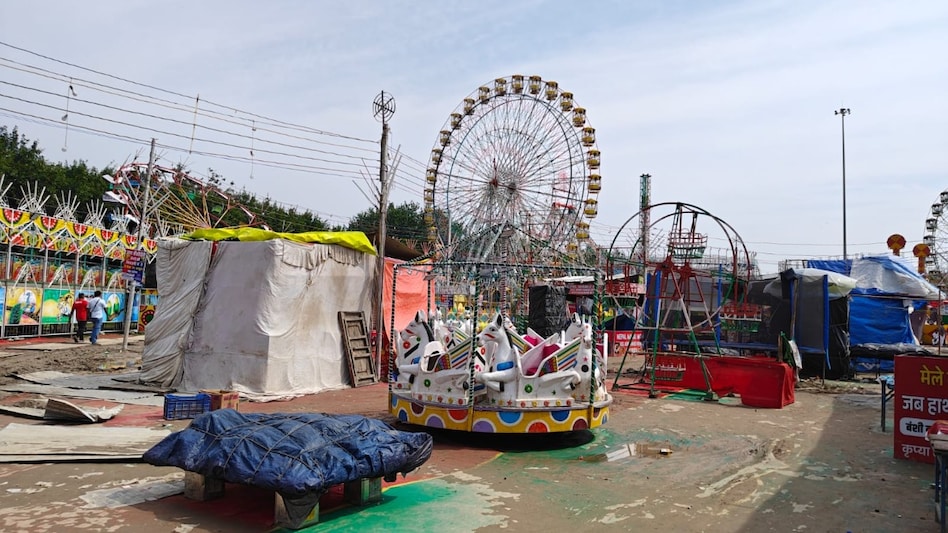
Currently, a fair celebrating Ramlila is taking place at Noida Stadium, with performances held every evening. Due to the large number of visitors, numerous small and large attractions have been installed here to entertain the public. After speaking with some of the ride operators, the author attempted to learn details about their work.
The author arrived at the fair during the day when most vendors and stallholders were resting. Upon entering, he noticed a huge swing and approached it. Below, he saw an elderly man sitting on a chair and resting. When the author asked who owned this swing, the elderly man pointed to himself and asked what was wrong.
A conversation began. He introduced himself as Abdul Khan. The author asked his questions, including where they would go after the fair ended and whether their job was seasonal. Abdul Khan replied that it was not seasonal work, but that they did this year-round. He mentioned that he was from Ajmer, and swings from 5-6 people from his village were installed at this fair. In total, about 25-30 people work here. A contractor provides them with work throughout the year.
Next to Abdul Khan stood a young man named Murshid Ali. He explained that their group includes 10-12 different swings, making a total group of 150 people. Four to five swings are installed here, and some of them are at fairs in other parts of Delhi. Murshid specified that contractors hire them for work year-round in various cities such as Jhansi, Jaipur, Delhi, Noida, and Bhopal. The working arrangement between the contractor and the ride operators involves splitting the profit equally, meaning they have to give away half of their earnings.
Both Abdul and Murshid reported that the cost of a ride on the different swings ranges from 50 to 200 rupees per rotation. From a large swing, one can earn from 8,000 to 10,000 rupees per day. Continuing the conversation with Abdul, the author also saw small operators who manually spin the swings. One of them introduced himself as Anil, a resident of Sambal. He explained that for 50 rupees, he makes 5 rotations on the swings, and his daily earnings range from 4,000 to 5,000 rupees. From this amount, he must pay a commission to the contractor, as well as significant money to electricians.
Similarly, operator Mo. Ali, who managed the peacock-shaped swings, stopped the author and asked to speak with him. He told the same story. He also receives work from a contractor. This swing is rented out. For 50 rupees, he makes 6 rotations, but after paying the contractor's commission, paying electricians, and renting the swing to the owner, he is left with only 25-30 thousand rupees over 20 days.
As a result of conversations with these operators, it became clear that setting up swings at fairs is their main profession. There is a coordinator, whom they call a contractor, who maintains contact with event organizers or fair committees in various locations. In any city where contractors are assigned to organize a fair, they invite these operators. A deal is made with them based on a certain percentage.
After one fair ends, the swings remain in place until they find work elsewhere. The work of these operators depends entirely on the coordination provided by the contractor. The contractor finds them work in exchange for a commission or partnership. There are also swing owners who rent them out or send only their staff to fairs with swings.