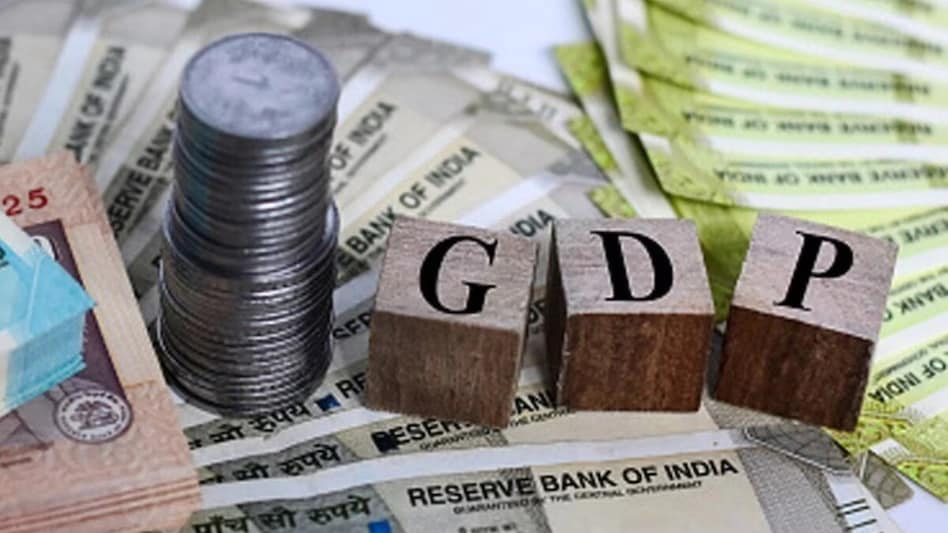
India's economy is demonstrating rapid growth, and according to the latest estimates from the International Monetary Fund (IMF), it has the potential for a significant leap. The IMF forecasts that India could surpass Japan and secure the fourth spot among the world's largest economies by 2027, despite global uncertainty, high energy prices, and international tensions.
The IMF raised its forecast for India's economic growth rate in 2026 to 7%. This assessment was presented in the Fund's recent report on the outlook for the Asia-Pacific region's economy. However, achieving the fourth position remains a future possibility, dependent on India's economic growth trajectory and the size of various countries' economies in the coming years.
Currently, the world's largest economies are the USA in first place, China in second, and Germany in third. Considering the sustained growth of the Indian economy and the slowing growth of the Japanese economy, the IMF sees a probability of a shift in positions by 2027, when India might overtake Japan and become the fourth largest economy globally. This shift would signify not only an ascent in the global economic hierarchy but also an increasing role for India in worldwide economic activity.
The status as a major economy could enhance the country's significance in matters of global investment, trade, and economic decision-making. Nevertheless, the overall size of the economy and per capita income are measured by different criteria, so a high ranking cannot be directly equated with an improvement in every citizen's standard of living.
The primary reason for the likelihood of India reaching the fourth spot is the slow economic growth of Japan. According to IMF projections, the Japanese economy may grow by only 0.7% year-on-year in 2026. Although Japan has long struggled with deflation, consumer prices there began to rise steadily in 2022.
High energy prices also put pressure on Japan. Risks of increased energy costs persist due to the Iran-related war and instability in the global energy market. Furthermore, the weakening yen against the dollar makes imports more expensive for Japan. Japan's aging population also poses a serious challenge, as it affects labor availability and economic activity.
Growing investments in artificial intelligence (AI) provide some support to the Japanese economy. Krishna Srinivasan, Director of the IMF's Asia-Pacific Department, mentioned these investments in Japan. However, he stated that the benefit of AI investments for Japan is limited compared to some other Asian economies. Investments in AI and new technologies can influence productivity and economic growth in countries in the coming years. For India, technology, digital services, and the resilience of domestic demand could become key drivers of economic expansion.
The IMF welcomed the changes in India's GDP calculation methodology. Krishna Srinivasan called this a positive change and highly praised the efforts of the Ministry of Statistics and Programme Implementation (MOSPI). He noted that the adjustments made comply with the recommendations of the IMF's Statistical Department. GDP measures the total economic value of goods and services produced in a country over a specific period.
Attention will now focus on the 2027 forecast. The IMF's projection is encouraging for India, but the goal of surpassing Japan and becoming the world's fourth economy has not yet been achieved. This requires India's growth rates to remain high and global economic conditions to be favorable. In the future, two aspects will be particularly important: firstly, how well India can maintain its economic growth momentum; and secondly, how clearly the state of the economy will be reflected in data published under the new GDP calculation methodology. It will be based on these factors whether India can overtake Japan in the global economic ranking by 2027.