Despite the high status of major sporting and cultural events, the Department of Sport, Arts and Culture faces challenges in management and administration, including issues related to financial control and operational efficiency.
This was reported by the Auditor-General of South Africa (AGSA), who noted that while the department successfully spent the vast majority of its multi-billion rand budget, internal deficiencies remain. These include significant gaps in performance reporting, irregularities in procurement and contract management, a weak system for responding to internal failures, and critical vacancies, such as the prolonged absence of permanent leadership.
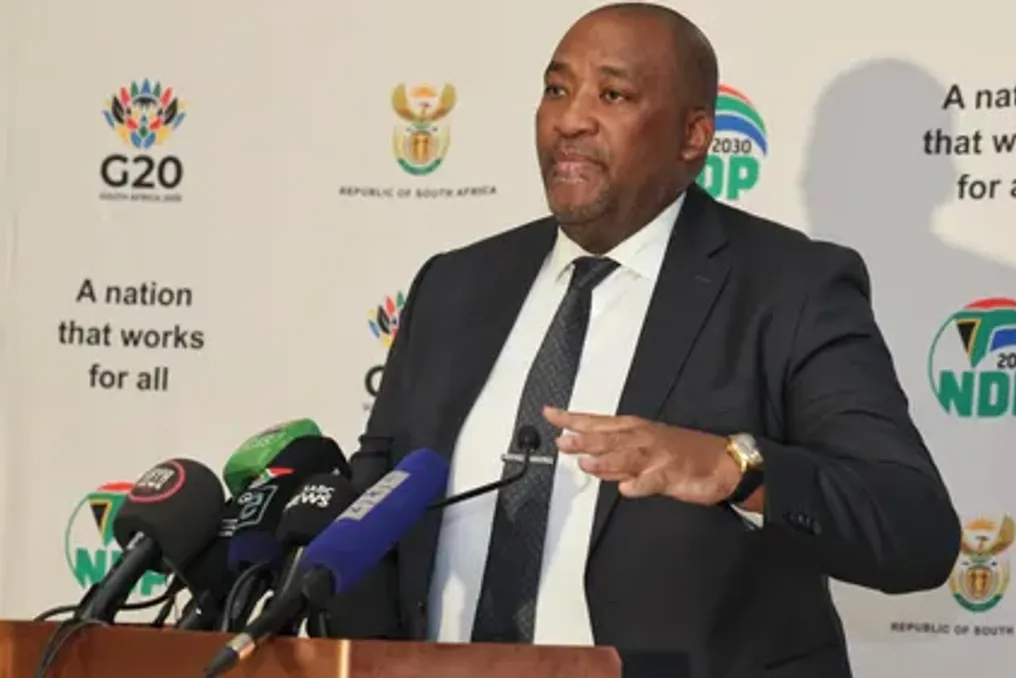
These findings were presented at a briefing for the Parliamentary Portfolio Committee on Sport, Arts and Culture during AGSA's review of the 2025/26 budget on October 1. However, Minister Gethon Mackenzie did not attend the briefing, offering an apology as he was attending a cricket match.
Although the department spent 99.6% of the R6.3 billion allocated for the 2025/26 financial year, it and its structures are under intense parliamentary scrutiny due to recurring structural and financial problems. While the department achieved 80% of its planned targets, five key targets were not met; reasons cited included insufficient supporting documentation and late approvals.
AGSA linked the failure to meet targets to weaknesses in performance management, monitoring, planning, and reporting. The auditor identified unexplained target shortfalls, achievements that were not adequately substantiated by evidence, as well as poorly defined or incomplete indicators and discrepancies between stated performance and supporting information.
The agency warned that reliance on external audits to detect and correct reporting errors reduces the reliability of performance information and affects accountability, transparency, and service delivery assessment.
Furthermore, AG reported ongoing significant non-compliance with legislation, particularly regarding procurement and contract management, financial reporting, irregular expenditure, fruitless and wasteful expenditure, consequence management, and the use of transferred funds.
AGSA also found weaknesses in internal audit, the effectiveness of the audit committee, and management across several structures. These shortcomings included inadequate monitoring of corrective action plans, insufficient internal assurance, repeated short-term extensions of internal audit outsourcing agreements, and critical vacancies that increased governance and accountability risks. Weaknesses were noted in disaster recovery planning and backup mechanisms for the Department's asset management system.
Regarding transfers and subsidies, AGSA reported delays in payments, poor beneficiary accountability, and risks of funds being misused.
Concerning the President's Employment Stimulus Programme, jobs were created in the arts and culture sector, but monitoring, reporting, and supporting evidence were weak. AGSA identified instances of fraud and misrepresentation, including invalid bank details, manipulation of payment information, and discrepancies between payment confirmation and supporting bank statements.
Mackenzie stated that the fraud was committed by beneficiaries who should face criminal prosecution and penalties. He added that if any official was involved in facilitating such fraud, disciplinary and criminal measures would be taken. He explained that the response addresses the vulnerability exploited by the fraud: dependence on documents provided by the beneficiaries themselves. In the future, bank details must be verified directly with banks and not accepted based on evidence of payment provided by beneficiaries. Furthermore, a system will be implemented to verify identification numbers. He also noted his readiness to appear before the AG's committee at any time if committee members deem it necessary to ask questions on these matters.
AGSA also pointed to delays in infrastructure projects and warned that prolonged delays could lead to increased costs, service delivery delays, and additional financial pressure.
The root causes identified across the entire portfolio were slow implementation of recommendations, ineffective monitoring of audit action plans, inefficient consequence management, and critical vacancies.
While the National Library Foundation of South Africa and Boxing South Africa improved their opinions from qualified to unqualified with reservations, modified audit results remained unchanged at the Mandela Bay Theatre Complex, Iziko Museums, the National Heritage Council, and Robben Island.
The Mandela Bay Theatre Complex received a qualified opinion related to the incomplete disclosure of irregular expenditure. Iziko Museums received a qualified opinion due to incomplete and incorrectly valued heritage assets. The National Heritage Council received a qualified opinion because supporting information was not provided for some transactions and balances, and Robben Island received an adverse opinion due to the lack of supporting information for various transactions and balances, leading to material and pervasive misstatements.
The Mandela Bay Theatre Complex announced on Thursday that it would revisit the situation after consulting with its board, which acts as its accounting body. An Iziko Museums representative, Fumzile Zonke, stated that the museum acknowledges its institutional responsibility for preparing accurate annual financial statements and maintaining precise and complete records of heritage assets. Zonke added that the board, as the Accounting Officer in terms of the PFMA, acknowledged the institutional responsibility to rectify historical deficiencies affecting heritage asset management and financial reporting.
The National Heritage Council did not respond, while Robben Island acknowledged the adverse audit opinion and the identified material weaknesses in its financial statements and internal controls, adding that these findings are under close management attention, and corrective action plans are being implemented to address the deficiencies, strengthen financial governance, and improve audit readiness.
Meanwhile, Mpho Masemola from the Association of Ex-Political Prisoners (AEPP) stated that the problems faced by Robben Island are the result of years of management failures, weakened financial control, and operational shortcomings that have damaged the reputation of an institution entrusted with preserving one of South Africa's most sacred historical sites.