Vastu Shastra Tips for Attracting Money: 7 Rules to Improve Your Home's Financial Situation
Read more
Aaj Tak
www.aajtak.in

Vastu Shastra Tips for Attracting Money: 7 Rules to Improve Your Home's Financial Situation

In the study of Vastu Shastra, great importance is placed on the correct placement of objects and the orientation of rooms in the house. According to these beliefs, following certain Vastu rules can help reduce financial difficulties related to debt and rising expenses, as well as promote overall well-being and open new paths to success.

If you are striving for financial prosperity, you can follow seven Vastu recommendations for your home:

Vastu Shastra Tips for Attracting Money

  1. Placing Kubera Yantra in the North and Northeast

    In Hinduism, the god Kubera is considered the deity of wealth. Vastu Shastra associates the north side of the house with finances, and the northeast with purity and openness. In this zone, toilets, shoe racks, or heavy furniture should be avoided. According to Vastu, placing a mirror or a Kubera Yantra on the north wall can open up new earning opportunities.

  2. Placing a Safe in the Southwest

    The southwest side in Vastu is associated with stability. It is believed that keeping money, jewelry, and important documents in this part of the house strengthens the financial position. A cabinet or safe can be installed here, provided that the safe door opens towards the north or northeast; opening towards the south or west is not recommended.

  3. Maintaining Cleanliness of the Main Entrance

    The main entrance to the house holds special significance both as a path of movement and from a Vastu perspective. It must be kept constantly clean. Any damage or lock issues should be promptly addressed. Small plants can also be placed near the entrance door, as a clean and well-maintained threshold is considered auspicious for household well-being.

  4. Placing an Aquarium in the Northeast

    In Vastu Shastra, it is considered auspicious to place items related to water in the northeast. A small fountain or aquarium can be placed in this zone, which helps maintain positive energy in the house. However, it is crucial to monitor the water's cleanliness and regularly clean the aquarium, as well as change the water in the fountain.

  5. Immediate Repair of Water Leaks

    Any water leak, whether in the kitchen, bathroom, or garden, should not be ignored. Water loss through a faulty tap or pipe leads not only to waste but also to increased bills. Vastu Shastra links water leaks with financial losses, so any pipe or roof leaks must be repaired as soon as possible.

  6. Prohibition of Placing Water Tanks in Certain Zones

    According to Vastu Shastra, placing water heaters in the northeast and southeast parts of the house is undesirable, as it can disrupt the balance in the dwelling. Since Vastu connects leaking water with monetary losses, the location of a rooftop reservoir must be carefully chosen during construction.

  7. Avoiding Toilet Installation in the Southwest

    Vastu Shastra does not approve of building a toilet in the southwest direction. It is believed that this can cause financial problems, stress, and sleep disturbances. The northwest direction is considered more suitable for a toilet.

Similar stories

Tesla Company Updates Model Y L: 0 to 100 km/h Acceleration Reduced to 4.5 Seconds
Read more
www.aajtak.in

Tesla Company Updates Model Y L: 0 to 100 km/h Acceleration Reduced to 4.5 Seconds

Tesla has made changes to its popular Model Y L. This car can now accelerate from 0 to 100 kilometers per hour in just 4.5 seconds. According to the company's statement, this improvement allows it to reach this speed 0.5 seconds faster compared to the previous version.

However, it should be noted that this performance increase is not available on all Model Y L units. Changes to the exterior and interior design of the car are also absent; the appearance remains the same.

These updates will be available for vehicles purchased after October 1, 2026. The price of the Tesla Model Y L starts from 61.99 lakh rupees for the display model. With an initial down payment of 6.5 lakh rupees, the monthly payment will be 49,990 rupees. Currently, no official discounts are offered on this model.

Despite the improved acceleration, the stated range of the Tesla Model Y L remains at 681 kilometers, consistent with the figures of the previous version. It is important to note that actual mileage depends on many factors, including driving conditions, speed, and weather. The car is equipped with an 88 kWh battery pack.

The Model Y L is equipped with an all-wheel-drive system and dual motors. Although Tesla has not officially disclosed detailed powertrain specifications, it is assumed that the car can produce 514 horsepower and 590 Nm of torque. The maximum speed is 201 kilometers per hour.

According to the company, using a Tesla Supercharger station, the Model Y L can cover a distance of up to 288 kilometers after a charging session of only 15 minutes. The car supports both fast DC charging at 250 kW and AC charging up to 11 kW. Tesla is actively expanding its charging network in the Indian market.

Currently, the Tesla network includes 20 Superchargers and 28 Destination Chargers. By the end of 2026, the company plans to add three more new locations to this list. In the premium electric vehicle market, the Model Y L competes with models such as the BMW iX1 and BYD Sealion 7.

US intends to intensify competition for Central Asian resources
Read more
uzdaily.uz

US intends to intensify competition for Central Asian resources

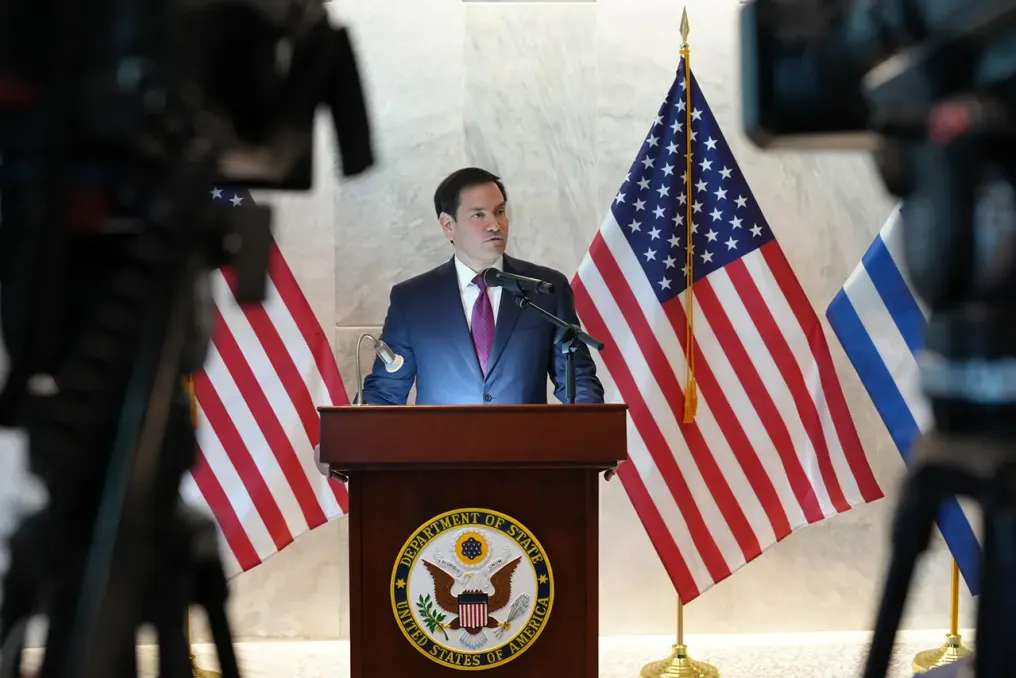
The US Ambassador to India and Special Envoy for South and Central Asia, Sergio Gor, stated that the United States plans to participate more actively in economic competition in Central Asia. This region possesses significant reserves of critical minerals. The statement was made ahead of Secretary of State Marco Rubio's visit to the region, according to the South China Morning Post.

Speaking at the Bloomberg New Economy Forum in New Delhi on October 15, Gor presented the upcoming C5+1 meeting in Samarkand as an opportunity to showcase American innovations and technologies to Central Asian countries. He specified that Rubio will be accompanied by representatives from over 200 American companies interested in exploring cooperation opportunities with regional states.

Gor emphasized that Central Asia holds large reserves of critical minerals whose potential remains untapped. According to him, American firms can provide the necessary solutions and technologies to utilize these resources, while the region's countries seek reliable partners.

The diplomat noted the US desire to 'be able to compete,' without directly naming China, which has considerable influence in the region's mining sector. He also stressed that Central Asian countries are sovereign states and independently determine the directions of international cooperation most beneficial to them.

Rubio is expected to hold meetings with the foreign ministers of Kazakhstan, Kyrgyzstan, Tajikistan, Turkmenistan, and Uzbekistan in Samarkand. Key discussion topics include strengthening regional economic connectivity and enhancing energy security. According to the US Department of State, the goal of this visit is to promote trade and economic ties between Washington and the countries of the region.

The C5+1 format has been operational since 2015 and serves as the main platform for dialogue between the United States and the five Central Asian countries. Last November, US President Donald Trump hosted regional leaders at the White House during the first summit under this format.

Washington aims to strengthen supply chains and reduce dependence on China, particularly in the areas of clean energy and defense. According to the US Department of Commerce, Central Asia has significant reserves of several critical minerals, including manganese, titanium, and cobalt. These resources are used in the production of electric vehicles, clean energy technologies, and artificial intelligence development.

Meanwhile, China is expanding its economic and political presence in the region. In 2023, Beijing launched a mechanism for holding China-Central Asia summits every two years. The first summit took place in China, and the second was held in Astana last year. The parties are developing cooperation in the fields of security, law enforcement, defense, and renewable energy.

Sergio Gor admitted that Washington previously paid insufficient attention to Central Asia, focusing instead on the Middle East and East Asia. He added that the region's countries are interested in strengthening relations with the United States.

Another sign of Washington's growing interest in the region is the invitation extended to the leaders of Kazakhstan and Uzbekistan to attend the G20 summit scheduled for December in Miami. As reported by the South China Morning Post, this will be the first time that Central Asian leaders have been invited to such a summit in the United States.

Uzbekistan and IMF Discuss Budgetary and Tax Reforms
Read more
uzdaily.uz

Uzbekistan and IMF Discuss Budgetary and Tax Reforms

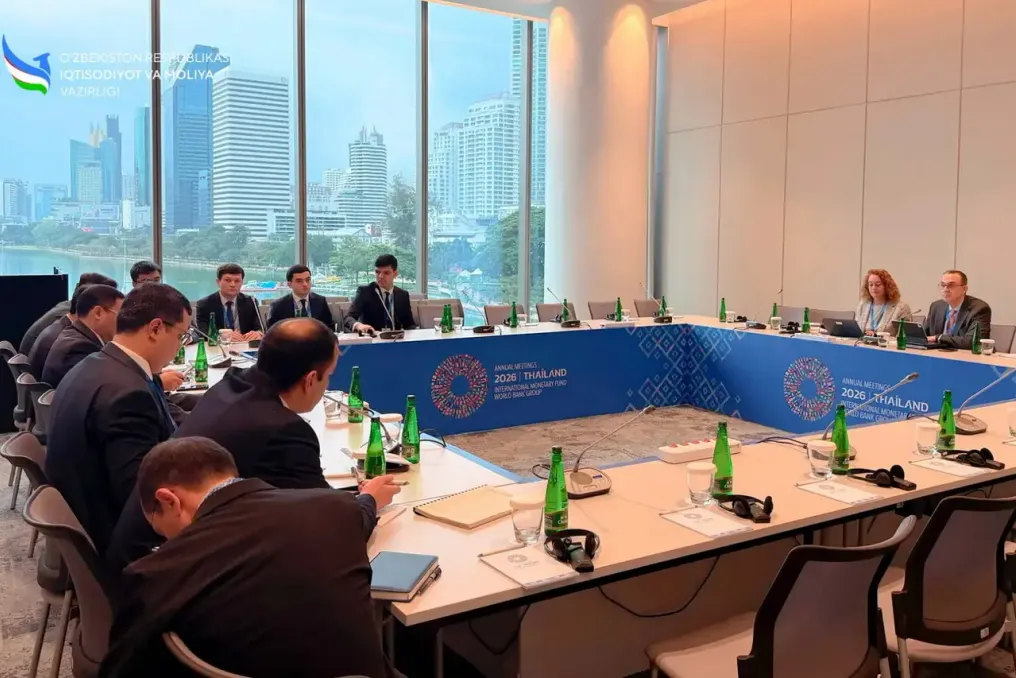
Uzbekistan and the International Monetary Fund (IMF) reached an agreement to continue cooperation in the areas of economic reforms, public financial management, and enhancing fiscal policy effectiveness.

The discussion took place on October 16, 2026, in Bangkok during a meeting between Jamshid Kuchkarov, Deputy Prime Minister and Minister of Economy and Finance of Uzbekistan, and Jihad Azur, Director of the IMF's Department for the Middle East and Central Asia. This meeting was reported by the Information Service and the Communications Department of the Ministry of Economy and Finance of Uzbekistan.

The negotiations were held parallel to the annual meetings of the IMF and the World Bank. Participants also included Thanos Arvanitis, Deputy Director of the IMF department, Nodirbek Ochilov, Deputy Chairman of the Central Bank of Uzbekistan, Jasur Karshibayev, advisor to the Minister of Economy and Finance, as well as other government representatives.

The parties reviewed current economic and financial trends in Uzbekistan, the country's medium-term prospects, and opportunities for further expanding interaction with the fund. Special attention was paid to supporting the economic reforms being implemented in Uzbekistan.

Participants exchanged views on improving public financial management and increasing the efficiency of fiscal policy. A significant part of the discussion was dedicated to developing tools for analyzing public expenditures, as well as improving budget forecasting and planning, with the IMF providing technical support in assessing the socio-economic impact of fiscal decisions.

Other areas of cooperation included privatization and transformation of state enterprises, pension system reform, improvement of customs and tax administration, and enhancing the effectiveness of monetary policy. At the end of the meeting, the parties agreed to continue developing mutually beneficial cooperation and discuss the issues raised.

Popular