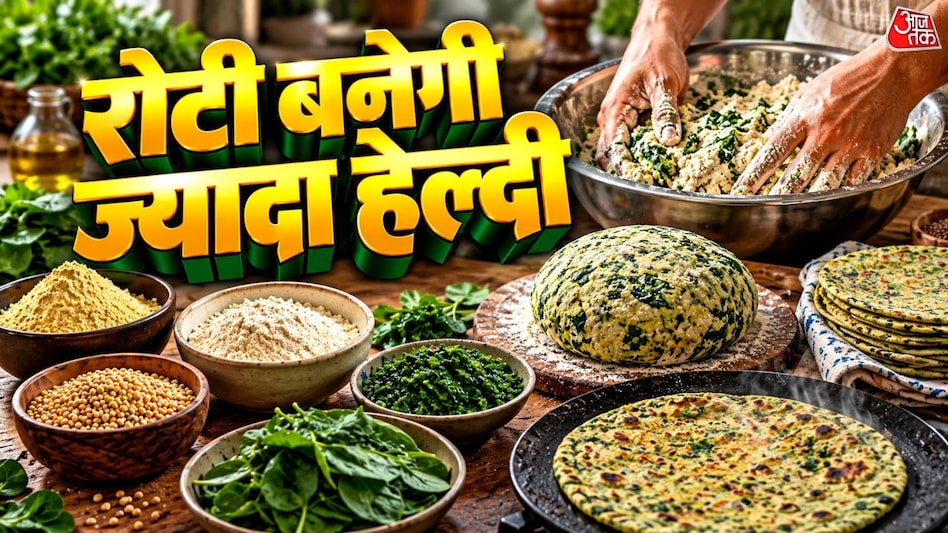
How to make multi-grain flour: adding soy powder and besan to wheat flour for healthy flatbreads
Read more
Aaj Tak
www.aajtak.in

How to make multi-grain flour: adding soy powder and besan to wheat flour for healthy flatbreads

To maintain health and good shape, it is not enough to consume only vegetables and fruits; it is important to pay attention to the small details of the daily diet. In Indian families, bread (roti) is eaten almost every day, and in most homes, roti is made from wheat flour. However, it is known that by adding some nutritious components to wheat flour, you can make rotis healthier and tastier. Today we will tell you a simple way to make daily bread healthier, which will increase the nutritional value and improve the taste of the dish.

You can make multi-grain flour at home by following the correct proportions. For example, you can mix 1 kilogram of soy powder and 1 kilogram of besan in 10 kilograms of wheat flour. If you do not want to prepare 10 kilograms of flour at once, you can prepare it in a smaller amount using the same proportion. Soy powder is an excellent source of protein, and besan also contains protein and fiber. Their combination increases both the taste and the nutritional value of the roti.

Additionally, during dough kneading, you can add leafy green vegetables such as spinach or mint. However, the amount of vegetables should not exceed 25%, as an excess of vegetables can make rolling the roti difficult. Adding these ingredients improves the taste of the roti and increases its content of fiber, vitamins, and other necessary nutrients.

Rotis made from this multi-grain flour can provide the body with protein, fiber, and many important nutrients. Mixing soy powder and besan with wheat flour increases the protein content in the roti, which helps strengthen muscles and generally improve health. Fiber helps improve digestion and provides a lasting feeling of fullness. Adding spinach or mint during dough kneading can increase the amount of vitamins, minerals, and fiber in the roti.

When making multi-grain flour, you should consider the following points: all ingredients must be used according to your needs. Too much vegetable matter in the flour can complicate the process of rolling the roti, so it is recommended to start with a small amount. If you are allergic to soy or wheat, do not use these products. If you have celiac disease or gluten problems, choose flour based on the recommendation of a doctor or nutritionist.
Similar stories

How to use wheat flour at home besides baking: 10 unconventional ways
Read more
www.aajtak.in

How to use wheat flour at home besides baking: 10 unconventional ways

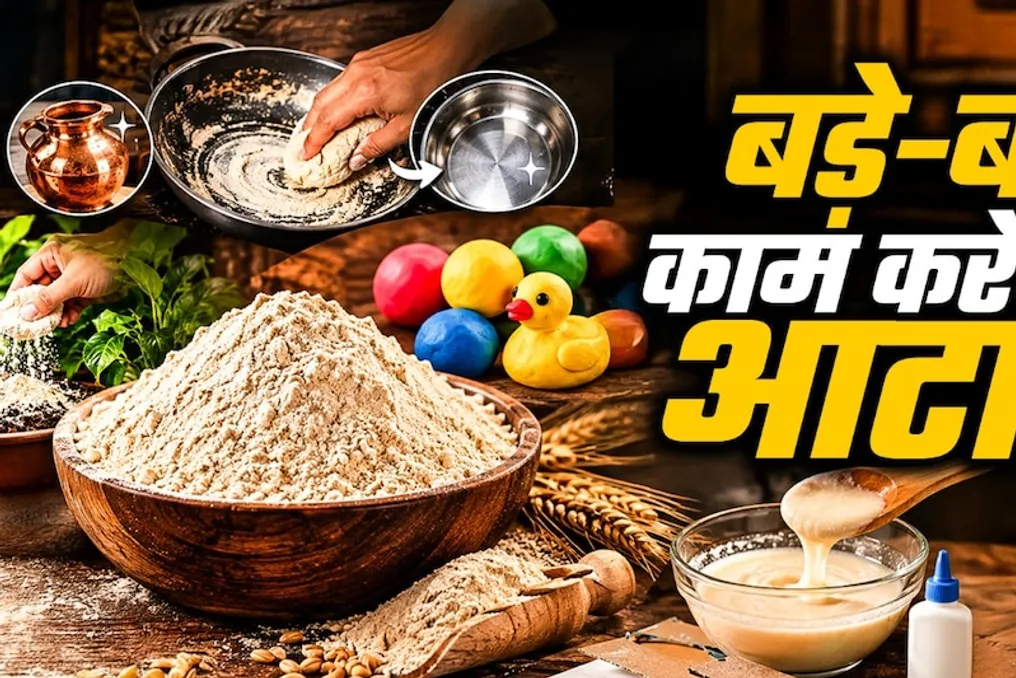
Wheat flour is an essential product in many cuisines, and people usually associate it exclusively with making bread, flatbreads, or chebureki. However, this simple ingredient can simplify many other household tasks around the house.

If you have old flour that you are about to throw away, you should stop. There are ten ways to use flour that are completely unrelated to baking.

Firstly, flour can help freshen metal surfaces. If a sink or stainless steel cookware has developed stains due to frequent use, first wash and dry them thoroughly with soap. Then take a little flour on a dry cloth and gently rub the surface, after which wipe it with a clean cloth.

Secondly, flour can be used to make soft modeling clay for children. To do this, mix flour, salt, water, and food coloring. The resulting mass is suitable for children's games.

Thirdly, flour serves as a base for homemade glue. Instead of buying store-bought glue, you can mix flour, sugar, and water, slightly heating the mixture. After cooling, this mixture can be used as glue for school projects or paper crafts.

The fourth method is eliminating grease from playing cards. To reduce stickiness or greasiness of the cards, place them in a bag with a small amount of flour and shake well. Then remove the cards and wipe them with a clean cloth.

Flour can also be used to protect plants from insects. If small pests are found on leaves, you can lightly sprinkle the affected leaves with flour and rinse the plant with water the next day. This process can be repeated if necessary.

To give clothes a light starch effect, preventing shrinkage and loss of shape, you can prepare a solution. Mix one tablespoon of flour with half a cup of cold water, then add half a cup of boiling water and let the mixture thicken. The cooled solution should be sprayed onto the clothing.

Flour can act as a repellent against ants. Spraying a small amount of flour in areas where ants frequently appear can create an obstacle in their path, preventing them from finding their usual routes.

For sensitive skin or in the absence of special products, flour can replace dry shampoo. A small amount of flour is applied to the roots of the hair using a brush, left for a few minutes, and then thoroughly brushed out. For dark hair, coconut powder can be added to avoid visible white residue.

To restore the shine of old copper items, you can make a paste from equal parts of flour and salt, adding a little vinegar. This paste should be carefully rubbed onto the copper items, and then rinsed with warm water and dried.

Furthermore, flour is suitable for making a homemade face mask. Mix puree of several grapes with about four tablespoons of flour. Apply the resulting paste to the face for 10–15 minutes, and then rinse with clean water. Before using any homemade remedy, it is recommended to perform a patch test on a small area of skin.

Popular