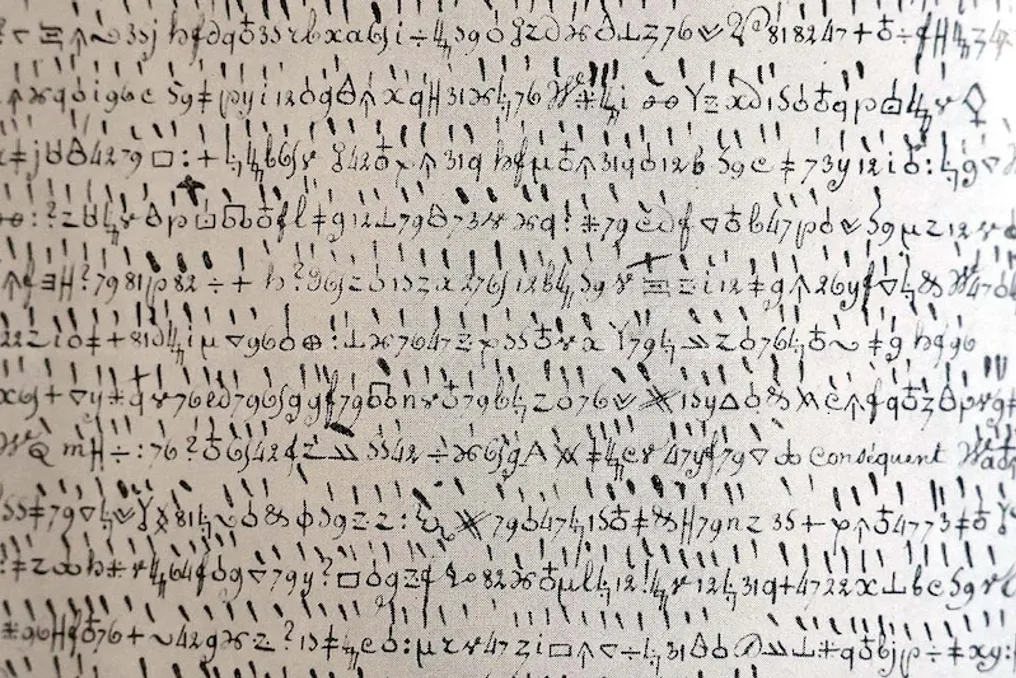
The secret message, written in 1809 by order of the ruler of France, Napoleon Bonaparte, contained information about the status of the French armies and their allies. It was encrypted with a special code that proved too complex to understand. For over two centuries, this message remained undeciphered, but now, with the help of artificial intelligence (AI), it has been deciphered.
Carter Church, a 27-year-old AI engineer working at the American cybersecurity company SentinelOne, managed to understand this message in about six hours using OpenAI's GPT-6 Astra model. The message was located in an online archive of academic materials. This case demonstrates that AI is now capable of assisting in the interpretation of old historical documents and extracting information from them.
This message dates back to the 19th century and consisted of about two dozen lines containing various symbols, numbers, and letters. Information regarding the state of the troops was conveyed through them. During wartime, such codes were used to conceal critical data from the enemy. Typically, deciphering such messages requires cryptanalysis methods and deep knowledge of the history of that era, which can require significant time and effort, causing many old messages to remain unrevealed for long periods.
Carter Church applied AI assistance to analyze this message. He worked on it for several evenings before contacting Japanese engineer Satoshi Tomokie. Tomokie maintains an online list of old and still undeciphered codes and helped verify Church's results. According to Church, he did not need to deeply study cryptographic methods or the history of the period to complete this task; AI helped understand the message in a short time. The main feature of AI in this case was its ability to continuously attempt to find a solution.
According to Tomokie, most of the secret messages from his list have been deciphered with the help of AI since mid-September 2026. He believes that 2026 can be remembered as a year of significant changes in the field of historical code decryption. Nevertheless, not all codes are easy to solve, as some messages have very little necessary information available, which can make reaching the correct answer difficult even for AI. Tomokie expressed satisfaction with receiving answers to old questions but also feels mixed emotions about how easily AI solves puzzles that people worked on for a long time.
The application of AI is not limited to deciphering secret messages. Scientists also use it to read ancient documents and manuscripts. In Italy, researchers are applying AI and X-ray technology to read old paper scrolls that burned during the eruption of Mount Vesuvius in 79 AD. There is a risk of destroying these scrolls upon direct opening. In June, scientists succeeded in the complete digital revelation of one of the scrolls, which contained an essay dedicated to ethics.
In Paris, researchers are working on digitizing and systematizing about 10 million pages related to Jewish history and culture in France. This may help in understanding the connections between people, places, and ideas of the past. Furthermore, AI is being used to read 14,600 Latin pages of medieval records from Notre Dame Cathedral. AI's ability to recognize symbols in this work ranged from 88 to 94 percent. This allowed for obtaining information about the cathedral's former activities, its construction, staff, and care for orphans. Thus, AI reduces the time spent reading historical documents, although verifying the obtained information remains crucial for a correct understanding of old records.