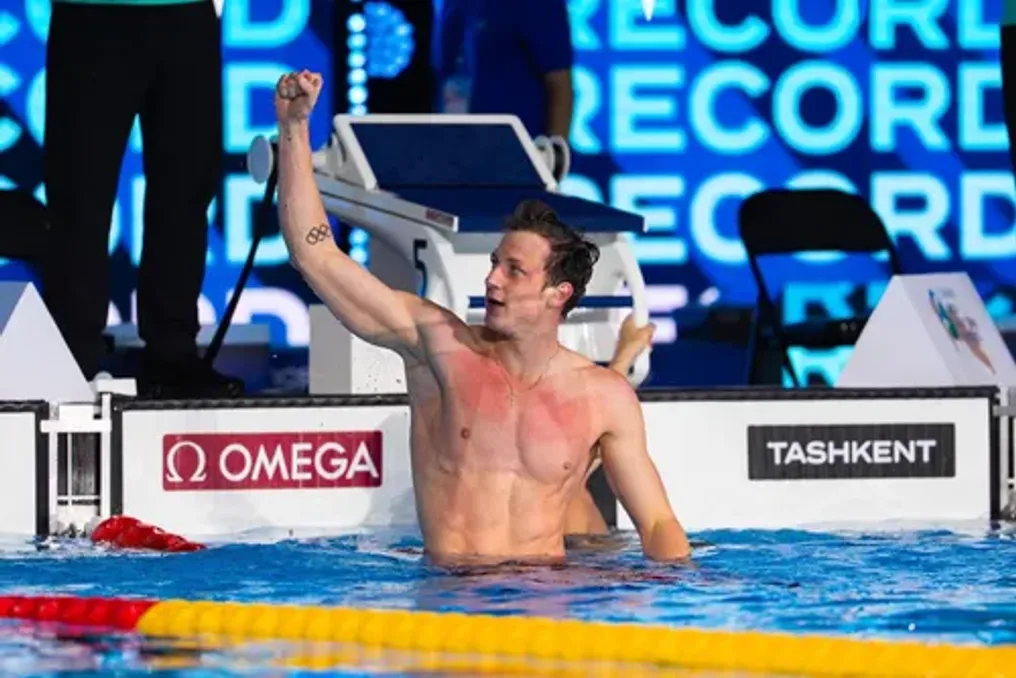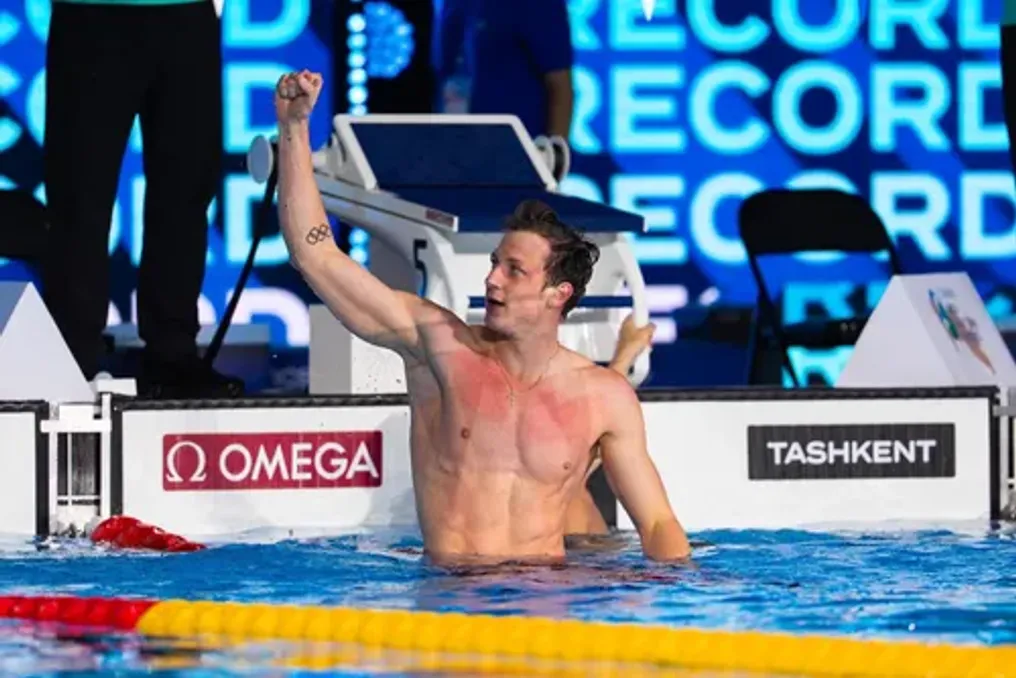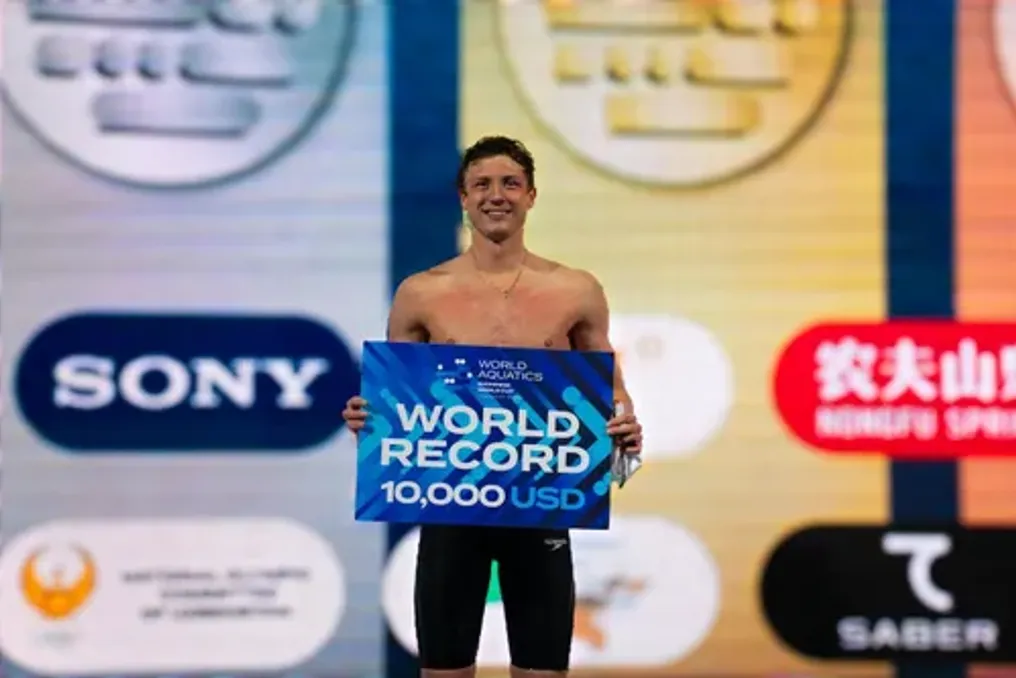
A recent series of short-distance competitions in Central Asia has reached a climax for Peter Kotze, who now has a chance at a large cash prize. After winning the finals in the 100m and 200m backstroke in Astana, the 22-year-old athlete from South Africa secured $50,000 (approximately 826,000 rands) in prize money and bonuses for his performances at the three-stage World Aquatics Cup.
World Swimming Cup
Before the final stage of the Spice Road Tour in Kazakhstan, Kotze had already accumulated $30,000 (about 495,000 rands) from the results of the first stops. These early earnings included $8,000 (132,000 rands) in Baku and a dominant reward of $22,000 in Tashkent, where he took first place, as well as a $10,000 bonus (about 165,000 rands) for setting a world record in the 50m backstroke (22.09).
In Astana, Kotze increased his income by winning titles in three backstroke disciplines—100m and 200m. According to World Aquatics rules, winning the same individual discipline across all three stages (Baku, Tashkent, and Astana) grants an additional bonus of $10,000 for the 'crown'.
Kotze noted that despite not being fully recovered before the World Cup, he feels more rested now because he was able to train according to schedule. He added that he needed short-distance competitions and values the opportunity to compete against the best in the world on excellent venues.
Unlike traditional international championships, the World Aquatics Cup functions as a direct commercial tournament. Athletes earn points based on their finishing position (10 points for first place, eight for second, and so on down to one point for eighth place) and additional World Aquatics points awarded for proximity to a world record. This dual scoring system distributes prize funds among the top 20 athletes at each stop, where first place earns $12,000 and second place earns $10,000. Through a combination of stop titles, world records, and winning all disciplines, elite swimmers can multiply their earnings, turning the three-week Asian tour into a financially significant event.
$100,000 Competition
Although Kotze's base earnings amount to $50,000, the final session on Saturday offered the possibility of nearly tripling his total tour income. The main prize of $100,000 (about 1.65 million rands) will go to the swimmer who finishes first in the overall standings across all three stages, while the silver medalist will receive $70,000 (about 1.23 million rands).
Before the last stop, Kotze trailed the overall leader Egor Kornev by only 0.3 points but managed to overtake him after the first two days of competition. With the potential bonus for a third triumph in the 50m backstroke discipline, in addition to the prizes for the stops, Kotze's total income could exceed $170,000 (about 2.8 million rands).
Kotze admitted that he monitors the accumulated points in the overall standings, noting that this makes the competition exciting and beneficial for the sport. Furthermore, the long-term financial prospects for the World and Commonwealth champions continue until December, as World Aquatics offers an additional bonus of $15,000 for a 'double crown' at the Short Course World Championships in Beijing for any winner who repeats a victory in the same discipline.
The heavy load from competing against the world's best swimmers without sufficient rest was evident in the number of athletes who failed to achieve the 'triumvirate' in Astana, despite dominating the first two stages. This indicates that achieving a 'triumvirate-triumvirate' is not unattainable for the South African athlete. Regardless of the results of the final events on Saturday, the Pretoria star is guaranteed to return home with a minimum income significantly exceeding 1.5 million rands, with a real possibility of surpassing the threshold of 2.5–2.8 million rands—which would be a landmark achievement for South African swimming.