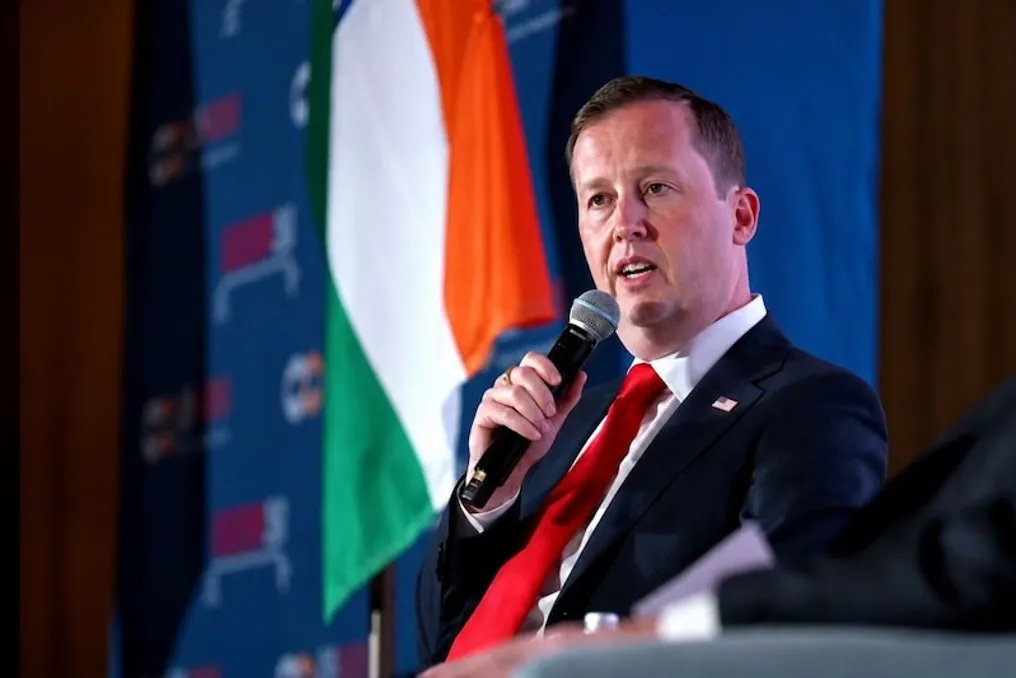
The US Ambassador to India, Sergio Gor, made a statement this week regarding the potential imposition of a 100% tariff against India due to its purchase of Russian crude oil. Speaking at the Bloomberg New Economy Forum, he reported that US President Donald Trump may decide to impose sanctions within the next ten days. These restrictions could affect countries that purchase oil and gas from Russia, including India.
Earlier, on September 18 of this year, Trump signed and approved the 'Lindsey O' Graham Sectioning Russia and Iran Act of 2026 (SRIA)'. This legislation grants authority to impose tariffs of up to 100% on imports from countries that are major importers of energy resources from Russia or help these countries circumvent existing sanctions.
Sergio Gor emphasized that a decision must be made within the next ten days. He clarified that despite the passage of the law, Trump has not yet applied any restrictions to any countries, although the law stipulated that a decision should have been made within 30 days of its enactment.
Furthermore, the ambassador noted that this law gives the president the right to restrict states that purchase Russian fuel and gas or assist Russia in evading sanctions. Gor stressed that these measures are not aimed at any specific country.
He explained that these Congressional-approved restrictions are not targeted at a single nation. They are divided into three separate categories: oil, gas, and sanctions violations. India falls into one of these categories, along with many other nations.
When asked about the possibility of India receiving any benefits or exemptions, the US ambassador replied that the decision rests with Trump. He added that India and America will soon reach a trade agreement, noting that despite a complex negotiation process lasting about eighteen months, both countries have made significant progress. According to him, the main issues have been resolved, and the remaining points involve minor details and new concerns that may arise as the dialogue progresses.
Gor also mentioned that the administration reviewed certain parts of the trade agreement following a US Supreme Court ruling, which was decided by a majority of 6 votes to 3. This ruling asserted that global tariffs imposed by Trump under the International Emergency Economic Power Act (IEEPA) were illegal and unconstitutional because they infringed upon Congress's exclusive taxing power.
In addition, he stated that America is interested in expanding trade cooperation with India in various sectors such as defense, information technology, data centers, and chip manufacturing. He also noted that investments by American companies in India could contribute to job creation in America.