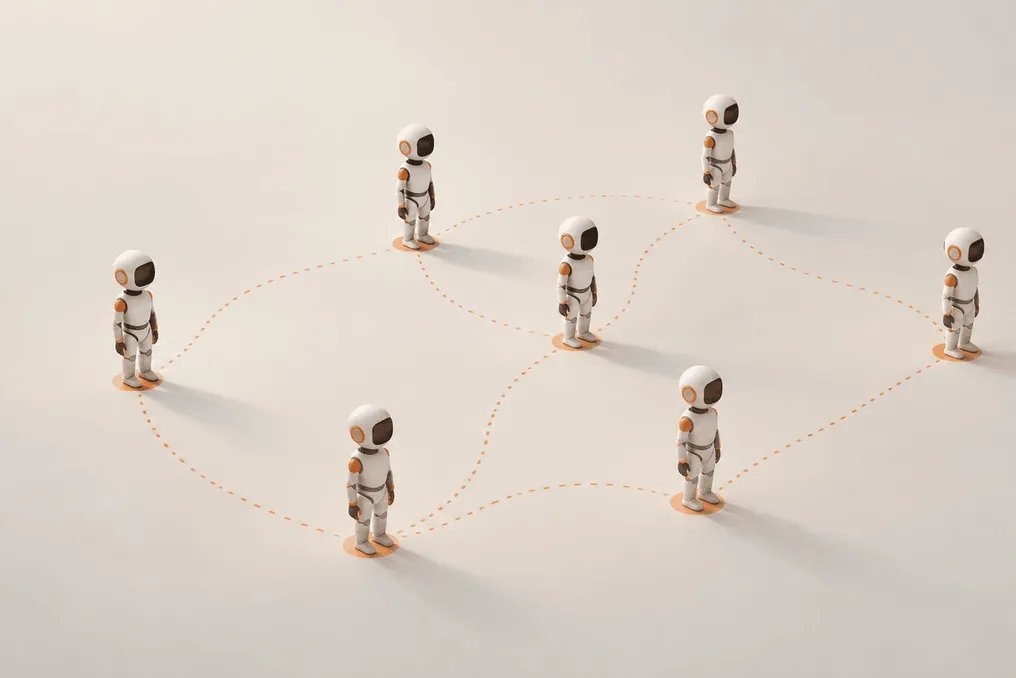
Unitree releases UniUni software for robot swarm control, available to users for free
Read more
Pandaily
pandaily.com

Unitree releases UniUni software for robot swarm control, available to users for free

Unitree Robotics has introduced UniUni, a swarm control system designed for setting up and managing groups of its robots. This software is provided free of charge to all Unitree users. At the time of launch, the system supports the humanoid robots H2 and G1.

UniUni is a desktop application compatible with Windows and macOS operating systems. The initial versions released by the company include 1.1.14 for Windows and 1.1.15 for macOS. Unitree claims that this system is designed for rapid planning of movements and positions for multiple robots, as well as for monitoring device status and handling emergency stops in real-time.

Trajectory planning is available in both two-dimensional and three-dimensional views, where users can draw the path each robot must follow. A timeline function with drag-and-drop capability allows for sequential arrangement of the entire group's movements, and an AI-supported tool helps organize full-body movements and synchronize them with music. For positioning determination, users can upload point cloud-based maps, while the robots utilize laser SLAM for localization.

The system setup is designed to be simple. Robots on the same local network are automatically discovered and joined. During operation, operators receive information about the current status of each machine and have the ability to stop the entire group with a single button press.

The release of UniUni transforms group control tools into a product that customers can use independently. Coordinated performances by humanoid robots have become a common way for Chinese robotics manufacturers to demonstrate their machines to the public, and such performances usually require careful planning of timing, placement, and failure behavior. The overall timeline, map, centralized monitoring, and unified stop control directly address these challenges.

Unitree has not yet disclosed the maximum number of robots that UniUni can coordinate simultaneously, nor has it announced which other models will be supported after H2 and G1. Furthermore, the company has not published technical details regarding network requirements or positioning accuracy.

UniUni complements the software layer that Unitree creates around its hardware. Recently, the company opened a project page and provided partial weights of its fundamental humanoid robot model, UnifoLM-WLA-1.0, and also updated the G1 line to G1+.

Similar stories

Hello Inc.'s Robotaxi Unit Releases HelloWorld — A World Model for On-Demand Driving Scenario Generation
Read more
pandaily.com

Hello Inc.'s Robotaxi Unit Releases HelloWorld — A World Model for On-Demand Driving Scenario Generation

The robotaxi division of Hello Inc. has introduced HelloWorld, a generative world model for driving. This model is designed to create on-demand driving data and facilitate interactive testing of vehicle control policies.

The team announced the model on October 12th and published the corresponding scientific paper on arXiv, as well as a project page. HelloWorld integrates scene control, continuous generation, multi-sensor observation, and efficient data output.

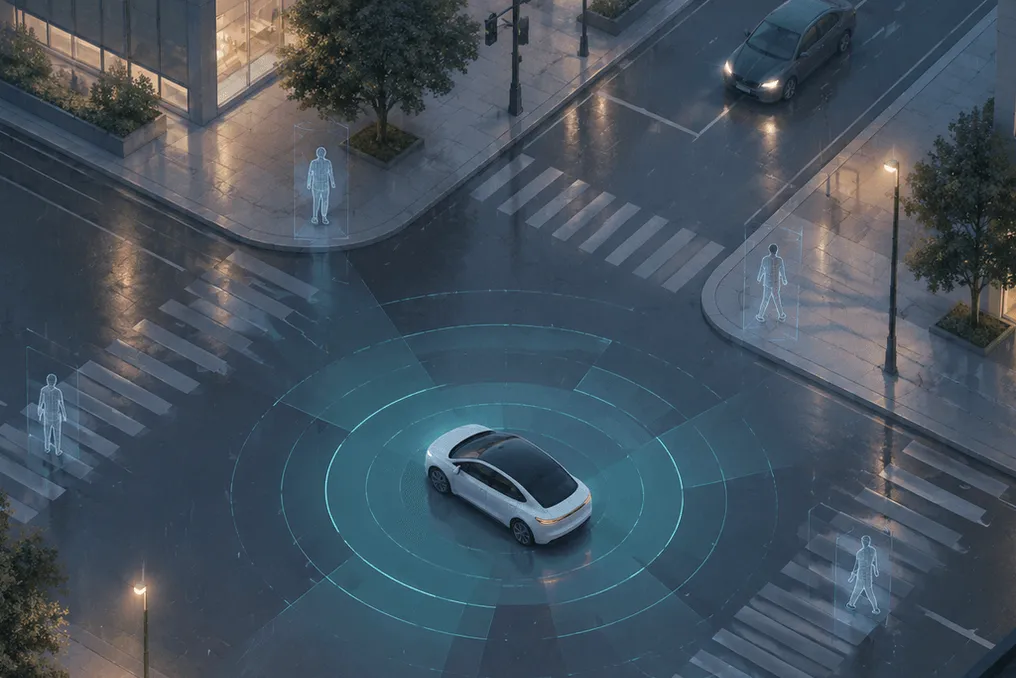
Engineers can directly edit vehicles, pedestrians, and their trajectories, after which the model generates corresponding videos from multiple cameras along with lidar data. Examples of such edits include adding a pedestrian crossing the road, changing the route of a leading vehicle, or altering weather conditions—for instance, transitioning from rain to snow, or from day to night.

The model also accepts simple language descriptions of situations as a second method for building scenes. The user describes the desired scenario, and a specialized application pipeline converts this description into the conditions required for the model to operate. Elements such as construction sites, heavy traffic, pedestrians crossing the road, fog, and various lighting conditions can be used to guide the generation process.

The primary goal of the development is to fill gaps in real-world collected data. Long-tail scenarios, such as rare hazards or unusual combinations of weather and movement, are difficult to collect in sufficient quantity solely by gathering road data. The ability to generate such scenarios on demand allows developers to create targeted training data and conduct counterfactual tests: reproducing the same moment while changing one element to assess the reaction of a driving policy.

According to the presented scientific paper, HelloWorld contains approximately 2 billion parameters, generates views for seven cameras with conditional lidar output, and utilizes multi-step causal generation. This architecture is intended to ensure sufficient output speed for repeated interactive simulation, not just for generating individual clips.

World models have become a common tool in autonomous driving and embodied artificial intelligence, where teams use them to reduce the costs of collecting and labeling edge cases. HelloWorld is the first public research publication of this kind from this company's robotaxi team. However, the company has not yet announced when or how the model will be integrated into its vehicle testing programs.

Huawei opens source code for AgentOS — a platform for corporate agents, swarms, and multi-user control
Read more
pandaily.com

Huawei opens source code for AgentOS — a platform for corporate agents, swarms, and multi-user control

openJiuwen, an open-source AI agent platform developed by Huawei laboratories in 2012, Huawei Cloud, and other Huawei teams in collaboration with universities and companies, has released and made the enterprise version of AgentOS publicly available.

This project aims to solve problems that arise when transitioning from demonstration agent examples to real production use. These problems include the complexity of coordinating long task chains among multiple agents, loss of experience between runs, increasing computational costs, and the need to ensure data permissions, isolation, and recovery capabilities required by enterprises before they can entrust agents with real work.

The code is available as AgentOS for Enterprise on GitHub and AtomGit under the Apache 2.0 license. The repository describes four main components: a distributed agent runtime, agents for work and coding (jiuwenswarm), the Conch agent sandbox, and the agent access gateway.

The system supports deployment both on a single machine and in a cluster, allowing it to be assembled and deployed with a single command, and it runs on openEuler or Ubuntu operating systems.

Coordination and Self-Development Mechanisms

In terms of coordination, AgentOS uses workflow orchestration and swarm collaboration to divide tasks, assign roles, and execute steps in parallel—such as research, analysis, and writing—while allowing humans to intervene at critical decision points. Regarding self-development, the platform employs execution tracing, user feedback, and memory to improve agent skills and interaction models, turning successful solutions into reusable capabilities.

The runtime is also aimed at improving the efficiency of computing resource utilization through joint hardware and software design, resource planning, and inference optimization.

For security, multi-user isolation, secure sandboxes, permission management, and guardrails are provided to control data access and tool calls, along with a failure recovery function that allows long tasks to continue execution.

Model calls, tool calls, and memory management are packaged as plugins that are loaded on demand. For developers, there are five types of assets—skills, connectors, plugins, experts, and expert teams—that can be combined, published, retrieved, or shared via Agentic Hub, enabling partners to package industry methods and system integrations as reusable components.

This software also serves as a foundation for hardware implementation. At the Huawei Connect 2026 event, Huawei introduced an open-source agent acceleration platform for universal devices built on Jiuwen AgentOS. This platform integrates a unified agent gateway, a distributed runtime, and a WorkSwarm workspace for office and coding, including a built-in SystemAgent for one-click setup and management.

According to the launch information, enterprises can complete a fully private deployment in a matter of hours and then connect existing business systems, local knowledge bases, and industry models via open interfaces and plugins.

Popular