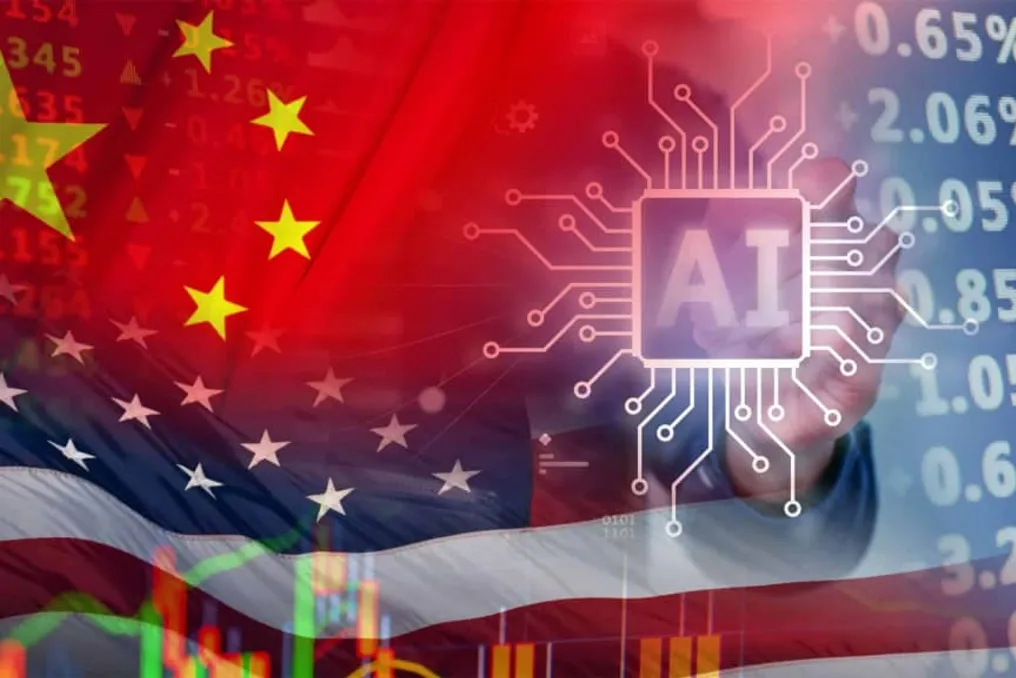
China is studying tightening control over the export of technologies considered strategic, encompassing artificial intelligence (AI) systems, biotechnology, and solar energy. This proposal, announced by the Chinese government this Friday, the 16th, establishes a ban on the export of 14 technology categories and restricts another 26.
The draft was formally presented by the Ministries of Commerce and Science and Technology. According to Reuters, this action covers a total of 40 technologies across the three mentioned sectors and occurs amid growing competition between Beijing and Washington for dominance in crucial areas of innovation.
Among the technologies subject to prohibition are AI tools capable of creating or altering malicious code, as well as models trained using sensitive and strategic Chinese data. Additionally, other AI-related technologies may also be subject to export limitations.
This initiative arises amidst the competition between China and the United States for the development and control of cutting-edge technologies. In recent months, both countries have exchanged accusations regarding the appropriation of capabilities from AI models created by competing companies.
Washington had already established controls on the transfer of strategic technologies to China, focusing particularly on the advanced semiconductor segment. In return, Beijing seeks to expand its oversight mechanisms over technologies developed within its territory.
As reported by Reuters, the Chinese project includes AI models, intelligent agents, and computing clusters, which are vital elements for both the development and operation of sophisticated systems. The Chinese government clarifies that this review is part of updating its export regulations and does not target any specific country, region, or entity.
The proposal was made available for public consultation for a period of one month, starting on October 16th, with the deadline for contributions set for November 15, 2026. It is important to note that the initiative is still in the proposal phase, meaning the foreseen controls should not be considered a definitive list of already implemented prohibitions.
In addition to reviewing the catalog, China has introduced provisional measures requiring prior registration for the export of these technologies. This new procedure intensifies governmental surveillance over the movement of these resources outside the country while the regulatory process continues.