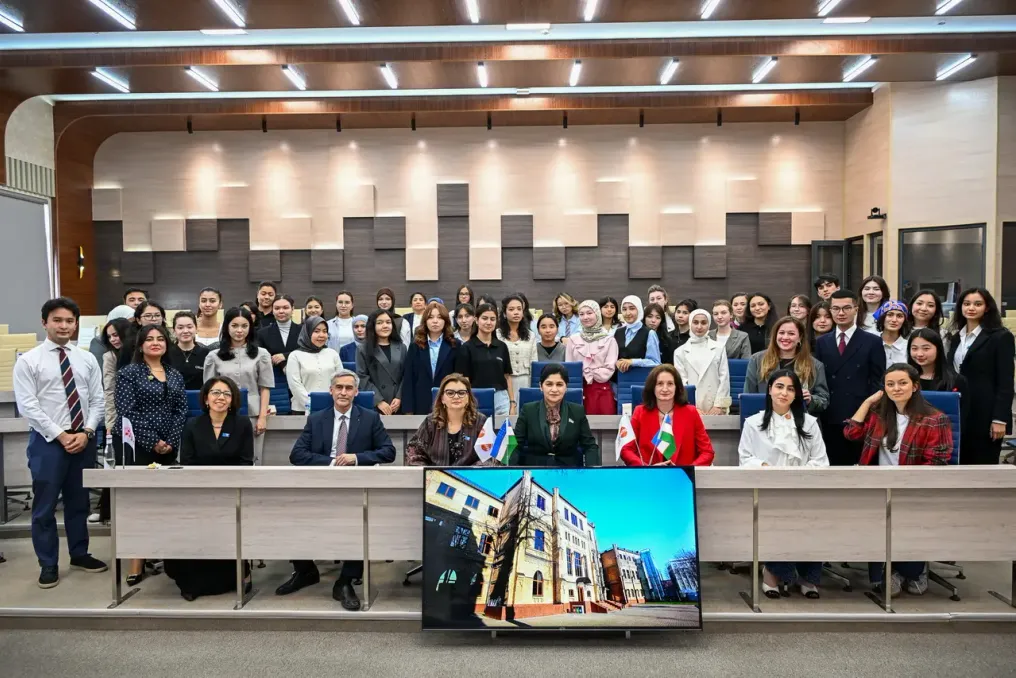
The event 'From Dream to Future: Girls' Rights, Choice, and Opportunities' discussed issues regarding what is needed to realize girls' childhood dreams, the obstacles preventing them from achieving goals, and how boys can become allies in building a society where every girl has the right to choose her future.
The event took place at Westminster International University in Tashkent (WIUT) in observance of International Day of the Girl and attracted 120 participants, including youth, women leaders, government representatives, experts, and development partners. The goal of the initiative was to strengthen dialogue between different generations.
The initiative was organized by the United Nations Population Fund (UNFPA) in Uzbekistan together with the Senate of the Oliy Majlis, the Youth Parliament under the Senate, Westminster International University in Tashkent, and the confectionery company Safia. The project is implemented as part of the regional CHANGE program, which is funded by the European Union and aims to 'Change harmful social norms and attitudes for gender equality.'
Registration was open to the general public, allowing youth from various social strata to participate in the discussion. The active participation of boys alongside girls was particularly significant, as their role as partners and allies is crucial for advancing girls' rights and overcoming negative gender stereotypes.
Government representatives from Uzbekistan, the European Union, UNFPA, the academic community, youth organizations, and the private sector were present at the opening ceremony. WIUT Rector Komiljjon Karimov emphasized the importance of education in creating new prospects for young women and girls. He stressed the need to create an inclusive university environment where young men and women can develop their talents, challenge stereotypes, and confidently pursue their goals.
Renata Vrubel, Deputy Head of the EU Delegation to Uzbekistan, affirmed the European Union's commitment to promoting gender equality. She noted that projects under CHANGE help translate the principles of equal opportunities into practical actions through cooperation with youth, local communities, and state structures.
Malika Kodirkhonova, a member of the Senate Committee on Youth, Women, Culture, and Sports, highlighted the importance of girls' active participation in decision-making concerning education, leadership, and public life. She stated that for young women to make a significant contribution to socio-economic development, supportive government policies, positive role models, and broad opportunities are necessary.
Dr. Nigina Abashada, UNFPA representative in Uzbekistan and Country Director in Tajikistan, focused on the right of girls to make independent decisions about their health and rights, as well as their freedom of choice. She emphasized that every girl must have access to quality education, reliable information, medical services, and a safe environment, and possess the knowledge, confidence, and ability to make informed decisions. She reaffirmed UNFPA's commitment to a future where every girl can realize her full potential without discrimination, violence, and harmful gender norms.
Leylo Aslanova, Chair of the Youth Parliament under the Senate, pointed out the importance of involving youth in shaping decisions that directly affect their lives. She also emphasized the role of young people in combating stereotypes and building a more inclusive society. All speakers agreed that girls' dreams and aspirations must be supported by real opportunities, equal rights, and favorable conditions for success.
One of the most substantive parts of the event was the open discussion between women leaders from various professions and young participants. Among the invited speakers were Leylo Aslanova, Nigina Jabbarova, Madina Ruzmetova, Charos Kamalova, and Elnora Ibragimova-Rizayeva, whose experience spans creative industries, management, law, and inclusivity. The speakers shared stories about their childhood dreams, the people who supported them, the difficulties they faced, and the stereotypes they managed to overcome. They also spoke about periods of doubt, difficult decisions, and lessons learned throughout their lives. Young participants had the opportunity to ask questions directly and see through real examples that there are many paths to professional success.
Special attention was paid to accessibility and inclusivity. Participants stressed that girls and young women with disabilities must have equal chances to actively participate in society's life, achieve their goals, and independently make decisions about their future. The presence of boys also prompted them to consider their personal responsibility for preventing discrimination, supporting girls' aspirations, and building relationships based on mutual respect and equality.
The program went beyond traditional presentations and panel discussions. Specially designed interactive sessions helped participants learn to identify gender stereotypes, understand their causes, and find ways to change them. Through practical tasks, creative assignments, and informal conversations, young people discussed how gender expectations influence educational choices, career goals, leadership opportunities, and daily decisions. The interactive zone provided an open space where participants could freely express their ideas, reflect on personal ambitions, and exchange views with peers and women leaders. This approach reinforced one of the key principles of the event: meaningful change begins when youth have the opportunity to speak, ask questions, actively participate, and be heard.
The event also featured the first large-scale national online media campaign in Uzbekistan, 'From Dream to Future.' This campaign was launched by UNFPA in collaboration with the Youth Parliament under the Senate and Safia. In personal video stories, inspiring women from various fields share their childhood dreams, overcome barriers, found opportunities, and received support on their path to success. The first woman featured in the campaign was Dilfuza Matkarimova, a road infrastructure safety specialist and the first woman from Uzbekistan to work as a marshal in Formula 1 races. Her story demonstrates that women can succeed in professions traditionally considered male.
Matkarimova was among 24 women from different countries selected by the FIA from over 300 candidates to participate in the prestigious international exchange program of female officials at the Singapore Formula 1 Grand Prix. The competition invites women from all regions of Uzbekistan to share their life stories, talk about the people who supported them, and inspire others to realize their dreams. The campaign will run until March 8, 2027, International Women's Day, ensuring the continuation of the discussion on girls' rights, freedom of choice, and opportunities beyond a single day.
The event demonstrated the importance of uniting youth, government bodies, educational institutions, women leaders, business, and development partners around a common goal—promoting girls' rights and expanding their opportunities. The combination of discussing political issues, personal stories, intergenerational exchange, and interactive activities helped participants better understand the impact of harmful social norms, meet inspiring role models, and openly express their own aspirations. The active participation of boys underscored the importance of shared responsibility in promoting gender equality. The ideas and proposals put forward during the event will serve as a basis for further public awareness, advocacy, and youth engagement initiatives within the CHANGE program. The central message of the event was clear: every girl has the right to dream, choose her life path, and receive support in building her future. Creating this future is a shared responsibility.
About the CHANGE program: The regional CHANGE program is funded by the European Union and implemented jointly by the United Nations Development Programme (UNDP), UNFPA, and UN Women. Its goal is to transform harmful gender norms, promote gender equality, and expand women's opportunities through cooperation with national institutions, civil society organizations, and local communities.