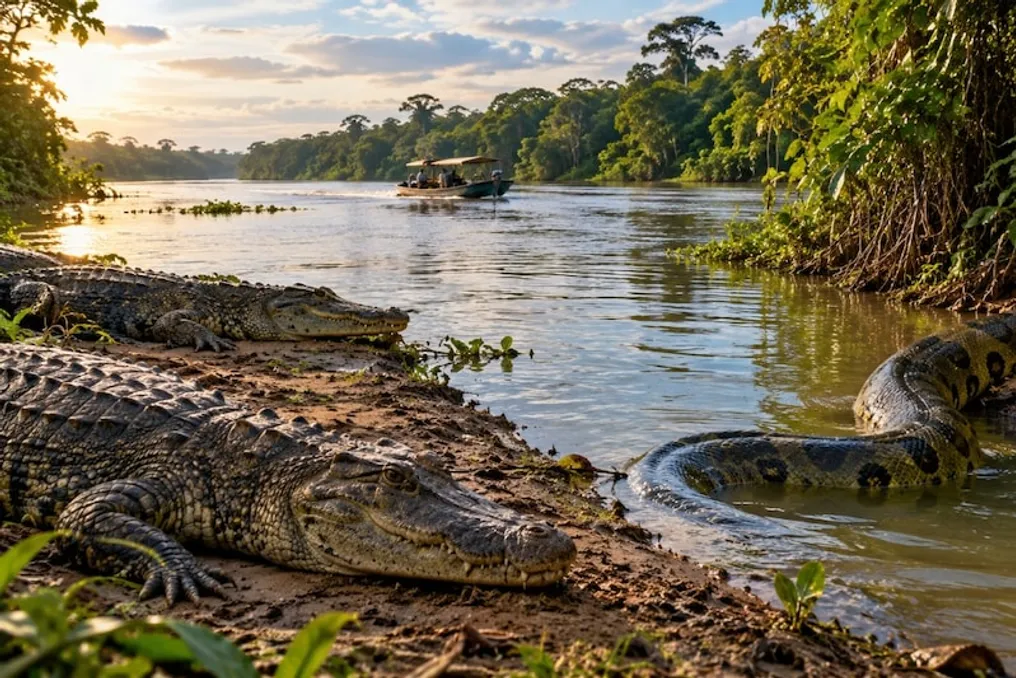
When rivers are mentioned, images of clean water, greenery, picnics, and picturesque landscapes often come to mind. However, there is a river where the danger comes not only from the strong current but also from aggressive animals. Giant anacondas, crocodiles several meters long, and fish capable of generating electric discharges inhabit this area.
This refers to the Amazon in South America. This river is one of the largest in the world. Its water flow is unparalleled, and it competes with the Nile for the title of the planet's longest river. Nevertheless, besides its enormous size, the Amazon makes itself extremely risky due to its powerful current, sudden floods, and dangerous fauna.
Many people live around the Amazon, whose daily lives depend on this river. They use it for transportation, fishing, and other needs. But the water in the river can be as dangerous as it is vital.
Strong currents run through the river; in some places, the flow is so powerful that even experienced swimmers find it difficult to stay afloat. Furthermore, there is a risk of flooding in the surrounding areas. It is estimated that about a thousand people die in the Amazon annually, most of these deaths being due to drowning. Thus, the danger in this river comes not only from hidden aquatic inhabitants but also from the force of the water itself.
Many creatures inhabit the water and around the Amazon, encounters with which can be fatal. Among them is the black caiman. This species of crocodile can reach a length of about 6 meters. The black caiman hides in the water and can attack prey when the opportunity arises. Its impressive build and strength classify it among the most dangerous predators of the river.
Although not all Amazon animals attack humans, predicting the behavior of wild animals is difficult. Therefore, entering the water in such areas without prior information or protection carries a high risk.
Green anacondas are also found in the vicinity of the Amazon, considered among the largest snakes in the world. Their hunting method is quite unique: the anaconda coils around its prey with its body. It can wrap the prey so tightly that it becomes extremely difficult for it to escape. This species of snake is well adapted to life both in and near the water.
Although anacondas usually try to avoid contact with humans, attacks on people happen rarely. Nevertheless, their enormous size and predatory strength place them among the most discussed dangerous inhabitants of the Amazon.
Among the most unique and striking inhabitants of the Amazon is the electric fish, or electric eel. Although the name includes the word 'eel', it is technically not a true eel, but a fish from the family of cephalids. The electric fish is capable of generating electricity with its body. Some of its species can deliver a shock of up to 600 volts. Such a powerful electric shock poses a serious threat to humans, especially if they are in the water and unable to control themselves.
Interestingly, the ability of this fish to produce electricity surprised even scientists. In 1799, the Italian scientist Alessandro Volta developed the idea of creating an electric battery, inspired by information about organisms like the electric fish.
Despite estimates of drowning fatalities in the Amazon, there is no official data on the number of people killed by attacks from animals such as the black caiman, anaconda, and electric fish. The Amazon is a wonderful part of nature, where countless species and a unique ecosystem exist. However, along with the beauty, dangers also lurk here. This is why it is crucial to follow local recommendations and maintain a safe distance for residents of this region and tourists.