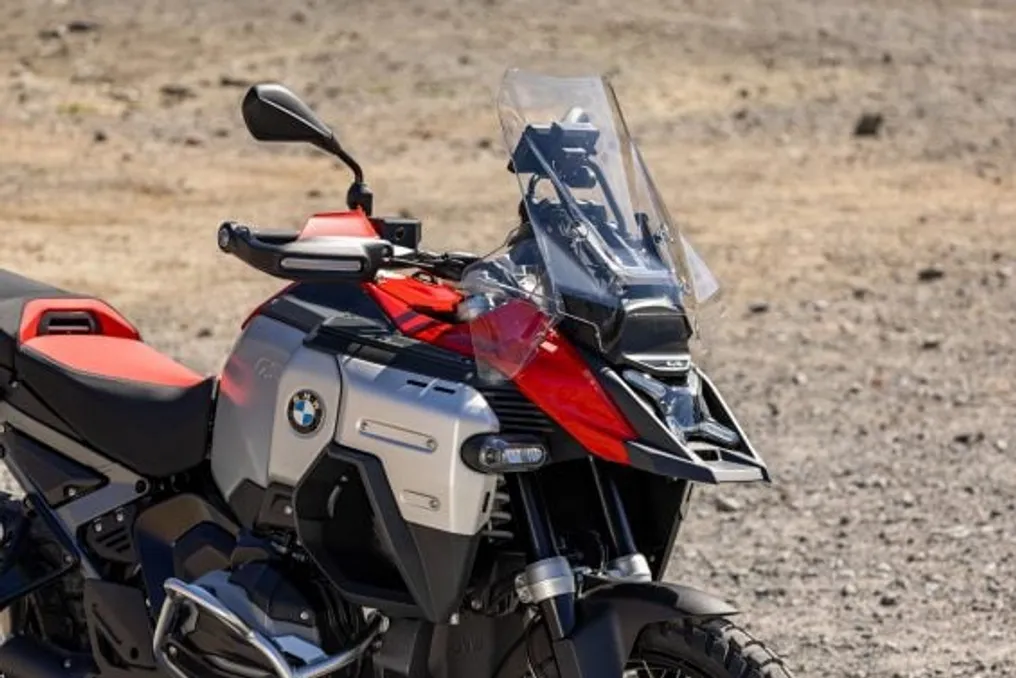
High-cylinder motorcycles registered the greatest growth in Brazilian production during the first nine months of 2026. This advance reached 19.7%, which represents double the overall market growth, which was 9.9% in the same period of 2025. These data, released by Abraciclo at its press meeting in the second week of October, indicate that the increase in demand for bikes is not only due to necessity but also to consumer taste.
Although the growth comes from a smaller base, high cylinder capacity accounts for 2.8% of all production. The entry-level range, with engines up to 160 cm³, remains dominant, representing 78.8% of total production, while the average engine size reaches 18.4%. However, it is the high cylinder segment that shows the highest percentage of growth.
During the press conference, Abraciclo mentioned a 39% increase in naked bikes and an impressive 600% growth in sport touring over the year. However, both niches represent less than 2% of production individually, which explains the high percentages. In September, for example, 3,474 naked bikes and 430 sport touring bikes were manufactured.
The production ranking by category maintains concentration in the basic segment: street leads with 842,150 units (51.2% of the volume), followed by trail (328,636 units, or 20%) and scooter (214,200 units, or 13%). The scooter occupies the next position, with approximately 9% of production.
According to Fenabrave information, the best-selling high-cylinder motorcycles in the market are those that attract new audiences. Marcos Bento, president of the entity, interpreted the growth in larger cylinders as a sign of a balanced expanding market. He observed that those who acquire these motorcycles are changing segments, attracting new profiles to the motorcycle market.
When questioned about the nature of this movement, Bento expressed expectations of continuity, classifying it as an upper-middle-class public that develops an appreciation for motorcycles, potentially even using them as a second vehicle. In his view, this growth tends to persist in the coming years.
At the Manaus Industrial Pole, the motorcycle industry produced 1,645,034 motorcycles from January to September, an increase of 148 thousand units compared to 2025, marking the best performance for the period since 2008, according to the association's own survey. In September alone, 186,758 units were registered, the best monthly record since 2011, despite an 8.5% drop compared to August.
This is the second consecutive year that the shift to higher cylinders appears in the association's indicators. In 2025, the focus was on medium cylinder capacity, and now the highlight is high cylinder capacity.
Based on the accumulated performance, Abraciclo adjusted its forecasts for 2026. Estimated production rose from 2,070,000 to 2,100,000 units, an increase of 6% compared to 2025. Retail sales were projected from 2.3 million to 2,350,000 registered motorcycles (+6.9%), and exports jumped from 45 thousand to 48 thousand units, doubling the growth projection from 4.4% to 11.3%.
Despite the revision, the production forecast still falls short of the 9.9% high already achieved until September, which could indicate a weaker fourth quarter. Bento refuted this interpretation, treating the revision as a mere adjustment to the annual projection, stating that the 6% growth is within expectations and is a very positive development for 2026.
In the retail sector, registrations totaled 1,783,972 units from January to September, setting a historical record for the period, with a growth of 10.5%. The association did not provide this data segmented by engine size.