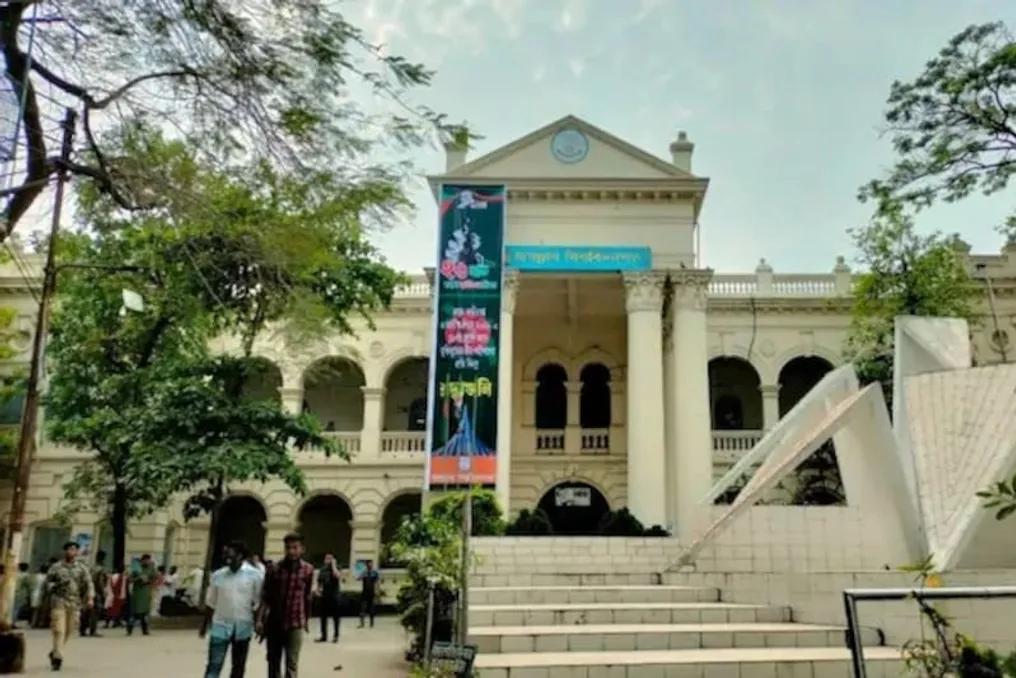
Students Prepare for Ritual Slaughter During Durga Puja Amid Dispute Over Pork Party Near Temple in Bangladesh
Read more
Aaj Tak
www.aajtak.in

Students Prepare for Ritual Slaughter During Durga Puja Amid Dispute Over Pork Party Near Temple in Bangladesh

A major conflict has arisen in Bangladesh stemming from plans to prepare beef kachdi near the Jagannath University temple in the capital, Dhaka. This dispute has escalated into a broader conflict concerning religious views, campus rules, and students' right to hold events.

A group of students from the university's Islamic History faculty announced their intention to slaughter a cow and host a meat feast on the day of Mahaashti Durga Puja, which falls on Friday, October 16th. The conflict first flared up on Monday, October 12th, when students from the Islamic History and Culture faculty organized the preparation of beef kachdi near an open area of the university, located close to the campus's central temple.

Hindu students expressed disagreement with the event's location, stating that it offended their religious sentiments. Joy Saha, secretary of the Jagannath University Central Temple Management Committee, told BBC Bangla that after learning about the meat preparation, he spoke with the organizers. He noted that issues arose due to the proximity to the temple, and the organizers were asked to change venues. A verbal altercation ensued between the parties, and Professor Mohammed Azam Khan intervened, sending an assistant proctor to calm the situation. Subsequently, the feast was relocated further away from the temple. The organizers assured that they had no intention of offending anyone's religious feelings.

Later, accusations emerged that temple bricks were used to create a temporary stove for preparing the beef kachdi. According to The Daily Star, the students initially planned to cook the kachdi in the university cafeteria, but due to low gas pressure, they decided to hold the event outdoors. Organizers explained that they used nearby bricks to build the temporary stove, unaware that they belonged to the campus temple. The students later retrieved the bricks, brought a metal stove from the cafeteria, and apologized for the misunderstanding.

Nevertheless, Joy Saha informed BBC Bangla that the main issue was cooking near the temple, not the bricks themselves. Following this, Hindu students held a demonstration and a human chain, demanding an impartial investigation and the security of religious sites on campus.

Following the incident on October 12th, the Jagannath University administration issued a notification on October 14th. It instructed students, faculty, and staff to refrain from animal sacrifices on campus. The administration justified this by citing the need to maintain cleanliness. According to BBC Bangla, the notification referenced a public announcement released by the Dhaka South City Corporation. There are legal restrictions on slaughtering animals outside authorized abattoirs under the Bangladesh Animal Slaughter and Meat Quality Control Act of 2011, and violations carry penalties.

Some students disagreed with this notification, viewing it as a restriction on the right to hold meat feasts. Professor Azam Khan stated that the administration received information about the animal slaughter plan and issued the notice to prevent escalating tensions during religious events. Later that same day, the university issued a second notification to clarify its position. The administration stated that the initial dispute was resolved through the intervention of the proctor and negotiations between the parties. The university apologized for the misunderstanding caused by the first notice and emphasized that students have the right to hold events on campus, including those related to animal slaughter. However, it also noted that one group's activities should not cause inconvenience to another.

Despite the university's clarifications, the conflict has not subsided. A group of students announced plans to hold the meat feast on Friday, October 16th, which is seen as a protest against the administration's initial notice. A member of the organizing committee, who wished to remain anonymous, told BBC Bangla that they originally planned to hold the event after Durga Puja. According to the organizer, after the administration's notice, the students felt their rights were being restricted.

The organizer specified that instead of holding the event near the temple, it would likely take place in the open area near the arts building. According to BBC Bangla, the organizers have raised funds and purchased a cow. The Bangladeshi Islamist Student Council Majlis has also offered to provide another cow. This organization is affiliated with the right-wing Islamist party Hizb ut-Majlis. A call for registration for the event at 70% of the cost has been posted on social media. Abdul Alim Riff, General Secretary of the Jagannath University Central Students' Union, told BBC Bangla that student representatives met with university officials, and an agreement was reached regarding the event. Proctor Azam Khan stated that if the cow is slaughtered, it must be done in a restrained manner to avoid repeated disputes over religious sensitivities. Joy Saha also noted that the temple committee does not object to the cow being slaughtered elsewhere on campus, provided it does not happen in front of the temple or interfere with the temple's activities.
Similar stories

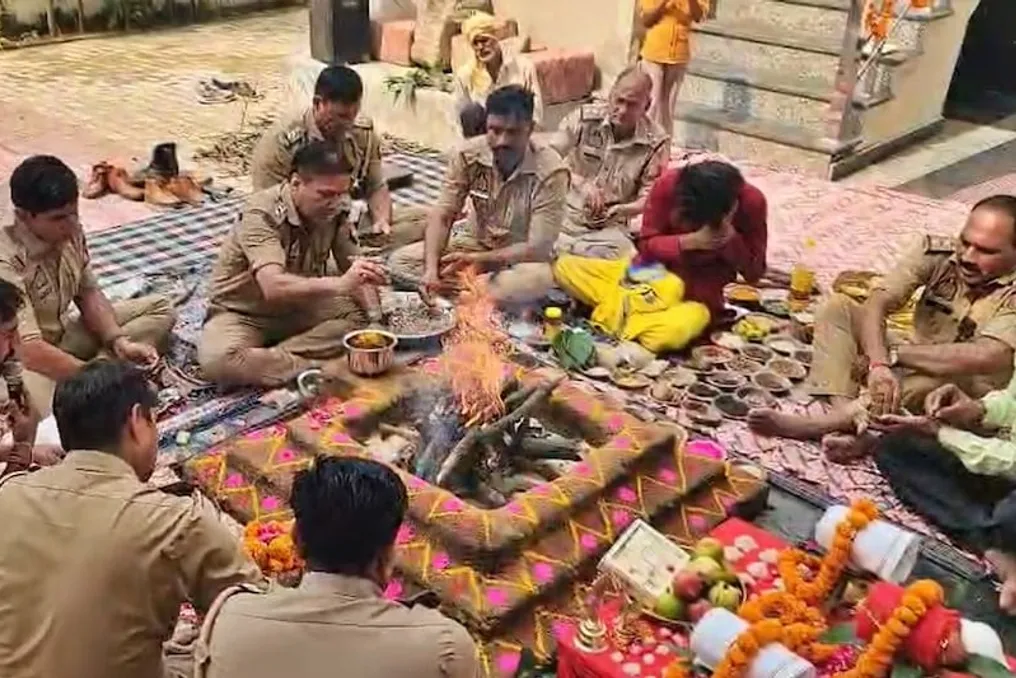
Worship ceremony held at Satyavrat police station opposite Shahji Jama mosque during Navratri
Read more
www.aajtak.in

Worship ceremony held at Satyavrat police station opposite Shahji Jama mosque during Navratri

In the city of Sambal, Uttar Pradesh, a ceremony reading Durga Saptashati took place at the high-tech Satyavrat police station, which was built opposite the Shahji Jama mosque, during the sacred period of Navratri. As part of this religious rite, worship and chanting of Durga mantras were conducted. A yagya shala was specially constructed on the station premises to perform offerings, where over 75 offerings were made during the recitation.

The ritual was attended by police officers, including CO Kuldipa Kumar, Kotwali head Modhit Chaudhary, Satyavrat police station head Satish Kumar, and SI Raj Singh. All participants sat in the yagya shala and made offerings according to established rules, creating an exceptionally devout atmosphere.

The event was also attended by district head Ankit Khandelwal and Police Chief Vikas Chandra Tripathi. The district head stated that during Sharadiya Navratri, worships and rituals honoring the goddess are being conducted throughout the Sambal district. Within this tradition, an event was also organized at the Satyavrat police station, where prayers were offered for peace and tranquility in Sambal.

Police Chief Vikas Chandra Tripathi clarified that the police conducted a worship and fire sacrifice ceremony at the Satyavrat police station, located in the Sambal Kotwali area, in observance of Navratri. The district head and representatives from the entire administrative and police community participated in this event. The ritual was performed in accordance with the spiritual essence of Navratri.

It should be noted that following the violence that occurred during the inspection of the Shahji Jama mosque in Sambal on November 24, 2024, the administration decided to establish a permanent police station in this sensitive zone. Construction began on December 27, 2024, and was completed in approximately 100 days. On April 6, 2025 (Ram Navami), this high-tech police station was inaugurated in the presence of the then district head and Police Chief, accompanied by Vedic chants and a fire sacrifice.

The station was erected on an empty municipal plot directly opposite the Shahji Jama mosque, which is an extremely sensitive mixed-population zone. Its primary purpose is to ensure round-the-clock security to prevent any acts of violence or unwanted incidents in the future. This two-story station houses the main control center for the entire security system and CCTV cameras of the city of Sambal. It provides accommodation and 24-hour duty facilities for about 100 police personnel.

According to mythological beliefs and history, the city of Sambal was called 'Satyavrat' during the Satya Yuga era. Considering this cultural and historical significance, the police station was named 'Satyavrat Police Station'. Engraved on the marble wall at the main entrance of the station is a depiction inspired by the original Constitution of India, showing Lord Krishna instructing Arjuna in the 'Bhagavad Gita.'

Annual 'Rasarang' Festival Cancelled in Maharashtra Due to Farmer Issues and Drought
Read more
www.aajtak.in

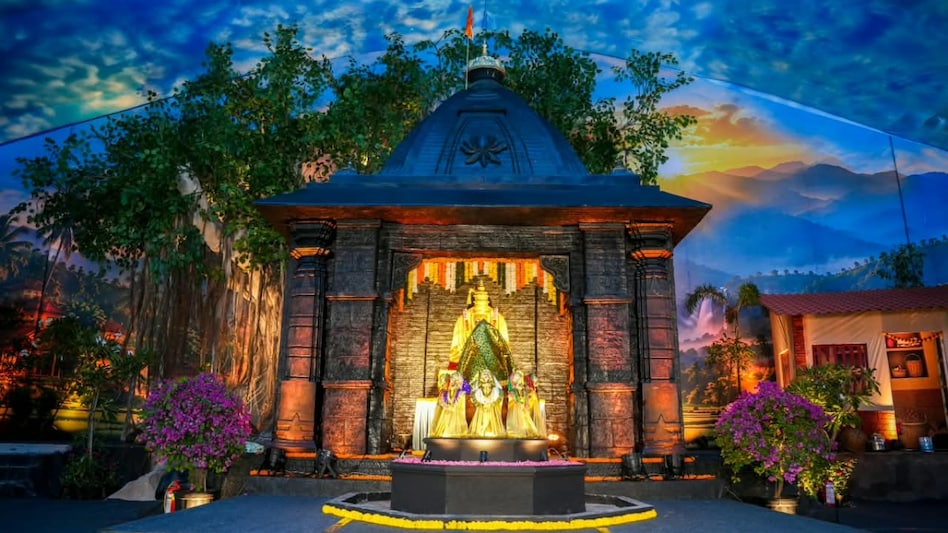
Annual 'Rasarang' Festival Cancelled in Maharashtra Due to Farmer Issues and Drought

Due to the worsening drought crisis and the difficulties faced by farmers, the atmosphere of Navaratri in Donbivli looks different this year. The large-scale Garba-Dandiya festival 'Rasarang', which is held annually, has been cancelled. Organizers decided to prioritize the well-being of the farmers, ensuring sufficient water for the fields, and the prosperity of Maharashtra over holding this major entertainment event.

The Navaratri celebration began with religious rituals and Mahayajnas. In the evening, an atmospheric concert of classical and theatrical music was organized, where the renowned singer Rahul Deshpande charmed the audience with his performance.

The Navaratri celebration took place on the premises of D.N.C. School in East Donbivli under the guidance of Dr. Shrikant Shinde Foundation and Shri Navdurga Youth Club. The deputy from the Kalyan constituency, Dr. Shrikant Eknaat Shinde, was also present at this event. The main message this year was sensitivity towards the farmers and wishes for their prosperity.

Considering the state of drought and farmer problems in Maharashtra, a Navakundatmak Sahasrachandi Mahayajna was conducted during Navaratri this year. Organizers hope that the farmers of the state will receive relief from the drought, that sufficient water will be available for agriculture, and that the fields will revive again thanks to good rains. The rituals and worship were concluded with Vedic chants under the direction of Vedamurti Shri Ravindraj Pataka. Ghatsthapana was performed by Deputy Dr. Shrikant Shinde.

During the ceremony, prayers were offered for the comprehensive development of Maharashtra and the well-being of the farming brothers. This religious event was driven by concern for farmer issues and the desire for the state to overcome the drought crisis. Through this event, there was an attempt to convey the idea that social responsibility and the plight of farmers can be a priority even at large public festivals like Navaratri.

Traditionally, the Garba-Dandiya festival 'Rasarang' was held in Donbivli during Navaratri. At this event, people enjoyed the festival through Garba and Dandiya. However, given the problems of Maharashtra's farmers and the drought fund, the organizers decided to cancel this festival.

In light of the announcement of most districts in Maharashtra being drought-affected and the plight of farmers, the priorities for organizing events this year have been changed. Instead of the Garba-Dandiya festival, the focus is on religious rituals, Mahayajnas, and cultural programs.

According to the organizers, this initiative is an attempt to convey a message of sensitivity to farmers and social commitment. Viewing farmers as 'Baliraju' (providers), they wished them happiness in life and the prosperity of Maharashtra. Thus, while the tradition of celebrating Navaratri is maintained this year, the farmers' problems have become the central theme. The decision to cancel the Dandiya 'Rasarang' festival is part of this sentiment.

After the completion of the religious rituals, the evening program began with a musical performance by the renowned singer Rahul Deshpande. The atmosphere at the D.N.C. school field became melodious thanks to Rahul Deshpande's performance, who is popular for his unique vocals in classical and theatrical music. A large number of music lovers came to listen to him. The richness of the classical music tradition and the emotional expression of theatrical music touched the listeners. People enjoyed the sweetness of the melodies and his singing with great pleasure.

He was met with loud applause during his performance. This year's Navaratri in Donbivli combined Mahayajnas and religious rituals for the happiness of the farmers, along with cultural colors through musical programs. The decision to cancel the Dandiya 'Rasarang' festival and conduct special prayers for the farmers gave this event a special identity.

Popular