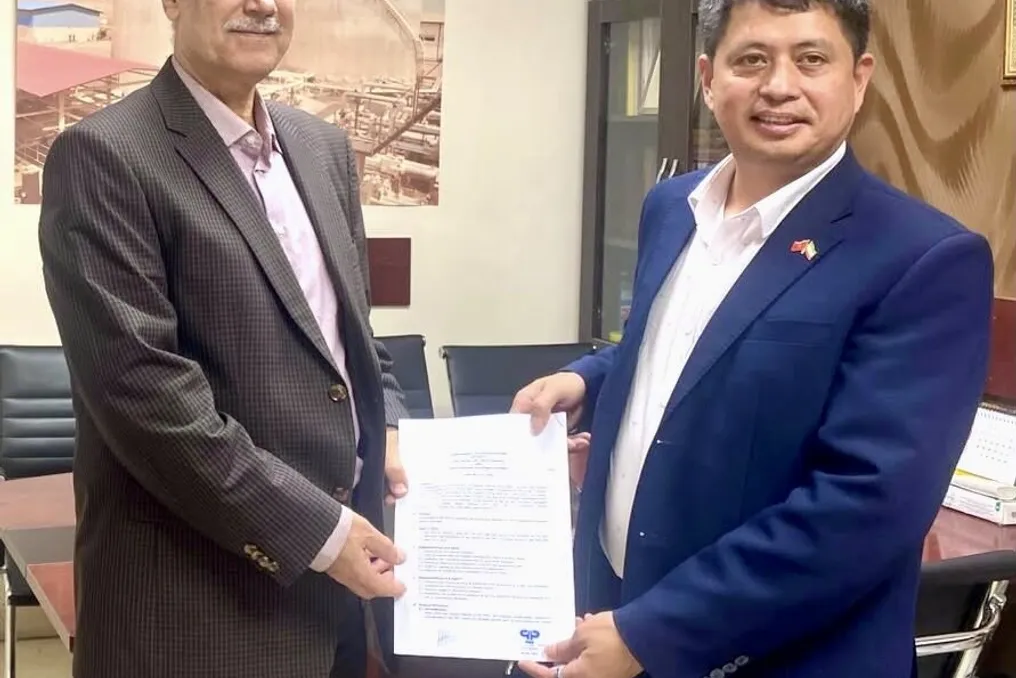
A Vietnamese delegation arrived in Tehran on Tuesday, October 6, and plans to stay until October 18. Led by Mr. Nguyen Dang Dinh, who is visiting Iran for the third time, the delegation has a packed program that includes visits to various regions, assessment of cooperation opportunities, and trade meetings.
In an exclusive interview with Tehran Times, Dinh stated that the mission's goal is to expand Vietnam's commercial presence in the Middle East and establish direct contact with the large Iranian market. Vietnamese enterprises aim to increase direct exports of agricultural products such as coffee, cashew nuts, pepper, and rice, as well as consumer goods, while also exploring the possibility of importing high-quality Iranian industrial raw materials and components.
On October 16 in Tehran, a memorandum of understanding was signed between DHT Mining Joint Stock Company, represented by Mr. Nguyen Dang Dinh, and Petro Pasargad Hormozgan Company, represented by Mr. Mostafa Hajihosseini. This agreement concerns the supply and distribution of POH-origin bitumen in Vietnam.
On the same day, at the Shahre Aftab International Exhibition Center, the Vietnamese delegation visited the specialized exhibition of medical, dental, laboratory, and pharmaceutical equipment, 'Iran Med 2026.' The delegation held intensive B2B negotiations with Iranian counterparts. During their stay, the delegation also visited cities such as Bandar Abbas and Shiraz Expo.
Dinh pointed to banking restrictions as the main operational problem. He called for the implementation of flexible settlement mechanisms, such as bilateral barter trade or local currency-based clearing, to reduce transaction costs and friction. Official trade between Vietnam and Iran amounts to about $170 million, but a significant part of real trade may pass through third countries. According to him, the actual potential is much higher, as the economies of the two countries complement each other. To ensure more direct and transparent trade, enterprises require market analysis data, trade exhibitions, and official platforms for finding business partners.
The most realistic sectors for immediate cooperation, according to Dinh, include agriculture and food processing; industrial raw materials such as specialty chemicals, building materials, and polymers; as well as healthcare and pharmaceuticals, including medical equipment, active ingredients, and biotechnology. Key bottlenecks in the supply chain include long transit times, high freight costs, and differences in quality compliance systems, such as Halal certification. He recommended establishing direct links with regional logistics operators and achieving mutual recognition of regulators to standardize inspections and expedite customs clearance.
Thanks to 17 free trade agreements and access to 60 economies, there is a platform for joint ventures or production within Vietnam. Iranian companies can add value to products within Vietnam and jointly enter ASEAN markets and broader international markets under relevant agreements. For the business community, a successful mission means obtaining vetted contacts, initial contracts, and memorandums of understanding for goods not subject to sanctions. Chambers of commerce and trade promotion agencies must maintain direct contact and organize regular delegations to turn these discussions into long-term partnerships in trade and investment.