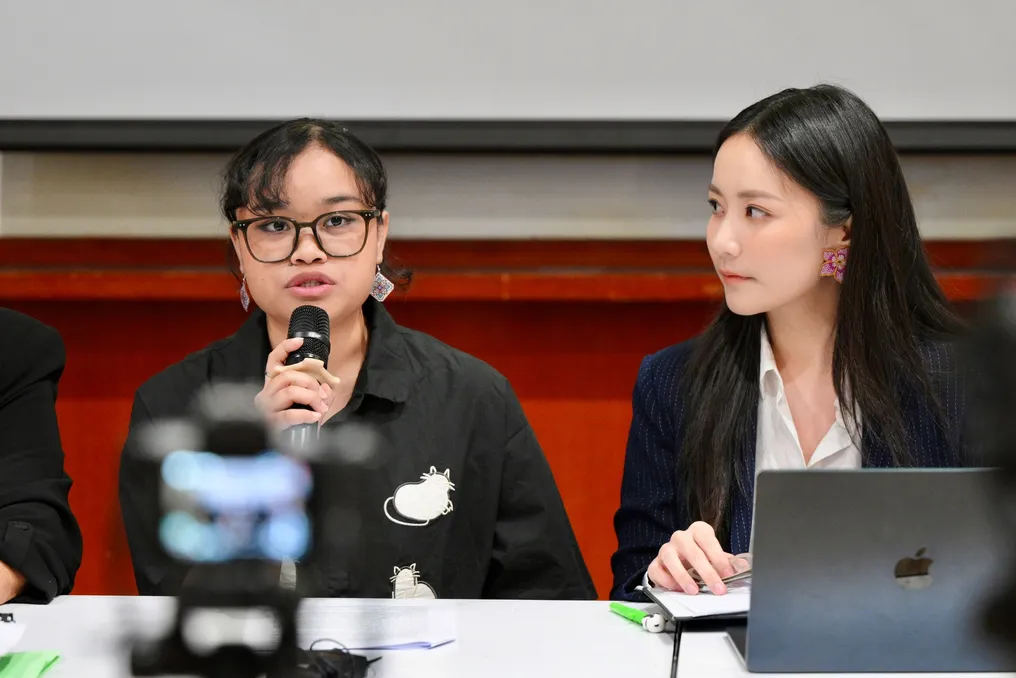
The question 'Mana hutan kami?' (Where is our forest?) has become the driving force for Malaysian youth, who are transforming their climate anxiety into legal action. Amira Alia first learned about climate change issues from a textbook, but the situation became real for her in August 2024 while visiting a welfare home in Johor, located at the southern tip of the Malay Peninsula.
In this home, where young people from disadvantaged families receive basic life skills training, she noticed how severely they were affected by floods caused by the state's recent monsoon season. Since the kitchen, laundry area, and common area of the home were outdoors, they were difficult for the young people and their guardians to access. Alia noted that the home's infrastructure was not designed for rainy seasons.
Alia realized that the environmental problems of severe flooding and the social difficulties faced by the young people in the home were interconnected and systemic. She stated that environmental protection concerns not only trees and animals but also the people living in that environment.
Despite being an active member of the school's ecology and nature club, where she organized workshops on food waste composting, the ongoing floods in Johor made her worry that her efforts were not addressing the root causes of the crisis. The scale of the flooding showed her that climate change 'is not something natural.'
In April, Alia, who was 18 at the time, filed a judicial review along with five other young people aged between 20 and 30. The lawsuit was filed in the High Court of Kuala Lumpur against the Minister of Natural Resources and Environment and the Malaysian government. Under the slogan 'Mana hutan kami,' the applicants demand that the government cease deforestation and uphold its long-standing commitment to keep at least 50% of the country under forest cover.
The plaintiffs request an official declaration that the government's failure to address the deforestation issue violates four legal and constitutional principles. These include the doctrine of legitimate expectation—the expectation that the government will fulfill its promises—and the doctrine of public trust, which requires the government to hold public resources in trust for society and future generations. Two rights guaranteed by the Federal Constitution of Malaysia are also involved: the right to life and the right to equality.
Furthermore, the applicants seek a mandatory injunction compelling the government to stop deforestation. In 1992, speaking at preparatory meetings for the Rio Earth Summit, then Prime Minister Mahathir Mohamad rejected calls to halt deforestation, arguing it contradicted Malaysia's right to use its own timber for economic development. Nevertheless, striving to balance growth and environmental protection, Mahathir committed to permanently preserving 50% of Malaysia's land as forest cover, although this promise was never codified into law; it was later incorporated into many policy plans and frameworks.
The applicants argue that this promise has been broken. They cite an independent 2026 report from the RimbaWatch conservation analysis center. This report, using spatial data on forest cover, shows that land designated for conversion into commercial enterprises will amount to over 4 million hectares—an area comparable to Switzerland. This will reduce Malaysia's forest cover to 47.4%–49.6%, significantly lower than the government's official 2024 estimate of 54.6% forest cover.
It is important to note that the government defines 'forest' differently, including industrial monoculture plantations such as palm and forestry, whereas RimbaWatch does not. A naturally regenerating forest has complex multi-layered vegetation and centuries-old interactions, while a plantation is more uniform in species, age structure, and ecological function. Abe Lim, a climatologist, researcher, advocate, and applicant in the case, explained this in an interview with the Malaysian radio station BFM 89.9 in April.
One of the challenges for the applicants is the concept of locus standi—the legal right of a party to bring a suit, challenge an administrative decision, or be heard in court. This requires that the applicants be directly affected or connected to the issue before they can approach the court. This problem has arisen in other Malaysian climate cases. In April 2026, the federal court ruled that two environmental NGOs challenging the revocation of legal protection for Bukit Cherak forests in Selangor lacked locus standi because they were established after the protection was revoked and therefore could not have been affected by the decision.
Sustainable development lawyer Kiu Jia You, who heads the Malaysian Bar's Committee on Environment and Climate Change, is not involved in the Mana hutan kami case. He characterized the Bukit Cherak ruling as a regression, stating that it demonstrates the need to strengthen the recognition of environmental rights within the legal system.
On October 20, the Mana hutan kami campaign will hold a resolution hearing, where the high court will determine whether the young people have the right to challenge government decisions. Kiu noted that although the government might dismiss the case based on the applicants' lack of locus standi, this would contradict the stance of recent administrations, which hold that development affects all society and requires civil society participation.
The critical argument of the applicants is that the impact of deforestation on youth and future generations constitutes intergenerational injustice and violates their constitutional right to equality. In their affidavit, they stated: 'Today's environmental degradation imposes deferred costs on those who did not participate in it.' Intergenerational justice is an established principle in the legal world, Kiu explained. He specified that this concept is enshrined in international climate change instruments and in certain areas of Malaysian law, such as family law, where unborn children possess certain rights.
Based on these precedents, Kiu highly praised the formulation of the applicants' judicial review as 'very strategically logical, clear, and conservative,' noting that it would not require an 'acrobatic' development of Malaysian law by the judiciary. Intergenerational justice is embedded in pre-colonial local customary laws, or adat. Kiu added that in adat, the idea of using the environment within limits that never threaten the ability of future generations to enjoy it is a fundamental principle. This sharply contrasts with formal statutory law, which arose during the colonial era as a means of exploiting nature by foreign capital interests, tying values to natural resources for trade in English commercial markets.
Alia added that she sees no future because anxiety prevents her peers from envisioning having children. She expressed concern that heatwaves in Malaysia are already severe enough and asked what would happen in 10 or 20 years when her children go to school. She questioned whether she wants such a future for herself.
This feeling of overwhelming worry is called eco-anxiety—a growing mental health issue, particularly affecting children and youth. Alia worries that her efforts to reduce her own environmental footprint pale in comparison to the damage inflicted by 'billionaires and corporations that harm the planet far more than any ordinary person.' She notes that this is a dangerous fear because it creates a sense of futility regarding individual climate efforts.
This feeling of helplessness is central to the eco-anxiety experienced by much of the youth regarding inherited problems, such as intensifying heatwaves whose roots lie in the past, beyond their control. According to Abe Lim, for young people, eco-anxiety is a 'very rational response to repeated evidence of accelerating environmental deterioration.' Studies show that while eco-anxiety can be overwhelming, it is often closely linked to a sense of hope. A 2022 study in Global Environmental Change noted that climate anxiety and concern can serve as a reminder of the seriousness of climate change, alongside 'climate hope,' which allows one to live with this knowledge and take climate action despite the risk of failure. This interaction of two future-oriented feelings is a strong stimulus for climate action.
For Alia, this sense of hope came when she saw her sister, Amira Aisyah, run for the Johor state assembly. After being elected, she successfully lobbied for the creation of a Climate Change and Disaster Risk Management Committee within the assembly. Seeing her sister's work, Alia realized that taking action was 'something that others can do too.' Now, her activism has inspired many others. An online campaign resonated with eco-anxious youth. Thousands of users shared their experiences of deforestation across Malaysia, from Penang to Borneo, and called for action, even tagging the prime minister with the question: Mana hutan kami?