India supports Uzbekistan's scientific expedition dedicated to the legacy of Ibn Sina
Read more
Uza.uz
uza.uz

India supports Uzbekistan's scientific expedition dedicated to the legacy of Ibn Sina

It was previously reported that Uzbek scientists planned to organize the first scientific expedition to India this November. During a meeting between an Indian representative and the head of the Ibn Sina Foundation, issues regarding the high-level organization of this expedition were discussed.

The meeting took place with Ms. Smith Pant, who is the Extraordinary and Honorary Ambassador of India to the country, and Nozimhon Mahmudov, Chairman of the Board of the Ibn Sina Public Foundation.


Similar stories

Discussion on the development of the water sector, priority tasks, and international cooperation
Read more
uza.uz

Discussion on the development of the water sector, priority tasks, and international cooperation

The seventh meeting of the Interdepartmental Working Group (TIG) on water resources, water supply, and sanitation was held at the Hyatt Regency hotel in Tashkent.

The main topic of the meeting was the development of the water sector, as well as the discussion of priority tasks and issues of international cooperation in this area.

Adib Abdulla Qahhor, a representative of Uzbek literature
Read more
uza.uz

Adib Abdulla Qahhor, a representative of Uzbek literature

Literature is a great force that finds a path to the human heart, stimulates thinking, and encourages society to change. A true artistic work invites people to reflect on life and look more deeply at surrounding events.

The works of Abdulla Qahhor, an amazing representative of Uzbek literature, have not lost their relevance even today due to these very aspects.

Tashkent's Ecological Status: IQAir Data Shows High Air Pollution Levels
Read more
uza.uz

Tashkent's Ecological Status: IQAir Data Shows High Air Pollution Levels

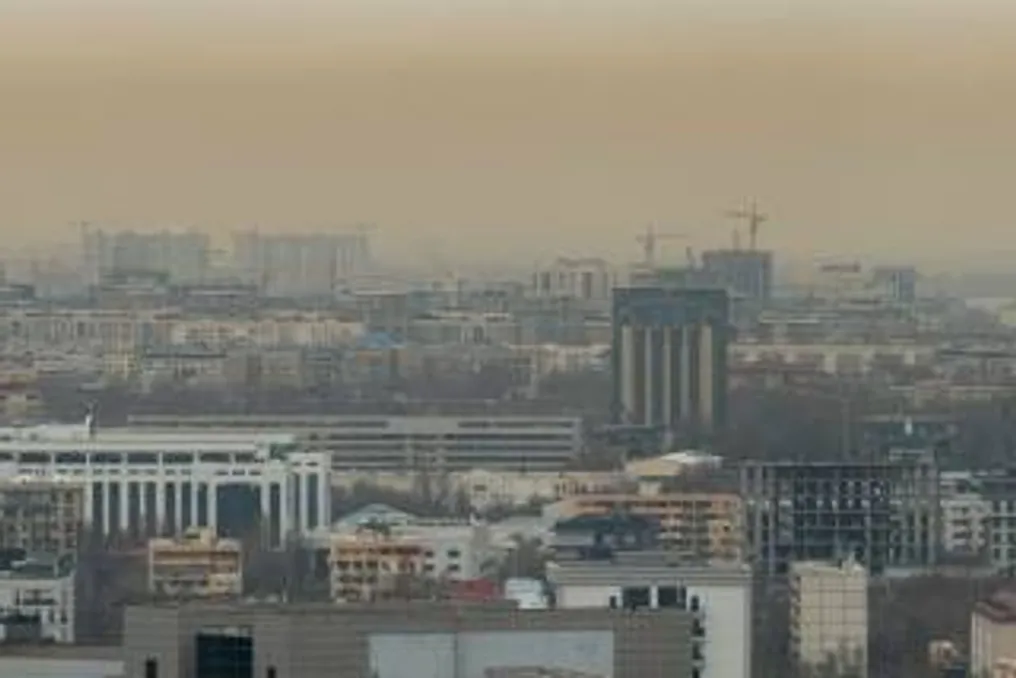
When the air color is red, it is easy to find the culprit in one place. However, the figures demonstrate that the air problem in Tashkent is much more serious. On the morning of October 6, IQAir monitoring recorded 'red' indicators for the air in Tashkent again.

The overall Air Quality Index (AQI) in the city was 132, and at some stations, it reached 147–159. An AQI level in the range of 101–150 is considered harmful to sensitive groups of the population, while values from 151 to 200 are classified as dangerous for everyone. This is a serious warning.

The main pollutant at the moment was PM2.5—very fine particles capable of penetrating deep into the lungs. At some points, the concentration of PM2.5 reached 59.7–67 micrograms per cubic meter. Such a level can exacerbate respiratory problems, as well as aggravate heart and lung diseases, especially in children, the elderly, and people with chronic illnesses.

Popular