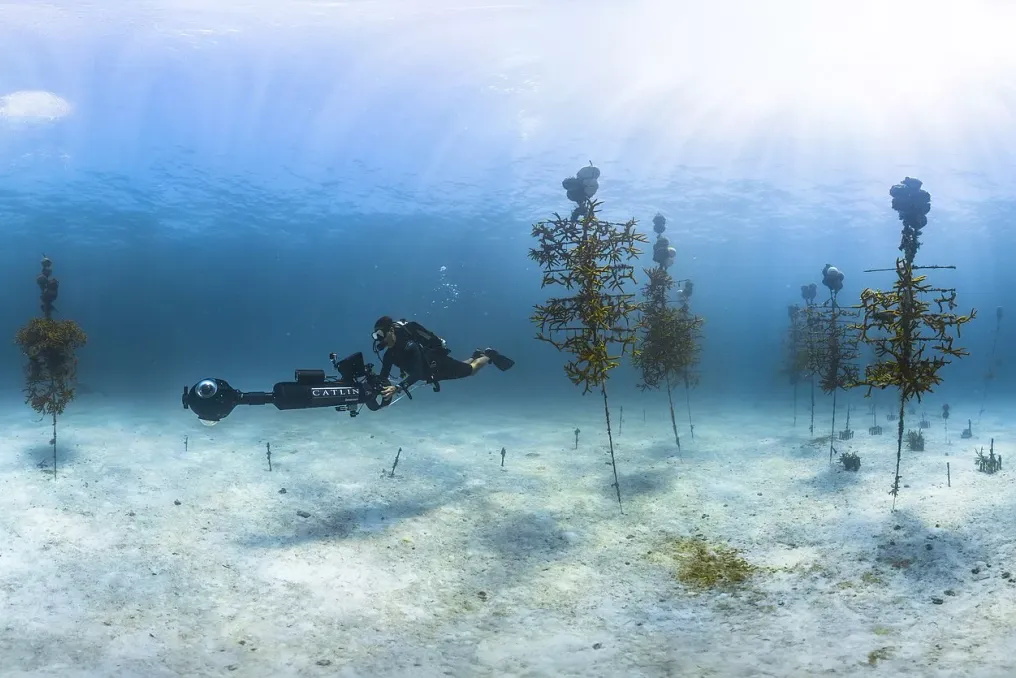
In 1996, a Florida fisherman made an unexpected discovery while noticing the growth of horned coral on his live rock farm. Nearly three decades later, this observation inspired the creation of an underwater aquafarming method used to restore damaged coral reefs.
Ken Nedimayer, who worked in tropical fish and aquarium fields, began experimenting with fragments of broken coral. He found that these fragments could form larger colonies if suspended underwater, leading to the development of the 'Coral Tree' nursery system.
The principle of this system is quite simple: coral fragments are hung on branching structures anchored to the seabed. This ensures water circulation around them while protecting them from algae and sediment found closer to the bottom.
As the fragments grow, conservation specialists transfer them to damaged reefs. This approach allows nurseries to cultivate a large number of corals before returning them to their natural habitat. Nedimayer's work ultimately led to the establishment of the Coral Restoration Foundation, which uses coral nurseries to support restoration efforts in the Florida Keys.
Florida's coral reefs suffer from diseases, habitat loss, and rising ocean temperatures. In 2023, an unprecedented marine heatwave caused devastating losses.
A study published in the journal Science in October 2025 showed that between 97.8% and 100% of horned and elkhorn coral colonies died during this thermal event in the Florida Keys and Dry Tortugas.
These branching corals serve as vital habitats for marine organisms. Their decline negatively affects the entire reef ecosystem by reducing shelter and feeding grounds for fish and other marine species.
Growing more coral is only part of the solution. Conservation specialists are also working on preserving genetic diversity, which can help coral populations withstand diseases and environmental changes.
Maintaining various coral genotypes in nurseries and partner sites helps prevent the loss of valuable genetic material due to a single catastrophe.
Nevertheless, coral trees cannot protect colonies from prolonged marine heatwaves. Even corals successfully grown in nurseries must survive after being returned to the reef. The method offers a practical way to restore damaged habitats, but long-term recovery also depends on addressing the environmental pressures causing coral decline.
What started as an observation on a Florida aquaculture farm has turned into an important tool for reef restoration. The current challenge is ensuring the survival of the corals so diligently cultivated by conservation specialists amidst rising sea temperatures.