A space journey that culminated in an unprecedented feat occurred 29 years ago, marking the beginning of the boldest planetary exploration of the 20th century. The objective of this ambitious project was to travel billions of kilometers to Saturn to attempt a landing on the surface of a moon located in the outer Solar System.
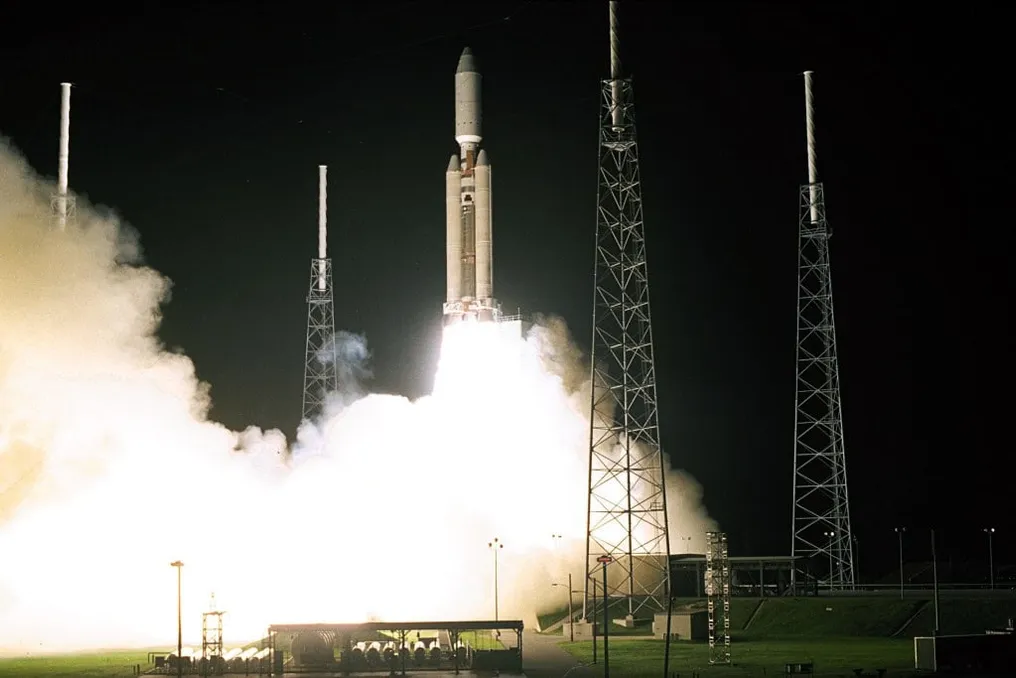
On October 15, 1997, the Cassini-Huygens mission was launched from Launch Complex 40 at Cape Canaveral Air Force Station in Florida, using the powerful Titan IVB/Centaur rocket. This operation was the result of collaboration between NASA, the European Space Agency (ESA), and the Italian Space Agency (ASI), involving more than 16 nations to transport the European probe Huygens to the surface of Titan, Saturn's largest moon.
Douglas Galante, an astrobiologist and Professor of Geobiology at the Institute of Geosciences at the University of São Paulo (USP), commented on the mission, stating that 'Huygens was a fantastic engineering achievement. The first important point is that it was built by ESA. And the rest of Cassini was done by NASA. So, it was already a very large international integration process.'
To achieve the necessary speed without relying on large amounts of additional fuel, the spacecraft had to perform a series of four gravitational assist maneuvers. These maneuvers included flybys of Venus in April 1998 and June 1999, a close pass of Earth in August 1999, and utilizing Jupiter's impulse in December 2000.
After seven years traveling through deep space, Cassini-Huygens reached Saturn's orbit on July 1, 2004. To ensure precise orbital insertion, the spacecraft performed a 96-minute engine burn and passed through a gap in the planet's rings, collecting unprecedented data recorded in the archives of NASA's Jet Propulsion Laboratory (JPL) and ESA.
The mission's name honored two great astronomers of the 17th century. Christiaan Huygens, Dutch, discovered Saturn's rings and the moon Titan in 1655. Later, Jean-Dominique Cassini, Franco-Italian, identified four other major moons of the planet: Iapetus, Rhea, Tethys, and Dione. It was also Cassini who noticed that the Saturnian rings did not form a continuous structure but were divided by a dark gap, known in science as the 'Cassini Division.'
The crucial moment of the project occurred on January 14, 2005, when the Huygens Module separated from the main spacecraft to investigate Titan's dense and thick atmosphere, composed of nitrogen, methane, and ethane, presenting a pressure approximately twice that of Earth's.
Galante highlighted the incredible durability of the equipment during the deceleration process. He explained that 'When Huygens made its entry into the moon, it heated up a lot. The disk, the ablation shield, which is the front part of the probe, was designed to withstand temperatures of over 18 thousand degrees. And it survived, it landed.'
During the descent, the probe conducted a detailed atmospheric mapping, measuring light absorption at different altitudes. This allowed for determining the chemical composition of Titan's clouds and understanding how light is scattered and absorbed in its gaseous layer.
The spacecraft surprised everyone by landing intact in a scenario where failure was the most likely outcome. Galante recalled: 'We took a picture on the surface, the farthest surface picture ever taken from Earth, which will probably remain so for a long time.'
The success of the landing exposed an unexpected landscape on Titan's surface, characterized by rivers and lakes of liquid methane, consolidating the mission as a milestone in both engineering and space exploration.
In addition to the technological advance, the data collected by Huygens brought significant contributions to astrobiology, revealing aspects of the moon's atmosphere and history. According to Galante, Titan's environment has parallels with the early stages of our own planet. He observed that although Titan is a hostile place for life as we currently know it, it resembles what Earth might have been in the past, due to its rich composition of methane, CO2, frozen water, and low temperatures, suggesting a similarity to primitive Earth.
The specialist argued that, with this composition, the moon functions as a field of study to understand the chemical reactions preceding the emergence of life. He defined Titan as a 'prebiotic chemistry laboratory,' where stellar radiation and meteorite impacts can generate energy and modify the chemistry of hydrocarbons, forming molecules essential for life, such as sugars, acids, and lipids.
By touching down on Titan's surface, the small European probe not only completed an unprecedented journey but established a lasting legacy that continues to guide the search for answers beyond Earth.