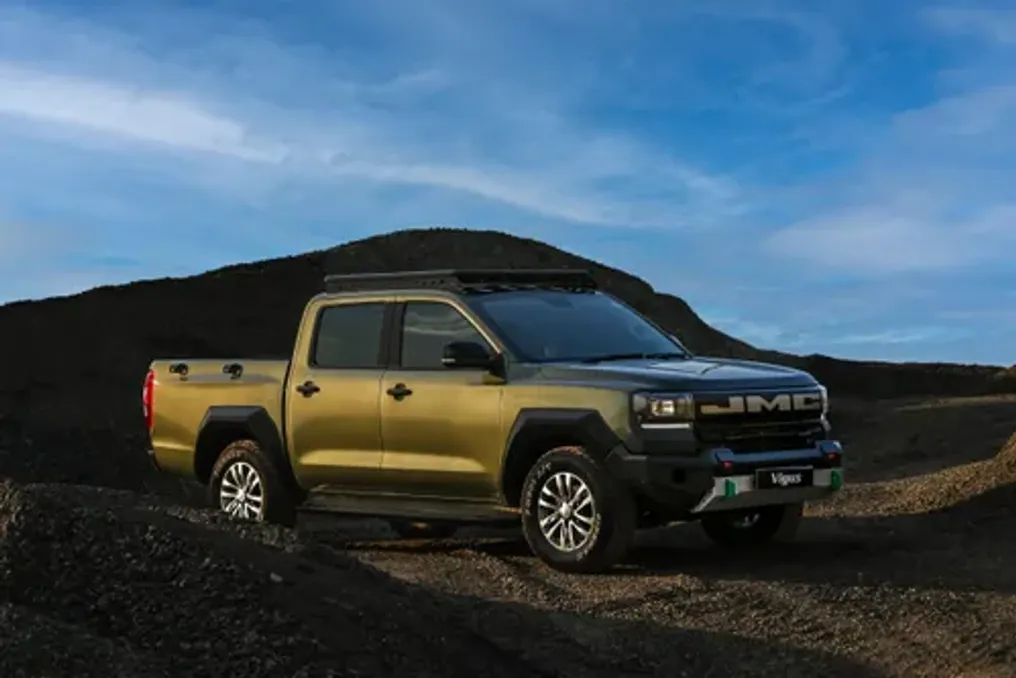
JMC Vigus Review: Characteristics of the New Budget Double Cab and Its Drawbacks
Read more
IOL
iol.co.za

JMC Vigus Review: Characteristics of the New Budget Double Cab and Its Drawbacks

The new JMC Vigus model, introduced at the beginning of this year, is one of the most affordable double pickups in South Africa. Unlike many competitors that are updated older generations, the Vigus features an entirely new construction.

Essentially, the new Vigus represents the third generation of the JMC Baodian, manufactured in China. While the first two models used chassis from Isuzu and Ford, the new version was developed independently. Power is provided by a new 2.5-liter turbo-diesel engine, which produces 123 kW and 430 Nm. It is paired either with a six-speed manual transmission or an eight-speed automatic.

Although the new JMC Vigus is cheaper than its Japanese rivals, its dimensions are similar. The overall length is 5335 mm, placing it between the Hilux and Ranger models, although it is slightly narrower.

The Vigus is available in one specification: the basic 4x2 with a manual transmission starts from R399,900, while the automatic version costs R459,900. An all-wheel-drive automatic version is also available for R499,900. A larger model, the Grand Avenue, offering a more luxurious interior and a 155 kW engine, starts from R529,900. This Chinese brand returned to the South African market last year under the umbrella of the Salvador Caetano Group.

Modern Interior

The cabin looks modern and technological, especially when compared to peers in the same price category. The automatic version is equipped with a large 12.8-inch touchscreen featuring Apple CarPlay and Android Auto, as well as a 9.0-inch digital instrument cluster. The manual version has a standard radio receiver with Bluetooth support.

All models feature a manual air conditioner, electric mirrors and windows, a rear parking distance control system, and a multifunction steering wheel. The automatic version additionally includes cruise control for long journeys. Safety features include two airbags, ABS, hill descent control, and tire pressure monitoring. However, unfortunately, the manual version lacks stability control, and side or curtain airbags are not offered.

The cabin design is pleasant and well-regarded in terms of functionality, offering ample space in the center console for storing keys and drinks. There are physical 'piano-style' controls for main climate functions and a large touchscreen located within the driver's line of sight. Nevertheless, it was disappointing that the test vehicle lacked AM/FM radio functionality.

The interior space meets expectations for this price segment: the cabin is impressively wide, there is sufficient headroom, and good rear legroom.

What is it like to drive?

The 2.5-liter turbo-diesel provides relatively high performance for an entry-level pickup, which is more than adequate for active driving both in the city and on the highway. Furthermore, the eight-speed automatic transmission shifts smoothly and has well-spaced gears.

In terms of fuel consumption, the test vehicle averaged 8.8 liters per 100 km, although this figure was achieved during a trip with a high proportion of highway driving. The ride quality is considered acceptable for a modern pickup, but without a load, it can feel quite bouncy over large speed bumps. Regarding payload capacity, the Vigus can carry 915 kg, and its chassis, made of Grade 420 steel, has a bending rigidity of 1150 N/mm.

CONCLUSION

As a fully modern, comfortable, and capable vehicle, the Vigus is likely to be the pickup you need. It will also likely occupy an ideal niche for buyers looking for a modern work tool that does not require significant financial investment.

The Vigus comes with a generous five-year warranty or 200,000 km, and the price also includes a four-year or 65,000 km service plan. However, maintenance intervals of 10,000 km could become expensive after the service plan expires.
Similar stories

New BMW 3 Series retains gasoline engine but receives electric car design and interior
Read more
autopapo.com.br

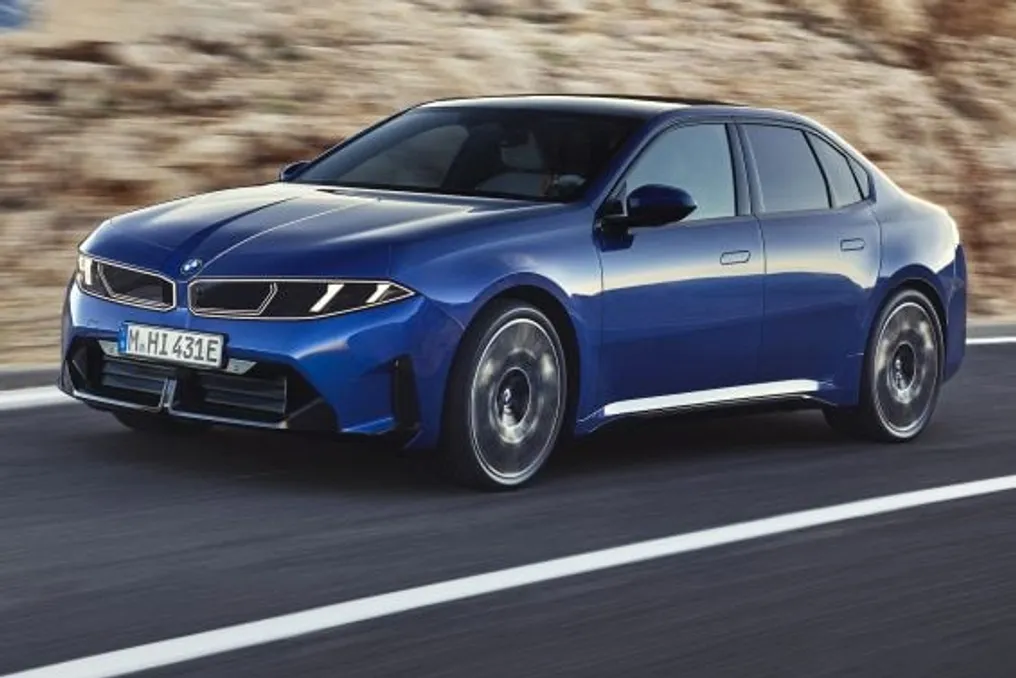
New BMW 3 Series retains gasoline engine but receives electric car design and interior

BMW has introduced the new generation of the 3 Series model, which is equipped with internal combustion engines, but it borrows the appearance and technologies from the Neue Klasse family, previously presented in the electric i3 version. According to the manufacturer, the differences between gasoline and electric versions are only in details related to the type of powertrain.

The technological separation occurs under the hood: the i3 model uses the new electric architecture, while the gasoline 3 Series continues the evolution of the CLAR platform.

In the United States, where sales will begin in the first quarter of 2027, the lineup will be offered in three variants. The 330 model starts at $51,250 USD (equivalent to approximately 263 thousand Brazilian reais) including delivery tax; the 330 xDrive version costs $2,000 more. The top-spec M350 xDrive is available for $67,250 USD (approximately 345 thousand Brazilian reais). Prices for Brazil have not yet been announced.

The sedan's equipment includes a front end that combines the double spiral grille with headlights in a single element, integrated door handles, and horizontal taillights. The vehicle dimensions are 4.75 m long, 1.85 m wide, 1.46 m high, and 2.86 m between the wheel axles. Wheels are available in sizes from 18 to 20 inches.

The interior is designed in the style of the i3 and features the Panoramic iDrive system, which includes the Panoramic Vision projection strip on the lower part of the windshield and a 17.9-inch driver-oriented central display. An optional 3D head-up display is also offered.

The X operating system, based on Android, integrates Amazon's Alexa+ voice assistant, as well as wireless Apple CarPlay and Android Auto connectivity. It also features Symbiotic Drive, which makes second-level driver assistance less intrusive. The driving assistance system stops interfering if it recognizes an intentional maneuver that poses no collision risk.

The 330 model is equipped with a 2.0-liter four-cylinder turbocharged engine that produces 259 horsepower and 40.8 kgm of torque. The car has an eight-speed automatic transmission and can use rear or all-wheel drive xDrive. The system is complemented by a 48-volt mild hybrid setup with a belt-driven generator. The acceleration time from 0 to 100 km/h is about 6 seconds.

The M350 xDrive, which replaces the M340i, uses a 3.0-liter inline six-cylinder turbocharged engine producing 443 horsepower and 59.1 kgm of torque. In this version, the 48-volt generator is located in the transmission housing and increases power by 17 horsepower. With all-wheel drive, the series accelerates from 0 to 100 km/h in 4.1 seconds and has a maximum speed limit of 250 km/h. It is also equipped with M adaptive suspension, M Sport rear differential, and reinforced brakes.

A special feature is Drift Moment, activated via the central screen, which disables front-wheel drive and stability control, directing all power to the rear wheels. This feature will only become available in 2027 through a software update, including vehicles already delivered to customers.

Internal combustion engine vehicles will be manufactured in Dingolfing, Germany. Next year, a plug-in hybrid option will be added to the lineup. Regarding Brazil, where the current generation is assembled in Aracuary (SC), BMW has not yet announced when the new model will arrive.

Popular