The 26/11 Mumbai attacks were seen by viewers on television, read in the news, and felt in numerous films. However, what was happening in the courts after these events? Why did it take so many years to prove Ajmal Kasab's guilt, despite the availability of photographs, witnesses, and evidence? And why was it so important to catch the terrorist alive?
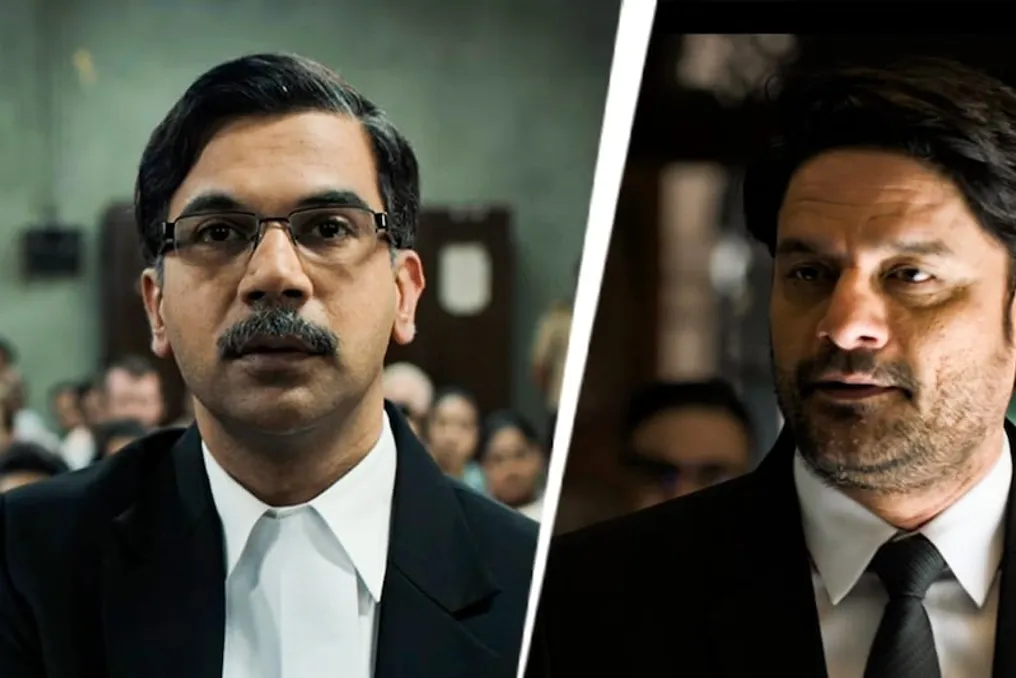
Rajkumar Rao's film 'Prahar: The Story of Ujwal Nikam' attempts to answer these questions. Unlike the focus on gunfire, explosions, and the horrors of the terrorists, the narrative concentrates on the legal battle that was meant to bring justice to the country within constitutional norms.
An important phrase is heard in the film: 'Delay in justice is denial of justice, but justice delivered in haste buries justice itself.' This means that even when dealing with a brutal terrorist like Ajmal Kasab, the constitution cannot be set aside due to anger. Although the film's concept is strong, the main question is whether it can evoke in the audience the level of shock that this story hoped for.
The story begins with Ujwal Nikam's victory in the 1993 Bombay bombing case. After this, the plot develops further. While Nikam is preparing for his daughter's wedding, the 26/11 terror attack radically changes everything. Now he faces not just a case, but the task of ensuring justice for the entire nation.
Rajkumar Rao played the role of Ujwal Nikam—a public prosecutor depicted as an impulsive and stubborn man who handles cases in his own style. For him, the Constitution is paramount, and he must fight for justice strictly within its framework.
The most interesting aspect of the film is that it does not just tell the story of Kasab's punishment but also tries to explain why it was vital to catch him alive. Kasab was not just a terrorist, but living proof of a transnational terrorist network, a training center, and a mechanism pushing youth towards radical views.
A crucial moment in the film occurs when Kasab hears the Adhan and is informed about Eid. He wonders, 'Is it permissible to celebrate Eid in India?' This small question says a lot about how hatred and radicalism can completely change a person's mindset and turn them into a machine for killing other people.
The film tries to understand Kasab as a person, but this does not mean justifying his crimes. This distinction is a strength of the story. Nevertheless, this aspect could have been shown more deeply.
At the beginning, the film dedicates a lot of time to court arguments and legal maneuvers. These details are important, but emotional connection takes time. Then, a witness appears in court—a 10-year-old child played by Dior Varghese. It is at this moment that the film allows the viewer to feel the real pain of the 26/11 terror attack for the first time.
The testimony of the innocent child reminds viewers that this attack resulted in the loss not only of numbers, but of lives, families, and childhoods. Here the film shows all its power.
However, just when it seems the story is moving in the right direction, the script takes another turn. The film begins to drift from its main theme.
Significant attention is paid to Nikam's personal life, his relationships with family, and the sacrifices he makes for his profession. He lives in a hotel room, missing many moments watching children grow up, and cannot spend time with his wife.
In one scene, he blesses his grandson, speaking about the necessity of always loving family. His son responds sarcastically to this. This small episode tells the story of a family where the father's professional success hides years of absence and emotional distance.
These scenes are not bad; they help to understand Nikam's character. The problem arises when the film gets so bogged down in such details that the main legal battle remains on the periphery. The story constantly builds momentum and then slows down. As a result, the viewer is sometimes engaged in the film, and sometimes starts looking for the plot's direction.
Another interesting character in the film is the lawyer Kajmi, played by Sikander Kher. He has to face opposition and dissatisfaction for defending Kasab.
When he asks questions to police, photographers, and witnesses, the audience's anger naturally grows. But the film also raises an important point: granting a suspect the right to legal defense does not mean supporting his crime.
Kajmi also explains that he faced difficulties in his professional life due to his Muslim surname. This is an important aspect of the story, as in the eyes of the law, the rights of the accused and public anger over his crime are two different concepts. It would have been great if the film had delved deeper into this topic.
The appearance of Jaydeep Ahlavat intensifies the drama of the court proceedings.