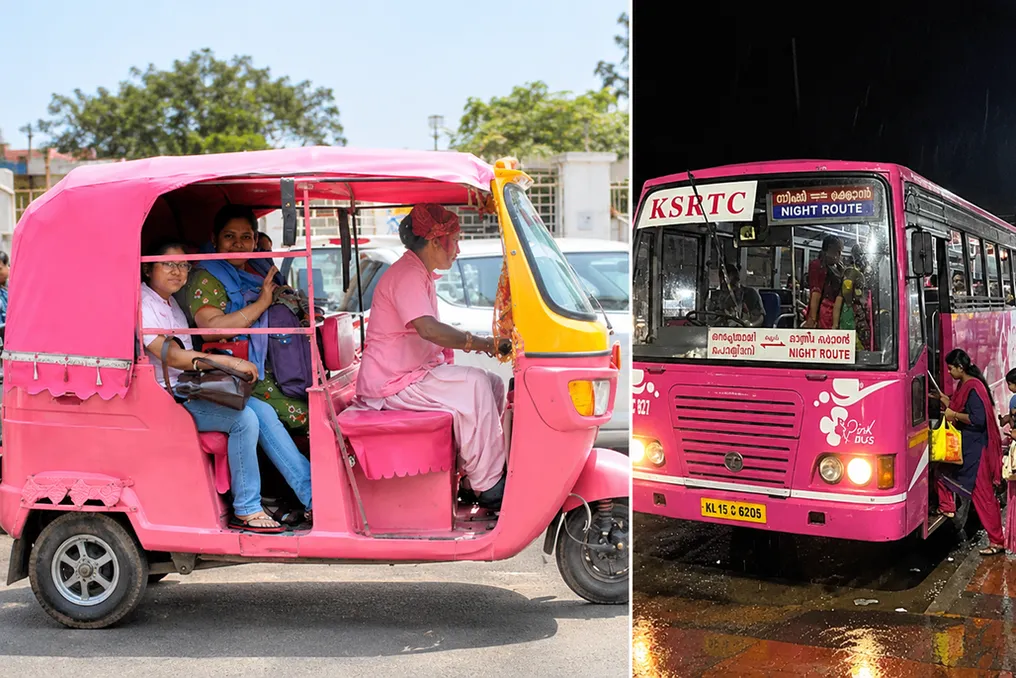
The question of whether pink taxis, buses, and booths contribute to enhancing women's safety is examined through the lens of analyzing six different initiatives in India. A situation where a woman leaves Delhi metro station late in the evening, finds that the last bus has left, street lighting is insufficient, and all waiting auto-rickshaws are driven by men, illustrates the problem that the new pink vehicles in Delhi are intended to solve.
According to reports, the Cabinet approved the DURGA scheme on September 23, 2026, and applications began on October 12. In the first phase, which includes 1300 electric vehicles, 1170 are designated for women, and 130 for transgender individuals who will own and operate them. Female applicants must be Delhi residents aged between 20 and 40; allocation is done by lottery if the number of applicants exceeds the district quota. Buyers can claim an incentive of 50,000 rupees under the Delhi Electric Vehicle Policy 2026, although the government has not specified the size of each contribution.
Six Pink Programs and Existing Evidence
The first program is free travel on Delhi buses for women, which has been in effect since October 2019. A WRI India study showed that the share of women among daily bus passengers increased from 33% in 2019–20 to 42% in 2022–23, but negative impacts from hostile staff, overcrowding, and service unreliability limit this growth. The Pink Saheli card became mandatory for free travel on September 18, 2026.
The second part examines free buses in Tamil Nadu and Karnataka. In three districts of Tamil Nadu studied by the State Planning Commission, women saved an average of 888 rupees monthly thanks to the Vidiyal Payanam program. In Karnataka, the Shakti program shows a different picture: the number of women's trips increased from 183.07 crore in 2023–24 to 275.71 crore in 2025–26, but ETV Bharat reports unpaid reimbursements amounting to 5,172 crore rupees, and transport corporations recorded their first loss in 2025–26.
The third point concerns pink taxis and e-rickshaws. In Mumbai and Thane, reserving 5% of rickshaw usage permits made 465 licenses available, and the first 19 trained women started driving in April 2017. Transport accessibility for women proved to be a complex issue. Maharashtra set a goal of 10,000 pink e-rickshaws by 2024. Minister Aditi Tatkare reported that 9,440 applications were received, and 130 women received vehicles; Hindustan Times notes that bank loans and driver's licenses were obstacles for the vehicle costing about 4 lakh rupees. In Delhi, the 2022 attempt reserved 1,406 permits for electric vehicles for women and attracted 743 applicants in the first round.
The fourth initiative is pink booths in Ghaziabad. These booths, staffed by female police officers, also handle domestic disputes. The Times of India reports 4,038 complaints regarding couple disagreements from September 2023 to April 2024, with a police official stating that 3,981 of them were resolved there, leading to a 16% decrease in crimes against women over seven months. Both figures are sourced from the police without independent assessment. The Wire found that one booth in Greater Noida was empty around 5:30 PM on September 1, 2026.
The fifth program is 'Pink Protection' in Kerala. The Kerala Police launched it in July 2021, starting with 10 cars, 40 two-wheelers, and 20 bicycles. However, no results have been published. The closest evidence is the J-PAL SHE Teams trial in Hyderabad, which is not a pink scheme: overall street harassment did not change, but serious incidents decreased by 27% in areas patrolled by uniformed officers.
The sixth initiative is pink polling stations. The Election Commission stated in April 2024 that more than 5000 polling stations would be fully managed by women. In Delhi, out of 13,641 polling stations for the 2024 Lok Sabha elections, 70 were designated for women, according to The Hindu. Data was collected, but there was no study on the impact on voter turnout.
So, are the pink initiatives working?
At that metro station, the color of the vehicle matters less than three questions: is someone waiting, can a female driver afford to own this transport, and does she feel her journey home is safer? Where the scheme eliminates costs, such as bus fares, women's mobility changes noticeably. Where safety is promised, the results are largely unmeasured or come directly from the police.
Maharashtra and Delhi have demonstrated that a reserved permit does not guarantee the presence of a vehicle on the roads. What will determine the success of DURGA: access—can applicants go through the process of obtaining credit and a license; transparency—will the government publish who applied and who received the vehicles; and evidence—will the planned two-stage study record safety, not just income?
The Transport Department requested parking and charging spots at metro stations from DMRC and NCRTC, aligning with the scheme's goal of ensuring a safer journey home late at night.
[