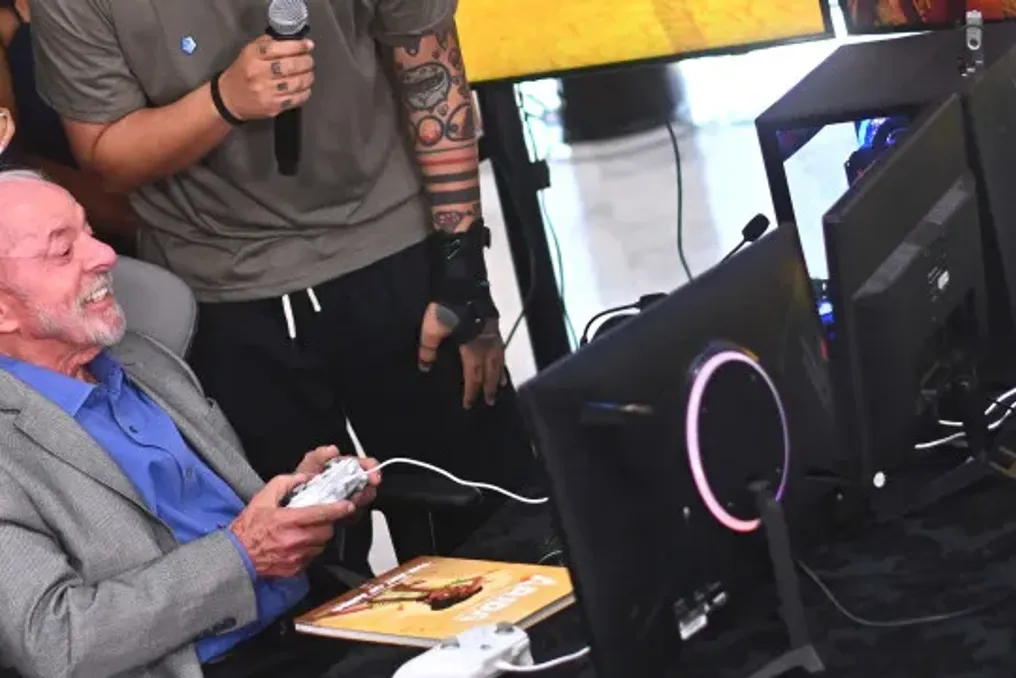
The Brazilian President, Lula da Silva, expressed satisfaction with the approval of the proposal aimed at reducing the weekly workload without salary cuts. However, several business entities criticized the Senate's endorsement of this proposal.
This Constitutional Amendment Proposal (PEC), which is one of the central themes of Lula's campaign for re-election, received majority approval in two rounds in the Senate, with 75 votes in favor and only one against. The document is now being forwarded for promulgation.
After remotely following the vote in the Senate, Lula used his social media to declare: 'We fought, discussed, and pressured to ensure that Congress voted this year on ending the 6x1!' He reinforced his thanks to the people who took to the streets and to the parliamentarians who supported the initiative, stating that 'the voice of the people was the voice that led me so that, together, we could guarantee more time to rest, accompany our children, and be with those we love.'
In a strategic move, both presidential candidate Flávio Bolsonaro and the Liberal Party (PL) opted to vote in favor of the PEC, seeking to avoid damage to their electoral campaign in light of popular pressure for the matter's approval.
The elimination of the 6x1 schedule, which corresponds to five consecutive days of work followed by two days off, was vehemently contested by large employers' unions in the industry, commerce, and services sectors. Generally, these entities classified the change as detrimental to the economy, predicting consequences such as layoffs and the deterioration of essential services.
The National Confederation of Commerce, Goods, Services, and Tourism (CNC), in a note sent to Lusa, lamented that the issue had been debated and approved during the election period. While recognizing the validity of the debate on improving working conditions and workers' quality of life, the CNC emphasized that structural modifications of this nature require in-depth technical analysis, dialogue, and careful evaluation of their effects on employment, competitiveness, and business sustainability, particularly in the commerce, services, and tourism segments.
For its part, the National Confederation of Industry (CNI) declared that the scenario becomes 'even more worrying after the reduction of the working day and the end of the 6x1 schedule' and also criticized the proposal's approval in the electoral context. The entity communicated that, according to the assessment of the industrial sector, the measure sanctioned by the Federal Senate will result in economic losses, unemployment, transfer of costs to the population, and an increase in inflation across the country. CNI advocates that the PEC must be revised to align with Brazilian reality, warning that the changes approved by the Brazilian Congress will raise production costs by 267 billion reais (equivalent to 47.58 billion euros).
Additionally, the Brazilian Association of Bars and Restaurants (Abrasel) also expressed regret over the proposal's approval, advocating instead for the Flexible Work PEC, currently supported by the PL and Flávio Bolsonaro. This PEC, authored by Senator Rogério Marinho and campaign coordinator for Flávio, suggests that workers can choose between the conventional work regime or negotiate with the employer a hours-based schedule. Abrasel expressed hope that the Flexible Work PEC would be approved early next year under the new administration of the National Congress, aiming to allow Brazil to overcome a possible setback and advance toward a contractual model that meets the interests of both workers and entrepreneurs, whose common goal is collective prosperity.
The approval of this PEC represents one of Lula's main political strategies to reverse the rejection of his administration and seek success in the elections, given that he trailed Flávio by 2.2 million votes in the first round. The speed of the process, which occurred a few days before the second round, was made possible by an agreement between the Lula Government and the President of the Senate, Davi Alcolumbre, whose re-election to the Upper House in February 2027 was threatened by the PL, which held the majority of the 81 senators.