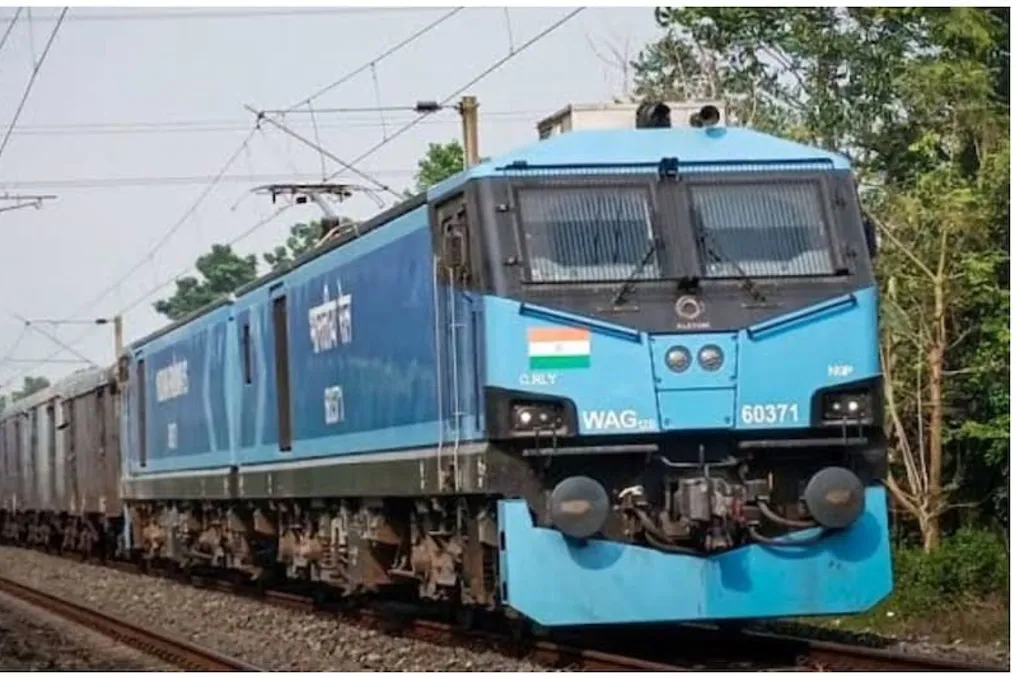
An important step has been taken in Bihar aimed at reducing the congestion of trains passing through Patna and increasing the speed of rail traffic. Currently, an alternative railway route is being prepared that allows freight trains to bypass Patna.
The competent authority has granted permission for the operation of a new 20-kilometer railway line running from Neura to Jatdumri. This will reduce the need for freight trains to pass through Patna and help free up space for passenger trains on the busy railway line.
Currently, both passenger and freight trains run simultaneously on the Danapur-Patna-Kiul-Jhajha railway line. This section is a critically important part of the main Delhi-Howrah railway connection, where high traffic intensity is observed. Providing a separate alternative route for freight trains will help reduce the pressure on this main route.
The full benefit of the new line will be achieved after the commissioning of the entire 42-kilometer Neura-Daniyawan project. After this, freight trains will be able to travel through Neura, Daniyawan, Biharsharif, Barbiga, Shekpura, and Kiul, bypassing the congested Patna railway line.
Before granting permission for the Neura-Jatdumri line, it was inspected by the railway safety commissioner. According to railway data, a train test was conducted on this section on October 8 at a speed of 120 kilometers per hour. Permission for railway operation was granted after checking all safety standards. This 20-kilometer section is part of the larger Neura-Daniyawan new railway line project, which is overseen by the Danapur East Central Railway Division. The project is being implemented in two phases: the first phase included the construction of the 22.74-kilometer Jatdumri-Daniyawan section, where train movement is already taking place. Now, with approval for the Neura-Jatdumri section, the project has moved forward.
The benefit of this project is not limited to freight transport. According to Saraswati Chandra, Chief Public Relations Officer of the East Central Railway, the new line will help create additional capacity on the busy Danapur-Patna-Kiul-Jhajha route for additional passenger trains. When an alternative route for freight carriers becomes available, some space will be freed up on the existing route. This may contribute to an increase in the number of passenger trains in the future. However, the railway has not yet announced specific dates for the start of additional passenger train services.
For passenger convenience on the new railway line, one new station and three halts have been built. A station at Gonpura was created between Neura and Jatdumri. Additionally, halts were equipped in Adpa, Chamachak, and Wajidpur. Neura station is located on the Patna-Ara section, and Jatdumri station is on the Patna-Gaya section. Various structures were also erected during the construction of the new line to ensure uninterrupted movement of both rail and road transport.
Three large bridges and 16 small bridges have been built on the Neura-Jatdumri section. Five low-clearance tunnels, two overground road bridges, and 12 underground road bridges have also been constructed. A structure allowing one railway track to cross another has also been created on this section. The goal of these construction works is to create the necessary infrastructure for the safe and uninterrupted operation of the railway line.
Obtaining permission for the operation of the Neura-Jatdumri section is a significant step for the project. However, the full benefit of the alternative route for freight trains bypassing Patna will only be available after the launch of the entire 42-kilometer Neura-Daniyawan line. As of now, the completion date for the entire project has not been set. Upon its completion, it is expected that freight transport will be shifted to alternative routes, ensuring better capacity for both freight and passenger rail services.