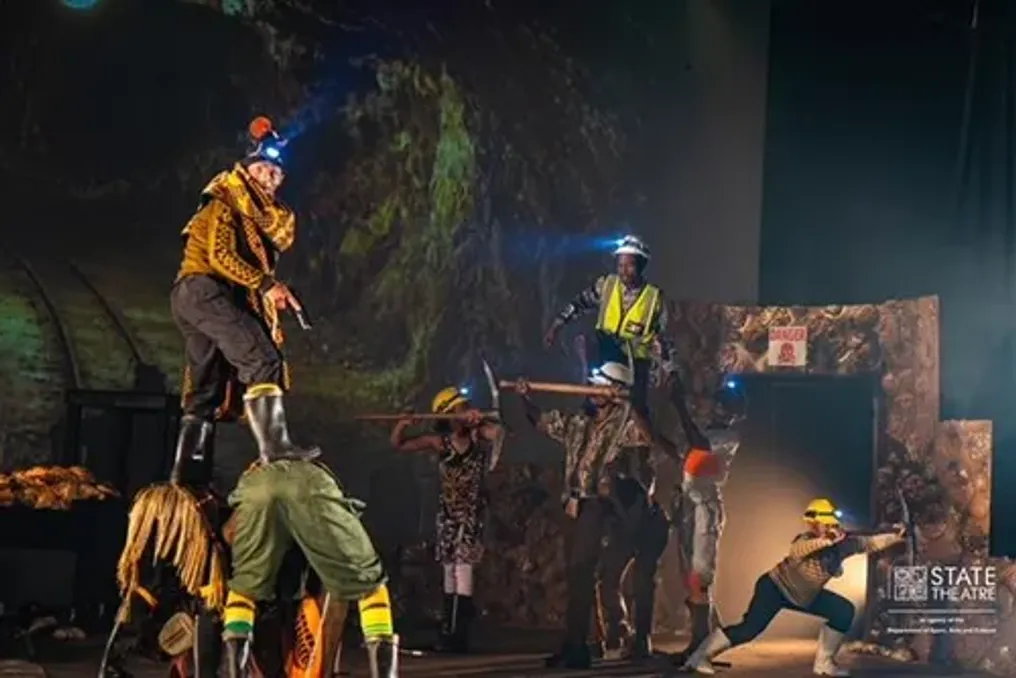
In his latest review, theatre critic Bongani Ngomane examined a new, gripping theatrical production that delves deep into the harsh realities of the mining industry. While Ngomane highly praised the raw energy of the performance, the expressive choreography, and the poignant exploration of themes of exploitation and survival, he presented a detailed set of observations and recommendations.
The production is a compelling study of mineral extraction, sacrifice, survival, and hope. The portrayal of miners seeking a better future exposes issues of exploitation, cheap labor, illness, and shattered dreams. The inclusion of the 'zama-zama' theme connects the work to current issues of inequality, migration, and the struggle for resources.
The ensemble maintains excellent energy throughout the performance, supported by strong acting, expressive choreography, and effective use of language, particularly Sesotho.
The themes in the play are clearly articulated, and the link between social injustice and capitalism provides a solid foundation for the production. The miners' aspirations serve as an emotional entry point into the consequences of exploitation. However, the confrontation between the miners and the police requires greater clarity. During the discussion, the director explained that this encounter is a trap, and this intention must be evident in the execution so that the audience understands whether the miners are protesting peacefully, defending themselves, or initiating violence. A clear establishment of sequence would strengthen the depiction of brutality and power.
References to unregistered miners from Lesotho and the killing of local residents also need careful handling. It is necessary to clarify who is making these accusations and how the production positions them, to distinguish between a character's prejudice or a political argument and the production's own viewpoint.
The main issue noted by the critic is the inconsistency of the set design. Although the choice of costumes and scenery was explained, their purpose must be conveyed through the performance itself. The director and actors should name all locations and define their physical state. The mine, office, hospital, and other spaces must have clear boundaries, entrances, sightlines, and imaginary features. If a character mentions a window, its position must remain constant. Similarly, espionage in the office requires a plausible hiding place.
The division of the stage into two zones must have a clear dramatic purpose. The significant space in the back of the stage should either be used meaningfully or remain inactive for a specific reason.
Several scenes would benefit from adjustments in blocking. The bench in the commissioner's scene obstructs the actor, presenting him with his back to the audience. Moving the bench and changing performer angles would improve visibility. The lieutenant could use a diagonal positioning instead of a rigid stance in one direction, allowing the audience to see his face and profile while maintaining the relationship between characters. The doctor and lieutenant scene has great potential, but its placement needs refinement to give the exchange more impact. The bed in the hospital is well-placed; a diagonal arrangement around it would improve actor visibility. Sitting and standing actors from Lesotho should also be positioned so they do not obscure each other.
The formation where the miners sit with their backs to the audience while the leader addresses them is effective. The gaps between their bodies create a strong visual composition. This choice should be maintained, provided that other instances where characters turn away from the audience are intentional.
The performances of the zama-zama and Lesotho characters are particularly engaging. When a Mosotho character asks the audience to cooperate, time should be allocated for a response and direct interaction with what the public offers. The police characters require further physical exploration. Their gait, posture, authority, and reaction to pressure must distinguish them from the miners. The dynamic of power should be explored through proximity, stillness, vocal delivery, and controlled movement.
The female police officer should catch her breath before speaking after the dance. Breath control will support clearer dialogue and maintain the character's authority. The union activist girl would benefit from maintaining physical stillness during her key speech, allowing the words and emotional intensity to carry the moment. Specific motivation for drinking whiskey must also be found; if it serves as a coping mechanism or means of survival, this must be established through the character's behavior and circumstances.
The choreography is beautiful, but its rhythms, tempo, and speed require clearer definition. Lead dancers should adopt larger, more confident movements where the sequence demands authority or collective strength. The shots and subsequent chaos create a powerful theatrical moment, but the sequence becomes excessive if maintained at the same intensity. It should be structured through changes in rhythm, focus, and stillness so that the violence retains its effect.
During the performance of 'Lento esiyenzayo asinalo uvalo', diagonal formations could enhance visibility and strengthen the collective image.
The music is sometimes too loud and risks drowning out the vocals. The sound needs balancing so that song lyrics and dialogues remain audible. Songs and lines are often rushed, causing strong moments to pass before the audience can absorb them. Pauses should be made after important revelations and emotional shifts. Transitions should arise from a completed moment, not anticipate the next scene. Some songs could be lowered in volume and performed softer. Such variety will create intimacy and lend greater power to the major musical moments.
The white stones do not yet convincingly look like gold. Their appearance needs revision, and it must be determined how the actors use them to convey their value. The large drum requires a clear presentation and intended use; its appearance must align with the world of the production. The visible grid also draws attention and should be assessed regarding the intended setting. The planned placement of the group behind the stage was explained; it must be ensured that this arrangement supports the balance of sound and the performers' musical cues.
This is a wonderful, relevant production with strong ensemble energy and significant emotional potential. The priority is clarifying the environment, refining the blocking, balancing the sound, and giving more time to important moments. These adjustments will help the audience follow the plot and feel the full weight of the miners' struggle.