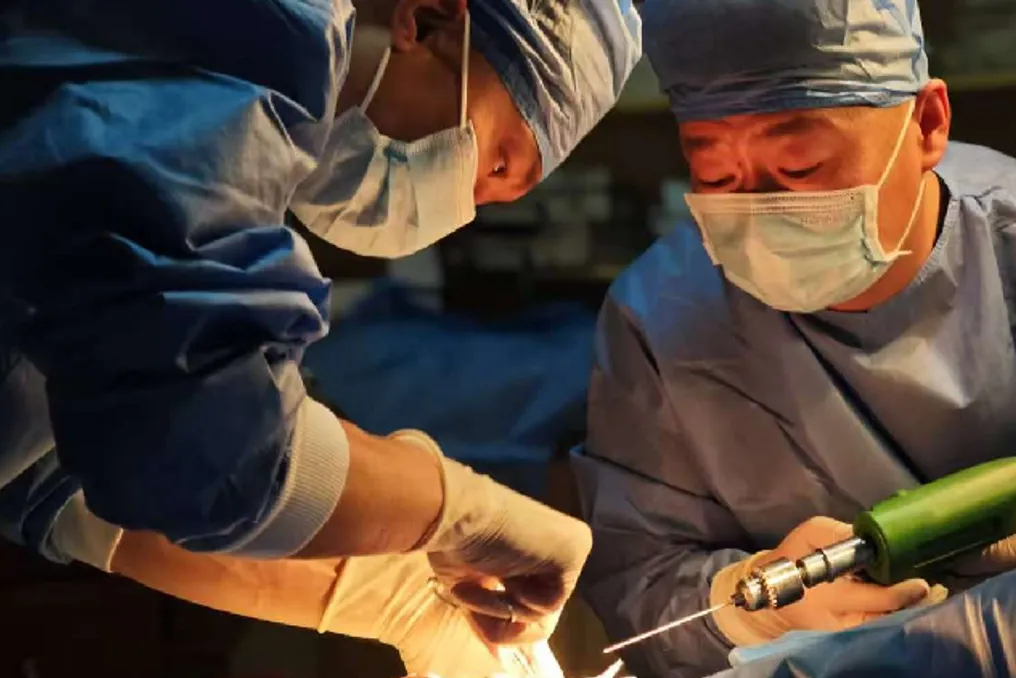
At a regional hospital in Lokossa, a city in southwestern Benin, obstetrician Tu Jinzhi and her team faced a critical situation: a pregnant woman with a positive HIV test result who had a fetus with a severe congenital cranial anomaly. Due to the limited resources of local pregnancy screening and infection prevention systems, there were serious risks of surgical complications and professional infection.
Thanks to the precise execution of procedures and strict adherence to protection protocols, Dr. Tu was able to safely deliver the infant, ensuring stability for both mother and child. This complex operation demonstrated the resolution of a vital local maternal care issue, serving as an example of years of effort. Since 1978, twenty-eight Chinese medical teams, totaling 662 people, have been working in Benin, all dispatched from the Ningxia Hui Autonomous Region in northwestern China, laying the foundation for healthcare support in this West African country.
This case in Lokossa reflects a broader trend in international medical assistance—a shift from emergency clinical interventions to clinical mentorship, long-term capacity building, and joint disease control.
On the Front Lines of Daily Care
In addition to emergency care, Chinese medical groups are increasingly integrating into the daily operations of host hospitals. In the Seychelles Islands in July 2025, a six-member team specializing in orthopedics, surgery, neurology, radiology, and acupuncture arrived for a two-year mission.
Team captain, Dr. Du Daodong, told China Media Group (CMG) that they interact closely with local staff in all departments, from routine orthopedic treatment to laparoscopic surgeries. Team members do not work in isolation; they help local doctors accelerate diagnosis in emergencies.
The team's radiologist, Dr. Yang Hunsheng, recalled a case where a patient affected by ocean waves presented with severe pain and paleness. His recommendation for an urgent contrast CT confirmed a ruptured spleen with active bleeding, which saved precious minutes for a life-saving operation.
In neurology, Dr. Wang Kaisin optimized acute stroke treatment protocols after assisting a 56-year-old man with sudden paralysis. Dr. Wang noted that after confirming indications for thrombolytic therapy, he immediately initiated intravenous treatment, monitoring the patient's vital signs at the bedside. The patient fully recovered and was able to leave the hospital independently.
This constant presence has fostered trust. One local patient, who previously underwent successful appendectomy by a Chinese surgeon, returned two years later complaining of severe stomach pain. After diagnosis of peptic ulcer disease, the surgical team adjusted his medication, resolving the issue without the need for surgery. Meanwhile, in physical rehabilitation, local residents who were initially unfamiliar with acupuncture began seeking needling treatments more frequently for chronic pain and headaches.
Targeted Health Initiatives
Beyond hospital wards, systematic public health programs target widespread diseases such as malaria and cataracts. China shared its artemisinin-based therapy methods globally after eradicating domestic cases of malaria—moving from 30 million annual cases in the 1940s to zero and achieving WHO certification in 2021.
China's '1-3-7' surveillance strategy—which involves reporting cases within one day, investigating cases within three days, and conducting targeted public health investigations and actions within seven days—has been officially incorporated into WHO technical guidelines. According to the WHO, approximately 240 million people in Sub-Saharan Africa have benefited from combination artemisinin-based therapy.
Simultaneously, specialized surgical teams travel abroad to combat preventable blindness. Under the leadership of the National Health Commission of China, expert teams regularly go to Central Asian countries, including Uzbekistan, Tajikistan, and Kyrgyzstan, to perform free cataract removal surgeries for local residents.
Kyrgyzstan's Deputy Minister of Health, Nurbolot Usenbayev, told CMG: