Toyota and Daihatsu present ammonia engine that emits no CO2, but requires a larger tank than gasoline
Read more
AutoPapo
autopapo.com.br

Toyota and Daihatsu present ammonia engine that emits no CO2, but requires a larger tank than gasoline

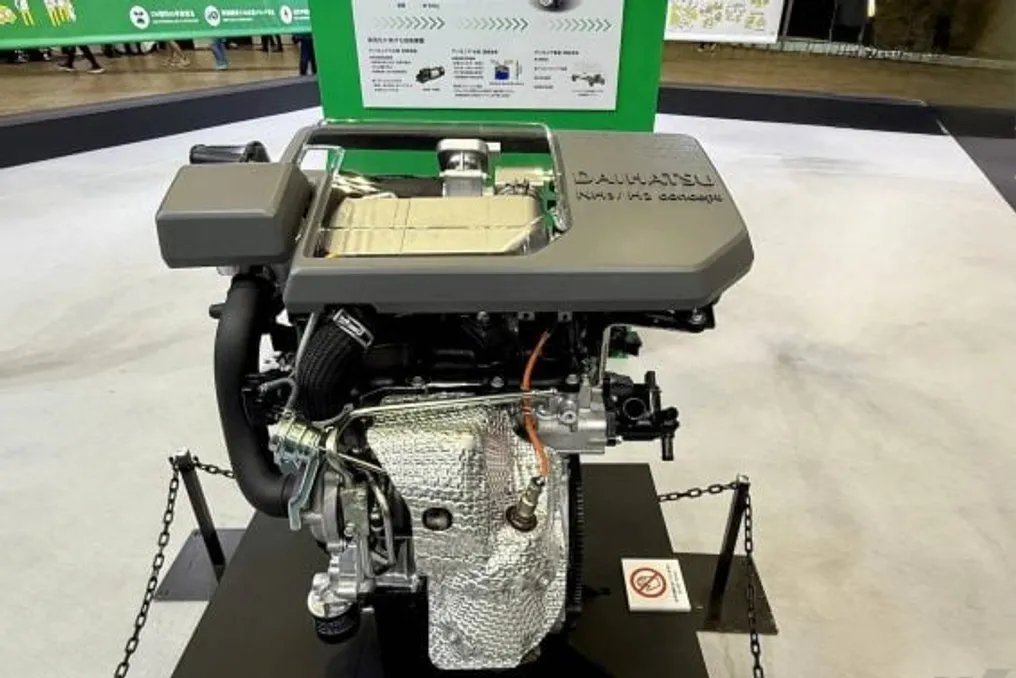
Daihatsu, a Toyota subsidiary specializing in compact cars, unveiled a new engine that runs on ammonia, a substance used in fertilizer production. This prototype was displayed during the Japan Mobility Show Bizweek in Japan.

This development is part of Toyota's multifaceted strategy to find alternatives beyond fully electric vehicles to reduce emissions. In the Brazilian market, the company has already introduced flex hybrids capable of running on ethanol.

The engine in question is based on the 0.66 turbo three-cylinder engine used in kei cars, which are small Japanese vehicles with an engine capacity of up to 660 cm³. It is important to note that the system uses only liquid ammonia, eliminating the need for a hydrogen reservoir.

Due to the difficulty of ammonia combustion, the system performs a partial conversion of it into hydrogen. This hydrogen is then mixed with the remaining fuel to stabilize the combustion process.

During ignition and when the engine is cold, a plasma reactor uses electricity to generate hydrogen. After the unit heats up, a catalytic reformer takes over this function, according to reports from the Daihatsu team to the Japanese website Motor Fan.

A significant advantage is that, because its molecule contains no carbon, ammonia does not release carbon dioxide (CO2) during burning. Furthermore, it is simpler to store than pure hydrogen: it liquefies at -33 °C, whereas hydrogen requires temperatures of -253 °C or high-pressure tanks.

However, there are notable disadvantages. To transport the same amount of energy as gasoline, the ammonia tank would need to be approximately 2.5 times larger. Additionally, combustion can generate nitrogen oxides, and unburnt ammonia can release nitrous oxide, a greenhouse gas more potent than CO2.

The engineers themselves recognize that integrating this entire system into a kei car presents a major challenge. Currently, the engine is undergoing bench tests and has never been installed in a vehicle. The goal is to achieve the power output of existing kei cars.

Other factors to consider include the toxicity of ammonia, the lack of an established refueling network, and the fact that its current production relies heavily on natural gas, generating CO2 in the manufacturing process.
Similar stories

Toyota tests electric Hilux resistance with 760 kg trailer drop, inspired by Top Gear
Read more
autopapo.com.br

Toyota tests electric Hilux resistance with 760 kg trailer drop, inspired by Top Gear

Toyota conducted a test to verify the robustness of the electric Hilux, replicating one of the most notorious sequences from the Top Gear program. This new challenge occurs almost 23 years after a diesel Hilux from the 1980s was subjected to extreme conditions in the show.

The original episode, broadcast on BBC 2 on November 23, 2003, featured Jeremy Clarkson facing an old diesel Hilux. At that time, the pickup went through a series of increasingly severe tests, including driving through a tree, a building, crossing the sea, and even colliding with a demolition ball. Furthermore, the vehicle was set on fire and later had a trailer dropped onto it, but the old Toyota managed to remain operational despite the damage.

To define the new test, Toyota consulted Reddit users. The options presented were a 1-ton demolition ball or a trailer drop, with the latter being the option chosen by participants.

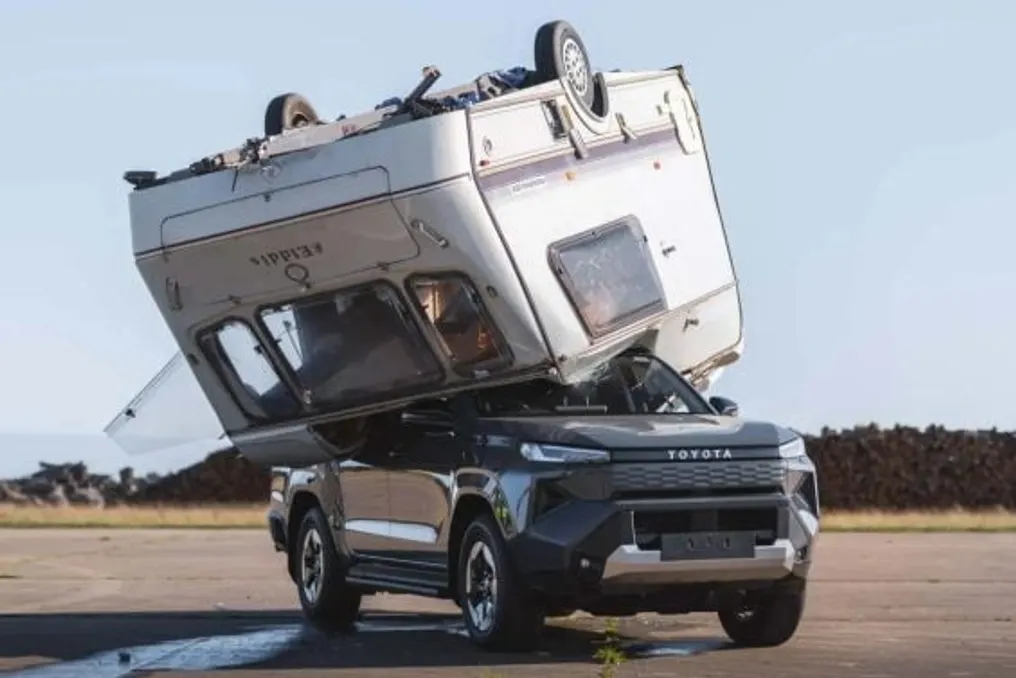
The simulation was conducted at Bentwaters airfield, located in Suffolk. A 760 kg trailer was lifted to about 9 meters high and released directly onto the cabin of the electric Hilux. After the impact, engineers removed the debris and proceeded to assess the pickup. According to Toyota, the body sustained only minor damage, and the electrical system was immediately reconnected, allowing the vehicle to leave the site operating normally.

This test also served to demonstrate the advancement in the protection of the electric Hilux's battery. The manufacturer stated that the unit was exposed to scenarios such as deep water driving, difficult terrain, and total immersion. The unit used in this experiment was subsequently given to the Top Gear channel, which is expected to apply new challenges to it.

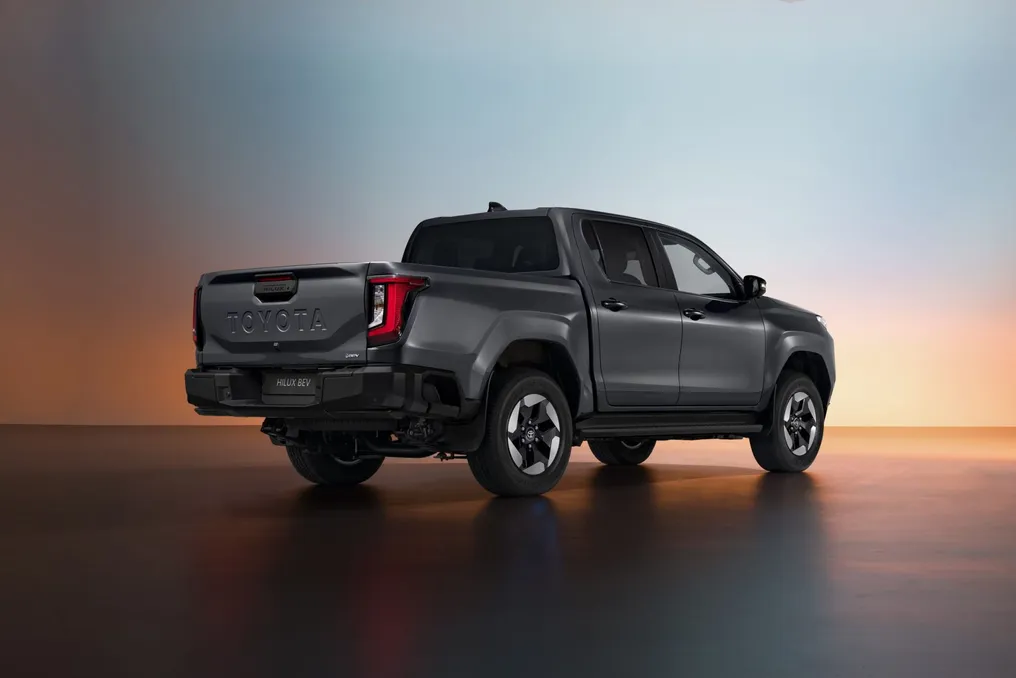
The Hilux is in its ninth generation and remains available with diesel and, in some markets, gasoline engines. There are also more basic models equipped with steel wheels and manual transmission. Additionally, Toyota is developing a version that uses a hydrogen fuel cell.

The manufacturer emphasized that the test was carried out by professionals in a controlled area and does not reflect a situation covered in the vehicle's manual. The remnants of the trailer were collected afterward for recycling purposes.

Toyota will invest R$ 7 billion in Argentina to manufacture electric and hybrid versions of the Hilux
Read more
autopapo.com.br

Toyota will invest R$ 7 billion in Argentina to manufacture electric and hybrid versions of the Hilux

Toyota plans to inject US$ 1.341 billion, equivalent to approximately R$ 7 billion, into Argentina to build a new plant dedicated to the production of electrified vehicles. This factory will be located in Zárate, adjacent to the industrial complex where the Hilux and SW4 models are currently manufactured.

The project received approval on Wednesday, the 30th, to integrate with RIGI (Incentive Regime for Large Investments), an Argentine government program that offers tax benefits. This investment is expected to give rise to the new electrified versions of the next-generation pickup truck.

The announcement was made by the Minister of Economy, Luis Caputo, who highlighted this contribution as the largest in the history of the Argentine automotive industry. Toyota becomes the first manufacturer to adhere to this regime. In an official statement, the company mentioned that the approval allows it to proceed with the final internal validation stage of the project, but limited itself to stating that the new line will manufacture 'an electrified vehicle,' without specifying the model.

Argentine press sources indicate that the new manufacturing unit will be responsible for producing the mild hybrid and fully electric variants of the ninth-generation Hilux, a model that will be presented globally at the end of 2025. The traditional diesel-powered models will continue to be produced at the existing facility, which has been operating since 1997.

The brand's most recent investment in the country occurred in 2013, when initial US$ 800 million were announced, which rose to about US$ 1 billion, intended for the manufacturing of the current generation of the pickup. It is estimated that about 70% of the volume produced at the new factory will be destined for export, generating a projected annual revenue of US$ 1.28 billion (approximately R$ 6.6 billion). Brazil is among the main destination markets, similar to what happens with the Hilux and SW4.

The project includes the creation of 3,600 jobs during the construction phase and 2,600 direct and indirect positions after operation, including the supplier network.

The new Toyota Hilux is expected to be introduced to the Brazilian market in early 2027, initially with the 2.8 turbodiesel engine, which has 204 hp and 50.9 kgfm of torque. The mild hybrid version, equipped with a 48V electrical system, is scheduled for launch in the second quarter. Production of the new SW4 version in Argentina is scheduled for March or April of the same year, although Toyota has not officially confirmed these dates.

The 100% electric version should begin production at the end of 2027, with arrival in Brazil expected in 2028. This model features two motors, one on each axle, offering a combined power of 196 hp and a torque of 20.9 kgfm on the front axle and 27.4 kgfm on the rear axle, in addition to permanent all-wheel drive. Its 59.2 kWh battery ensures an estimated range of 240 km under the European WLTP cycle. Additionally, it supports a load capacity of 715 kg and a towing capacity of 1,600 kg.

Popular