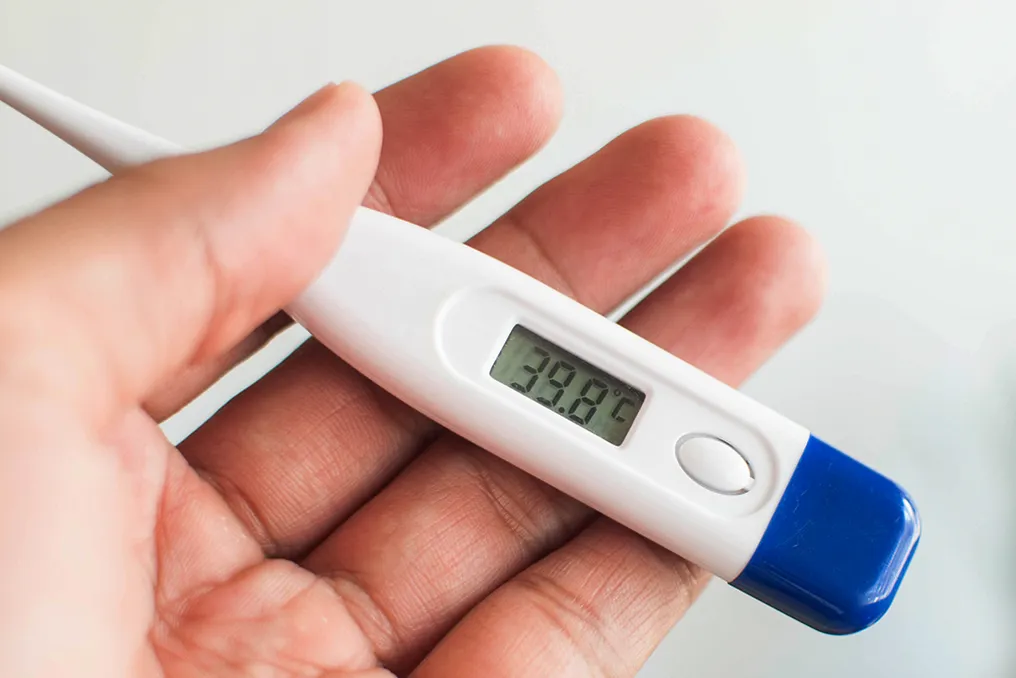
Although the efficacy and safety of vaccines are widely recognized by global health organizations as the best protection against serious diseases, they can present side effects. This occurs because, upon receiving the immunizer—composed of inactivated or attenuated viruses or bacteria—the body identifies the substance as a foreign agent, triggering the natural response of the immune system, such as fever.
Most people experience mild reactions, such as pain at the injection site, fatigue, or tiredness. However, variations in the immune response led researchers to investigate what explains these distinct reactions.
A recent study, published in the journal Science, points to the gut as a relevant factor. Analyzing fecal samples from over 170 individuals, researchers observed that those with similar profiles in their gut microbiome also developed fever after receiving the second or third dose of the COVID-19 vaccine.
In cases of more intense fever, a high concentration of a specific protein called flagellin was detected. This protein is part of the flagella structures, which allow bacterial movement in fluids. Scientists suggest that the presence of flagellin indicates that the microorganisms associated with the fever have a greater capacity for dispersal throughout the body, meaning greater motility.
Additionally, participants who experienced high fever showed a higher level of intestinal inflammation compared to others. In contrast, in individuals who did not have a fever or only had a low-grade fever, flagellin was not found, and no specific pattern in the microbiome was noted.
To understand the exact influence of flagellin on vaccines, researchers conducted a new experiment using mice. They found that animals exposed to human bacteria associated with fever replicated a fever response similar to that observed in humans.
Interestingly, instead of presenting hypothermia, which is common in immune responses, the temperature of the mice increased, mirroring the human reaction. Since they were genetically modified mice, researchers could determine that the immune response occurred specifically in animals capable of detecting flagellin. Mice without receptors for flagellin were less affected, establishing a connection between this protein and the immune system response.
These results raise new questions, the main one being why some individuals have higher levels of flagellin in their gut than others. Currently, the strongest hypothesis relates flagellin to diet, as the study indicated that vegetarians registered the lowest levels of this protein.
The authors emphasize the need for additional studies to fully clarify this issue. It is expected that these findings will help combat vaccine side effects in the future and consequently stimulate higher vaccination rates.