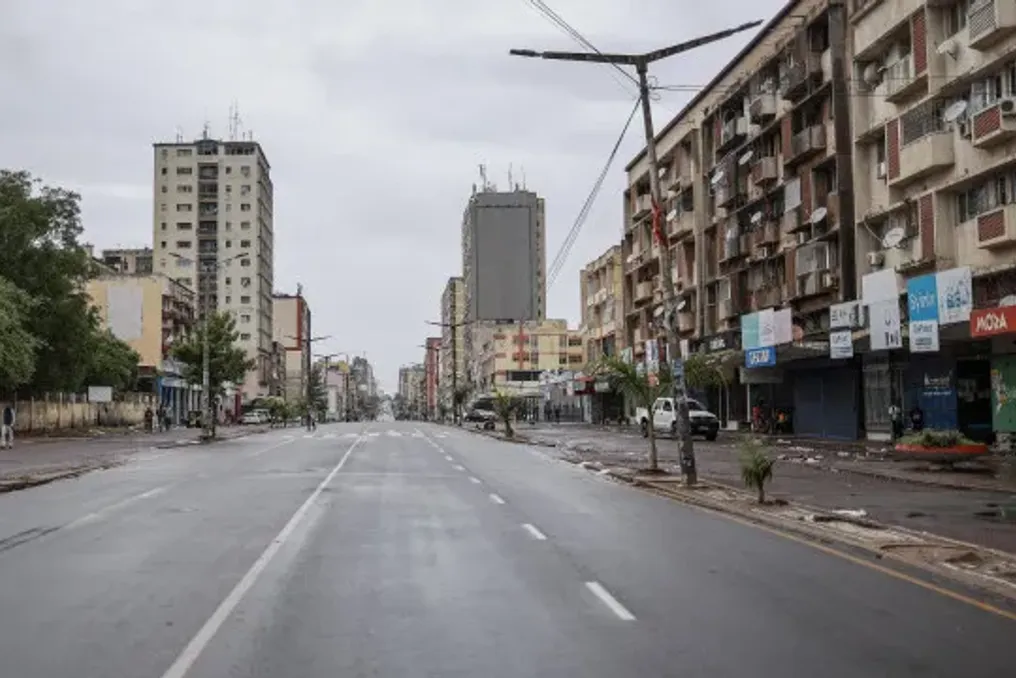
The Government of Mozambique has announced plans to start constructing over 3000 kilometers of roads in the first quarter of 2027. These works will be carried out as part of the 'Mais Estradas – 2031' program, which is estimated at approximately 2.5 billion euros.
The five-year program, valued at $2.8 billion (2.5 billion euros), aims to improve the transport accessibility of the national road network and strengthen connections between provinces, districts, production centers, and the country's main development corridors. This was reported by the Minister of Transport and Logistics, João Matlombe, during the second session of the ministry's Coordination Council.
The state official emphasized that this initiative is in the stage of concrete implementation, as public tenders have already been announced for the execution of the works. He added that an evaluation of the submitted proposals is currently underway before contracts are concluded.
Matlombe stated that after completing the evaluation procedures and awarding contracts, the government expects to mobilize to begin work in the first three months of 2027, with interventions planned in various parts of the country's territory.
Nevertheless, the minister insisted that the program's implementation requires changes in road network management. These changes must include increasing rigor in planning, prioritizing, and utilizing available financial, technical, and human resources to avoid carrying out repairs only when roads reach a critical level of wear.
He noted that it is not possible to continue intervening in the condition of roads solely upon reaching critical degradation. He named preventive maintenance, quality of work, adherence to contractual deadlines, and supervision as the principles for improving road sector management.
In the same context, the official highlighted the restructuring of the National Road Authority (ANE) and the reorganization of the Road Fund. These processes are intended to improve coordination between institutions, clarify areas of responsibility, and enhance the efficiency of using funds allocated to the road network.
According to Matlombe, the reforms should strengthen capabilities in planning, contracting, supervision, and project support, without jeopardizing the continuity of current programs and works, ensuring more effective and transparent management focused on tangible results.
The minister stressed that institutional transformations must lead to a noticeable improvement in road conditions without creating obstacles to investment realization, and called on responsible sector officials to guarantee the execution of priority projects.
Previously, on September 4, the publication Lusa reported that the National Road Authority planned to select a future concessionaire in 2027 for nearly 200 kilometers of national roads N2, N3, and N4 in Maputo province. The transfer of management of road N4 was also planned before the expiration of the current concession in February 2028.
This process covers 96.8 kilometers of road N4, located between Maputo and the Ressano Garcia border; 69 kilometers of road N2, running between Matola, Boane, and Namaacha; and 31 kilometers of road N3, connecting Impaputo, Goba, and the border with Eswatini.
At the same time, the institution announced the search for private investment to restore National Road Number One (N1), spanning about 2600 kilometers, including critical sections and segments affected by the 2025-2026 rainy season.
The implementation of the 'Mais Estradas – 2031' program and the institutional reforms should contribute to improving the movement of people and goods, facilitating the sale of national products, and strengthening the competitiveness of the Mozambican economy through a road network capable of meeting the needs of territorial integration and national development.