In the past, actor Robert Downey Jr. faced serious issues related to drug addiction and legal troubles that made him unattractive to Hollywood studios in the late 1990s.
Despite the inability to accurately measure his alcohol and drug use, he once publicly stated in court: 'It's like I have a shotgun in my hand, and I'm holding my finger on the trigger, and I like the taste of gunpowder.'
Downey was repeatedly arrested for possession of heroin, cocaine, and crack, going through a turbulent period between 1996 and 2003, alternating between incarceration and court-ordered treatment. Realizing the destructive path he was on, and receiving crucial support from his current wife, Susan Levin, Downey began treatment and has remained sober since 2003.
His story of redemption culminated when he was cast as Tony Stark in the 2008 film 'Iron Man.' Since then, his films have brought in billions of dollars worldwide. Downey's transformation from a Hollywood pariah to a global icon represents a powerful story of personal triumph.
Everyone knows his journey; we can accept his flaws, and it can be argued that we have come to terms with who he was and who he is today. His story carries a satisfying narrative: from drug addict to role model.
He earned forgiveness not by denying his mistakes and failures, but by looking inward, accepting them, and then making every effort to become better.
This leads to the topic of Manchester City. Last weekend, the team defeated Liverpool 3-0 at the hostile Anfield stadium, despite an independent commission ruling hanging over their financial activities.
The commission found City guilty of serious breaches of the English Premier League's financial rules over nine seasons, as well as most charges related to unwillingness to cooperate with the league's investigation.
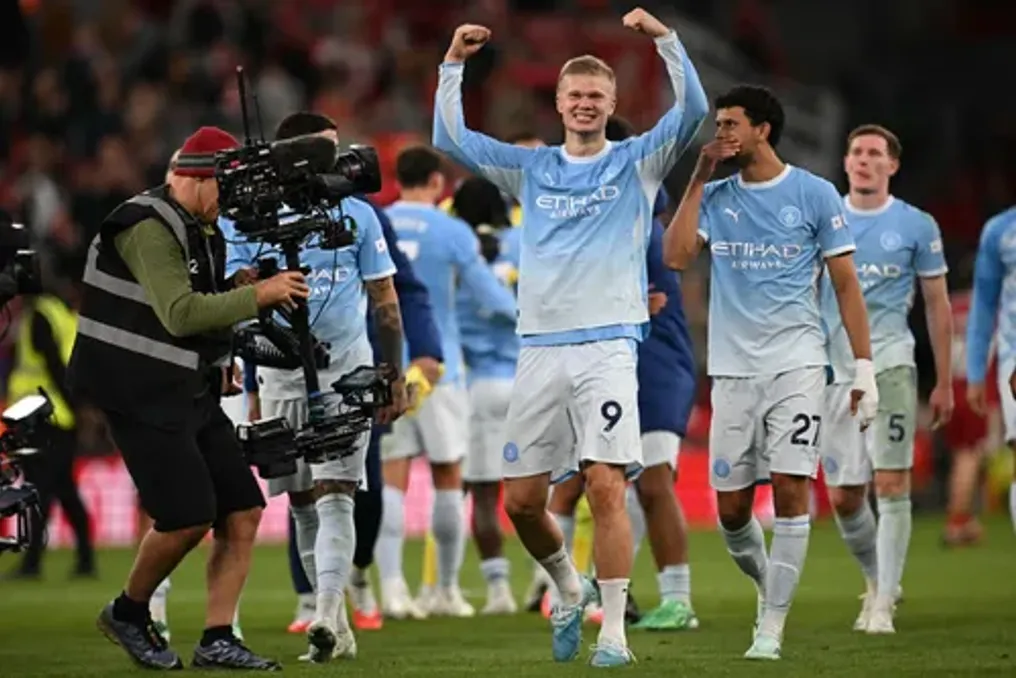
Despite this cloud, the 'Citizens' displayed ruthless play, which angered the home crowd. Following this, they held a victory celebration, adding insult to the fans of 'The Kop.'
At some point, City presented themselves as victims of their own wrongdoing, which is a striking case of corporate fraud. For some reason, they seem to believe they are in a period of redemption. Considering all circumstances, this appears quite inappropriate.
They seem to think they are being besieged because of the mistakes they committed. They appear to want to move on as if they were post-2003 Downey, while they are still mired in their legal and moral problems.
The entire procession surrounding the match on Sunday seemed chaotic, rendering the whole spectacle hollow. City has the right to celebrate a 3-0 victory at Anfield, but the broader context cannot be ignored.
When a club can continue to compete at the highest level while serious findings loom over them, questions about the integrity of the league itself inevitably arise.
Why have no sanctions been announced? Why are we waiting until January for their appeal to be reviewed? Why are we allowing such a prolonged absence of consequences?
What are clubs playing for if the rules they must follow can be violated on such a scale without immediate sporting repercussions?
City, who were due to defend the UEFA Champions League title against PSG on Wednesday evening, appealed the commission's findings, and the process is proceeding. However, the appeal does not make the questions regarding their conduct any less pressing. It remains worrying to observe their careless attitude, as if everything is going according to plan, when such serious findings exist against them.
If Robert Downey Jr.'s story teaches us anything, it is that redemption is not just surviving a scandal, continuing life regardless of circumstances, and waiting for the public to forget. It requires acknowledging past mistakes and being willing to face their consequences.
Manchester City has every right to challenge the findings against them, but they cannot reasonably expect football to forget the issues hanging over their achievements simply because they keep winning.