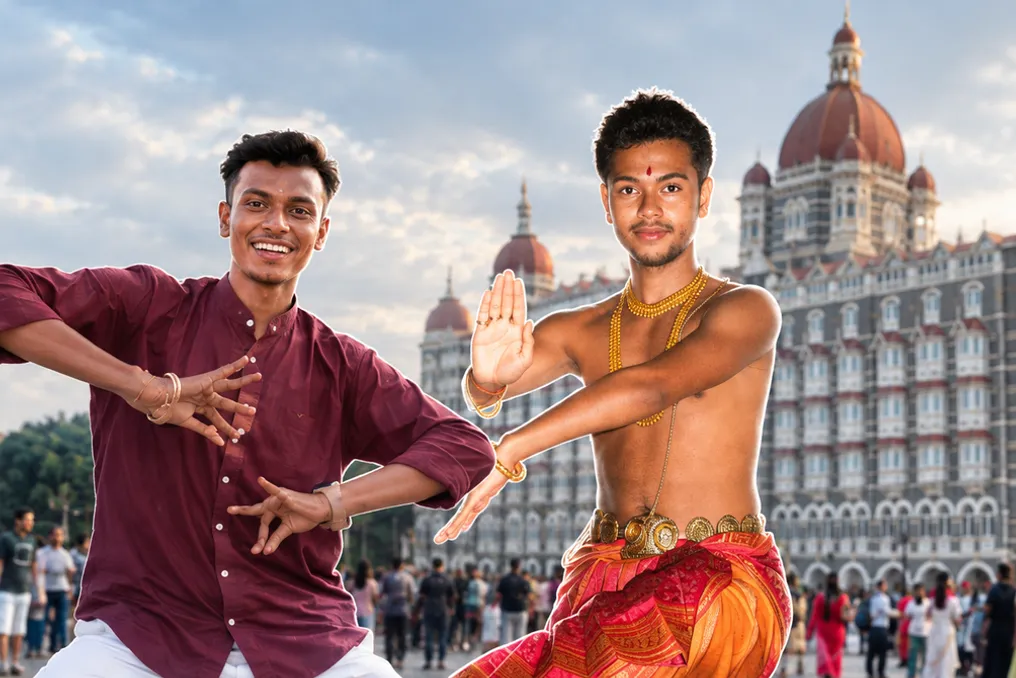
When Amit Debnath heard phrases like 'Bharatanatyam is meant for girls,' it was a familiar challenge during his upbringing in Nadia, West Bengal. He deeply loved Bharatanatyam, but those around him often did not understand why a boy would want to study an art form they associated exclusively with girls. Nevertheless, Amit continued to dance.
Years later, life presented him with another obstacle. Financial problems forced him to stop dancing and move to Mumbai to earn a living and support his family. His formal training stalled, but his love for Bharatanatyam remained untouched.
Why should gender determine what one can dance?
Having grown up in a middle-class family, Amit faced a question often raised by young men interested in classical dance: why should he pursue Bharatanatyam? For him, the answer was obvious—he simply loved the dance. This art form encompassed everything that attracted him: intricate footwork, rhythm, expressive movements, and the ability to tell an entire story without a single word.
However, while mastering these movements, he also struggled with the notion that some interests were for girls and others were for boys. Refuting this was not easy, especially when he was merely trying to do what he enjoyed. Nevertheless, Bharatanatyam gave Amit reasons to continue: he believes the art taught him discipline, strengthened his self-confidence, and provided a sense of belonging.
When family support required him to quit dancing
As financial difficulties grew, Amit was forced to make a difficult decision. He left Nadia and moved to Mumbai, where his primary tasks became finding work and supporting his family. For someone who loved Bharatanatyam, giving up regular practice meant losing the structure and guidance that helped him develop as a dancer. There were responsibilities to fulfill and bills to pay; dance could no longer occupy the same place in his daily schedule.
But whenever he found time, Amit practiced. There was no guarantee when he could return to formal training or how far he could advance as a dancer. He simply kept doing what he could, using any time life allowed. Perhaps this is a part of his journey that many of us can relate to: how often do we postpone what we love because work, money, or family obligations demand our attention?
For Amit, following Bharatanatyam became a search for ways to keep that part of himself alive, even when circumstances made it difficult.
'Amio Parbo': Two words he hopes to inspire other boys with
Today, Amit shares his love for Bharatanatyam through videos on his Instagram account @classical__amit. Somewhere, he hopes that a boy who loves to dance but is afraid to admit it will see one of his performances. Perhaps this boy heard the same words as Amit in childhood. Perhaps he worries about what his friends, neighbors, or relatives might think. Amit wants him to know: he too can dance.
This hope is embodied in two Bengali words: 'Amio parbo,' which means 'I can too.' Amit's path has been shaped by financial hardship, interrupted studies, and the stereotypes surrounding male classical dancers. He understands that following a passion can be difficult when life presents other demands.
Nevertheless, he continues to share the art he loves. His hope is simple: that the boy watching him dance will feel a little more confident about attending his first Bharatanatyam lesson or returning to something he was once discouraged from. Because sometimes, just watching someone follow their passion is enough for us to reconsider what we thought was possible. And somewhere, a young boy might watch Amit's performance and find the courage to say those same two words: Amio parbo.