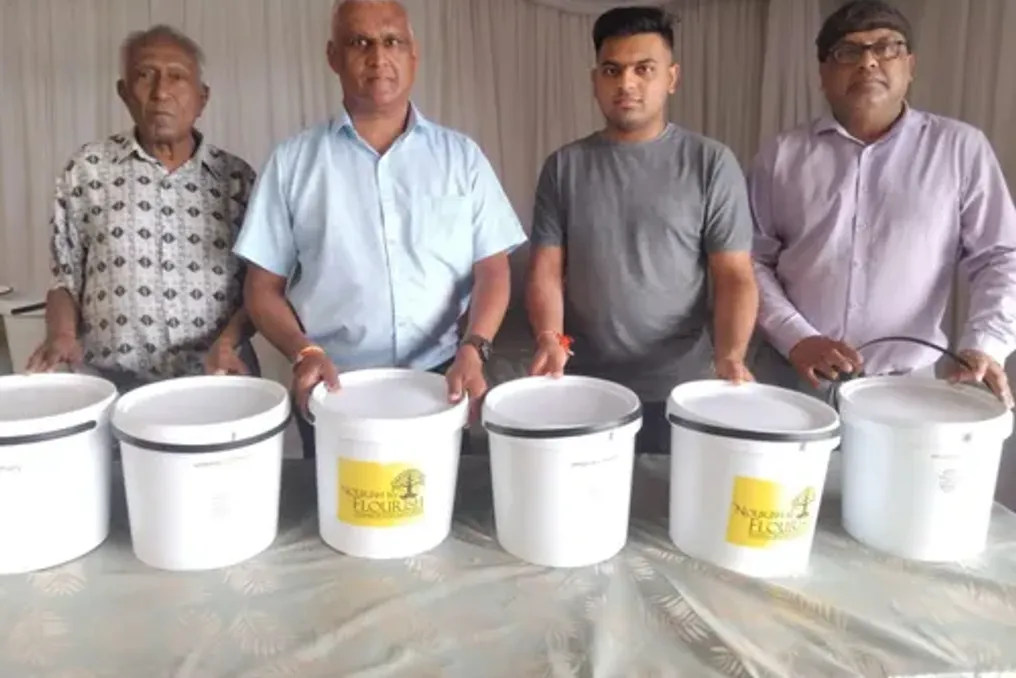
Nourish to Flourish Initiative Marks Two Years Since Distribution of Over 528,000 Meals
Read more
IOL
iol.co.za

Nourish to Flourish Initiative Marks Two Years Since Distribution of Over 528,000 Meals

The Chinmaya Mission Nourish to Flourish initiative is celebrating its second anniversary, noting that since its launch, it has distributed over 528,000 meals. These meals have been provided through schools, care facilities, disaster relief operations, and direct home deliveries.

The Nourish to Flourish program started on October 14, 2024, and was founded under the guidance of Swami Abhedananda. In the past two years, the initiative has significantly expanded its efforts, providing over half a million meals to a very diverse demographic group.

Pavan Maharaj, a member of the Chinmaya Mission board of directors, stated that thanks to coordinated and targeted efforts covering primary schools, community care institutions, emergency disaster relief operations, and direct home delivery, Nourish to Flourish has increased its reach. This strategic distribution has helped strengthen community resilience, improve educational outcomes, and create a critical safety net during unforeseen local crises, reaching over 530,000 meals to date.

Distribution takes place in schools, organizations, and as part of disaster aid. Maharaj noted that the success over the last 24 months demonstrates the scale of community needs and the operational efficiency achieved through local partnerships. The program ensures maximum social return from every meal provided by directing food aid where it is most critically needed.

Food resources have been strategically distributed across four main sectors to maximize societal benefit, address critical nutritional deficiencies, and stabilize communities during difficult times. Furthermore, ensuring a reliable daily food source for vulnerable students improves cognitive function, classroom concentration, and school attendance, Maharaj added.

The initiative also helps care facilities reduce significant financial burdens, allowing vital funding to be redirected towards resident care, staff support, and rehabilitation programs. It also provides rapid food assistance to families displaced in informal settlements and disaster-affected areas during critical emergencies. Direct door-to-door food delivery is provided for isolated households unable to reach centralized community centers or school programs.

The initiative supports 20 organizations, including orphanages, youth welfare centers, and shelters for victims of violence, thereby easing significant pressure on the operational budgets of these non-governmental organizations. Nineteen schools benefit from the program. Maharaj emphasized that the initiative has noticeably improved student concentration and daily attendance, as for a significant number of these children, Nourish to Flourish is their primary and most reliable source of daily nutrition.

Over the past 24 months, Nourish to Flourish has transformed more than 528,934 meals into a brighter future, sustainable education, and hope in emergencies. He thanked partners, logistics teams, and the community for making these two years a great success and stated that they continue to combat hunger together.
Similar stories

Man from Lwandle founded academy to bring 180 children off the streets through football and education
Read more
iol.co.za

Man from Lwandle founded academy to bring 180 children off the streets through football and education

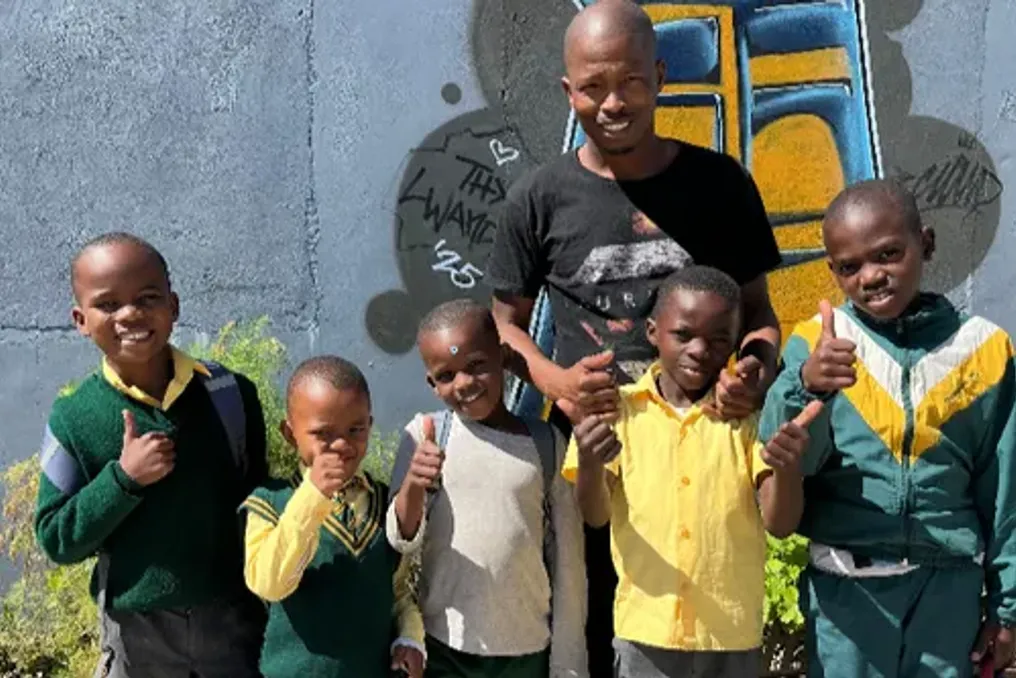
Luyanda Peter, known in the local community as Ta V, started his work even before training sessions began. He drives an old minibus, collecting young players from Lwandle and taking them to fields both in the settlement and in Somerset West. Peter noted that his transport is a 1983-1984 model bus that he still uses.

He performs many functions: driver, coach, and sometimes even assistant during play. Peter founded the non-profit organization Veron Youth Academy (VYA), which offers a free after-school football and education program. This program is for boys and girls aged six to eighteen in the Helderberg area and currently covers about 180 children, from junior groups to the senior team.

Peter told IOL Media that his personal story began with the loss of his mother in a sudden car accident, which drastically changed his family's life since she was the sole breadwinner, and his father was unemployed at the time.

Involving Children Through Football

Football became his way forward. He played in the then Vodacom league, now the ABC Motsepe League, and later received a preliminary contract with SuperSport United. However, he declined the opportunity to play abroad because his partner was pregnant at the time, and he decided to prioritize the child's life over his football career, wanting to be a father.

Peter emphasized that the locals supported him in those years. He believes that if he had grown up elsewhere after his mother's death, his fate might have been different, but thanks to the principle of Ubuntu, people from this area offered him support and help. He acknowledged, however, that dangers in the settlement are real, as children are easily drawn into drugs and bad friends.

The academy started with just a few boys on a concrete pitch that was previously an artificial turf football field. Peter explained that he bought balls with money earned from working to feed his family, but he couldn't leave the children who were so eager to play and trusted him.

A Symbol of Hope for Lwandle

Today, the children also receive homework assistance on Wednesdays, as well as meals from the academy's garden. Peter regularly visits their homes because some boys do not have food at home, and he shares what is available in his own house.

The academy has no permanent sponsor, and Peter receives no income from it. In his estimation, it requires about 500,000 rand per year to operate effectively. Sometimes he uses money from his own home for the academy's needs, despite knowing that his children might complain because their father is spending their funds. Nevertheless, he considers the other children his own and cannot stand by while watching their difficulties.

The academy's logo depicts a water tank that once served the migrant workers of Lwandle, and for Peter, it symbolizes something more. He claims it is the hope of the community and the only factor capable of getting children off the streets. The academy helps them achieve a new level of cohesion and gives them self-confidence, which is evident in their wide smiles.

The Hijab Question in Azerbaijan: Discussion on Excluding Girls from Schools
Read more
www.middleeasteye.net

The Hijab Question in Azerbaijan: Discussion on Excluding Girls from Schools

The issue of head coverings for Muslim girls has once again become a subject of political debate. Last month, a change was introduced to the rules of school uniforms in state educational institutions in Azerbaijan, which is linked to the secular nature of education.

Although the hijab is not explicitly mentioned in the text, reports that Muslim girls are not allowed into schools, followed by the introduction of rules regulating teachers' attire this month, have intensified the discussion. It is important to understand that the difference between what the normative act states and how schools apply these rules is crucial for the affected children.

The requirement to remove a head covering before entering school is not just a matter of appearance. It raises a more fundamental question: can access to education depend on the necessity of making religious identity inconspicuous?

This debate should start not with abstract adult reasoning, but with the girls themselves at the school gates. Decisions made in the name of secularism, religion, or public order shape their daily lives, educational opportunities, and sense of belonging.

The conflict goes beyond the politics of one country regarding school education. The question arises as to why the clothing of Muslim women so often becomes a test of modernity, freedom, and social progress.

Ideological Confrontation

A head covering can symbolize devotion, cultural affiliation, or personal identity. Where covering is mandatory, it can also become an instrument of coercion. None of these meanings can be assumed for every woman or girl.

A contradiction arises when authorities declare the liberation of women from religious pressure while simultaneously introducing another rule concerning their bodies. Requirements to wear a hijab or demands to remove it arise in different historical and legal contexts, yet both require careful examination of whose choices matter, whose voices are heard, and who has the right to make decisions.

This is especially relevant for girls. Too often, a girl becomes a symbol of her family's religious values or the state's secular identity, rather than an individual with developing beliefs. No child should be reduced to a symbol in an ideological confrontation among adults.

Instead of figuring out who decides what Muslim girls should wear, one should ask why their own voice is so rarely heard.

Secularism can promote children of different faiths learning together without the state imposing religious beliefs. However, institutional neutrality does not necessarily mean requiring the concealment of students' individual religious identities. This distinction becomes important when school dress code rules affect attendance.

Governments may regulate uniforms for reasons of equality, order, and belonging. Nevertheless, these goals cannot conclude the discussion.

If a dress code excludes certain children from classes, it calls into question the conditions related to their right to education. In Azerbaijan, the decisive test is not only the wording of the rules but also their application and consequences.

Officials, parents, religious authorities, and commentators have the right to speak. But how often is the opinion of the girls whose lives are being discussed asked?

Listening to the Girls

A human rights-based approach to the hijab issue must consider both aforementioned aspects: the ways family and social pressure can shape a child's decisions, and the reality that removing an item of clothing under institutional pressure is not automatically an act of liberation.

The UN Convention on the Rights of the Child recognizes children's right to express their views on matters affecting them, alongside their freedoms of thought, conscience, and religion, as well as the right to education.

These rights must be considered together. Listening to a girl is not the same as leaving her unprotected; protection must take into account her developing capacities and circumstances.

States should not reject a girl's beliefs in the name of education. Similarly, family religious preferences should not force children into silence. The task is to create conditions where they can speak, receive support, and continue their education.

Excluding a girl from school because of her hijab means more than just losing a day of classes. It can damage her relationships, self-confidence, and sense of belonging, especially during adolescence when identity is profoundly significant.

Schools should be places where children encounter differences and learn to live with them. If the stated goal of education is to help girls think independently, consider various worldviews, and make their own decisions, then exclusion is a troubling way to achieve this goal.

Girls' freedom cannot be protected at the expense of their right to education. What should remain at the school gates are not hijabs, but these exclusionary policies.

Instead of figuring out who decides what Muslim girls should wear, one should ask why their own voice is so rarely heard.

Popular