
Sastri College students began the 2026 final exams with the first part of the Hindi exam
Read more
IOL
iol.co.za

Sastri College students began the 2026 final exams with the first part of the Hindi exam

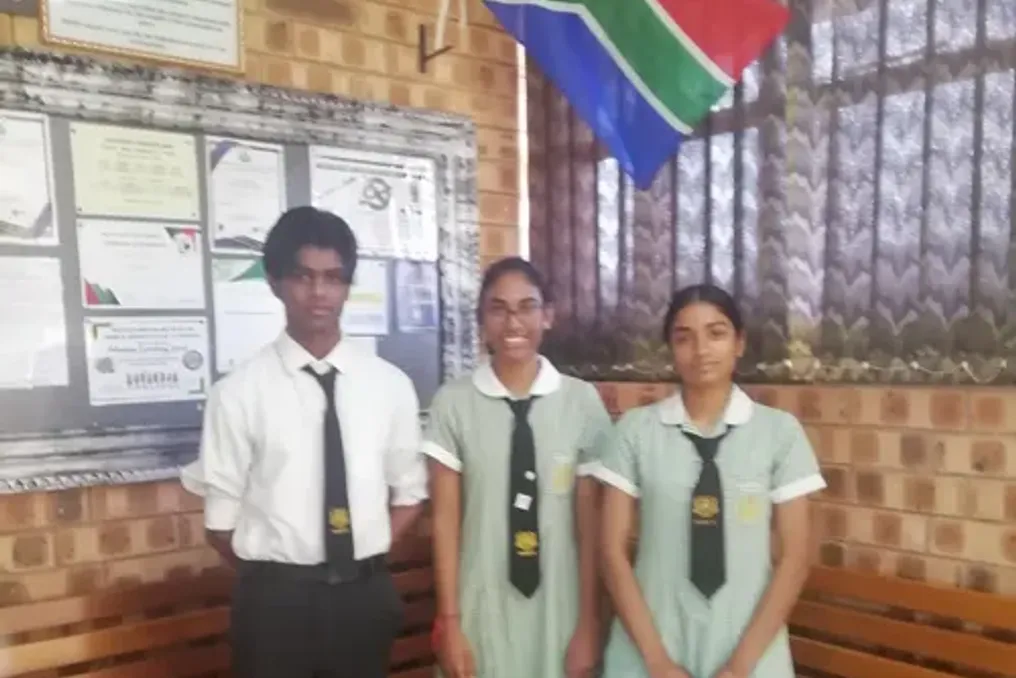
The 2026 National Senior Certificate (NSC) final exams started on Tuesday, and four students from Sastri College in Durban began taking the first part of the Hindi exam.

The students, namely Bhavik Rampata (18 years old), Aarush Mohanlal Dukkan (17 years old), Luvir Vibhav Ramnarain (18 years old), and Kveron Mudli (18 years old), shared their feelings at the start of the tests, noting a mix of nervousness and excitement, but felt relieved after completing the two-hour session.

They also reported that they prepared thoroughly for the exams and intend to put forth their best effort. Bhavik plans to study supply chain management to manage his family business, with information technology (IT) as a second option.

Aarush aims to enter the cybersecurity field due to the increasing number of vacancies in the labor market, while Luvir is weighing the choice between architecture and civil engineering. Kveron is considering IT options or attending a business school.

The boys, who celebrate Diwali on Sunday, November 8th, said they will be able to celebrate the Festival of Lights without worrying about the exams the next day. According to the Department of Basic Education's schedule, November 9th is a non-exam day.

School Principal Santosh Rajkumar wished the students success over the next six weeks, emphasizing that the school provided them with all necessary support, and now it was time for them to succeed independently.

On Wednesday, the students will take the Information Technology (first part) and language exams. The final paper is scheduled for November 26th.

Similar stories

Palmview School Students Begin Final Exams in Hindi and Tamil
Read more
iol.co.za

Palmview School Students Begin Final Exams in Hindi and Tamil

Ten students at Palmview Middle School in Phoenix have begun taking final exams, having chosen subjects in Hindi and Tamil. Reasons for selecting these disciplines include religious beliefs, cultural background, and university admission plans.

Dashen Rampersad from Shastri Park noted his religiosity and that he had been studying Hindi since the eighth grade. He stated that he wanted to understand his culture more deeply and become more fluent in Devanagari—the script used in India for learning Hindi and other Eastern languages. Rampersad also mentioned that the school year included many motivational activities, including spiritual enrichment through prayers of various faiths. He reported spending a lot of time reviewing material and preparing well for the exams.

Ashara Munsi from Ottawa shared that she had been diligently preparing for the final tests for the past ten months. She noted that she usually received A and B grades in her studies and was confident in achieving good results on the exam. Munsi emphasized her religiosity and explained her choice of Tamil as pride in her culture. Furthermore, she is a Bharatanatyam dancer and a Carnatic singer, which, she said, helps her absorb the language better.

Amy Natasan from Palmview also decided to study Tamil because it will give her an advantage when applying to higher education. She explained that learning Tamil would allow her to have an edge over other students when calculating scores for university admission. This applicant, who is aiming to be a certified accountant, stated that she is an excellent student and confident in succeeding in this subject, although she is concerned about mathematics, where she received a B on the mock exam. She added that she is ready for her other subjects.

More than 1.8 million graduates across South Africa have registered to take the National Senior Certificate examination, which will conclude on November 26th. On Wednesday, students will take English 3.

Harvastan School Students Share Plans for Graduation Exams
Read more
iol.co.za

Harvastan School Students Share Plans for Graduation Exams

Ahead of the National Certification Exam scheduled for October 13th, 12th-grade students from Harvastan School, Kalisha Saiyan Naidu and Priya Sompersad, are discussing their study strategies, the pressure they feel, and their career aspirations.

It is expected that about 182,000 students from KZN will take the final exam in 2026. Specifically, the written English language exam, section 3, will take place on October 13th.

Kalisha Naidu expressed joy as graduation tests approach. She noted that after twelve years of study, reaching this life stage feels surreal. She acknowledged significant pressure because the results could affect future opportunities, but she tries to view it as a chance to appreciate all the effort put in over the years. Naidu added that despite the anxiety, she is happy to close this chapter and see what lies ahead.

To prepare for the exams, Naidu has focused on regular review of material and working with past years' assignments. She has also practiced effective time management to dedicate more attention to subjects where she struggled, which has increased her confidence before the exams. Her favorite subjects include English, Afrikaans, and Information Technology.

Her classmate Priya Sompersad reported that Harvastan School provided graduates with comprehensive development in preparation for the exam. She emphasized that staff was available for constant consultation, and special measures were implemented to maintain students' mental well-being. Sompersad shared her method: she set small academic goals for herself and rewarded herself upon achieving them. Despite the fleeting nature of the year and high pressure, her goal is to achieve a passing score of 90%. She plans to build a career in actuarial science.

In turn, the chairman of the KZN Parents' Association, Vi Ghani, stated that the National Certification Exam is the most important event in the academic calendar and urged students to put in extra effort in their studies. He congratulated everyone who reached this educational milestone, noting that some students drop out before reaching the 12th grade. Ghani stressed that those who work hard and show good results can pursue higher education and build a career, while others might miss the chance for further learning.

He also pointed out that socio-economic factors or limited resources are the reason for low results among some students, even when they strive for academic success. Ghani advised successful students who could not enter universities due to financial constraints to consider vocational training options in fields such as engine mechanics or plumbing.

Popular